
Why Azalea Park Homes Sink More Than You'd Expect
Most folks in Azalea Park, FL don't think about what's under their slab until something goes wrong, but calling a professional foundation construction company in Azalea Park can help. A door that won't latch, a crack running across the living room floor, or tiles popping loose in the kitchen are often the first signs. By the time you notice, the foundation has already moved.
Central Florida sits on a mix of sandy soil and limestone. That combination does strange things over time. According to the Florida Geological Survey, much of Orange County rests on karst terrain. This means the ground beneath your home can shift, compress, or even dissolve slowly without any warning at the surface. Azalea Park homes built near low-lying areas around Lake Underhill Road or closer to Lake Barton deal with this more than most.
Here's what actually causes the sinking we see often in the 32807 area:
- Sandy soils that wash out during heavy rain, leaving voids beneath the slab
- Organic material in fill dirt that decomposes over decades and creates gaps
- Poor drainage around the foundation that saturates soil unevenly
- Tree root systems that pull moisture from one side of the home but not the other
And then there's the age factor. A lot of homes in Azalea Park went up in the 1950s and 1960s. Those foundations were poured on whatever soil was graded at the time, often without modern compaction standards. Sixty-plus years of Florida rain cycles will test any slab.
We've worked on blocks near the Colonial High School area where three houses on the same street all had the same settling pattern. They often share the same builder, same soil, and similar problems show up within a few years of each other. The ground just can't hold the weight anymore.
That doesn't mean your home is in danger of collapsing. It means the soil conditions here make house leveling more common than people expect. Catching it early saves you from bigger structural repairs down the road. It also keeps your doors closing right and your floors feeling level underfoot.
Warning Signs Your Slab Foundation Needs Leveling Now
Most people don't wake up thinking about their foundation. They notice something small, like a door that sticks or a crack running along the wall near the ceiling. Then one day they realize the floor slopes enough to feel it when they walk barefoot.
We get calls like this every week from homeowners near Lake Underhill Road and across Azalea Park. By the time they reach out, the signs have usually been building for months. The good news is that once you know what to look for, you can catch problems before they get expensive.
Here are the most common warning signs we see:
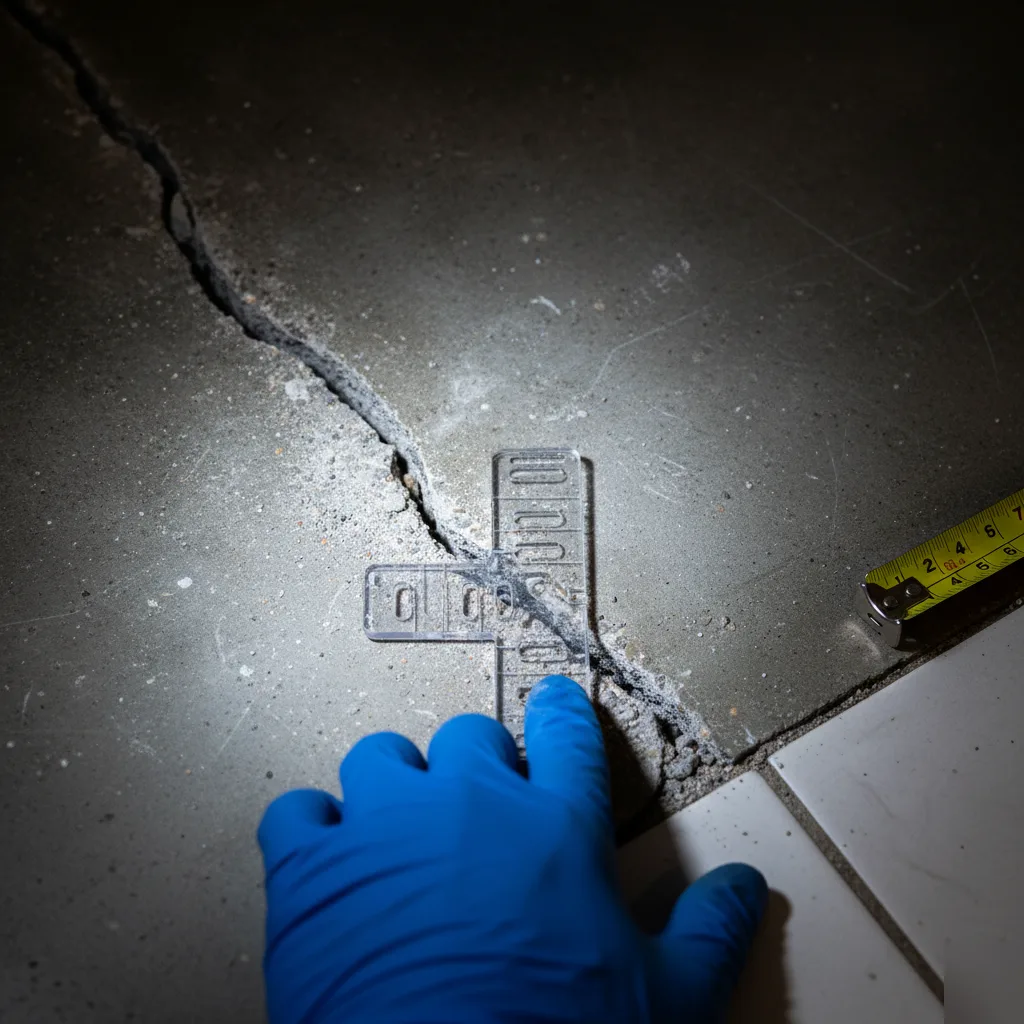
- Cracks in drywall, especially above door frames and at corners where walls meet ceilings
- Doors or windows that won't close right or suddenly jam in their frames
- Visible gaps between the baseboard and the floor
- Tile floors cracking for no obvious reason
- A noticeable slope when you set a ball on the floor and it rolls to one side
Some of these seem minor on their own. But two or three showing up together? That's your foundation talking. And it's not going to fix itself.
One thing we run into a lot in Azalea Park homes built on slab foundations is settling caused by the sandy soil underneath. Central Florida's soil conditions shift with moisture levels. The water table fluctuates with heavy rain and dry spells, and that movement puts real stress on concrete slabs. According to the American Society of Civil Engineers, foundation issues affect roughly 25 percent of all homes in the U.S. at some point. In areas with our soil type, that number feels low based on what we actually see in the field.
Here's the thing people miss. A small crack today can become a big structural problem in six months. The longer a slab sits uneven, the more stress transfers to walls, plumbing lines, and load-bearing points throughout the house. We've walked into homes near the Colonial High School area where a half-inch of settling turned into two inches because the homeowner waited a full year to act.
Don't wait for the floor to feel like a ramp. If something looks off, it probably is.
How House Leveling Works on a Central Florida Slab
Most homes in Azalea Park sit on concrete slab foundations. They have no basement or crawl space. Just a flat slab poured right on the ground. So when that slab shifts or sinks, you can't just crawl underneath and jack it up. House leveling on a slab takes a different approach, and we do it often across the 32807 zip code.
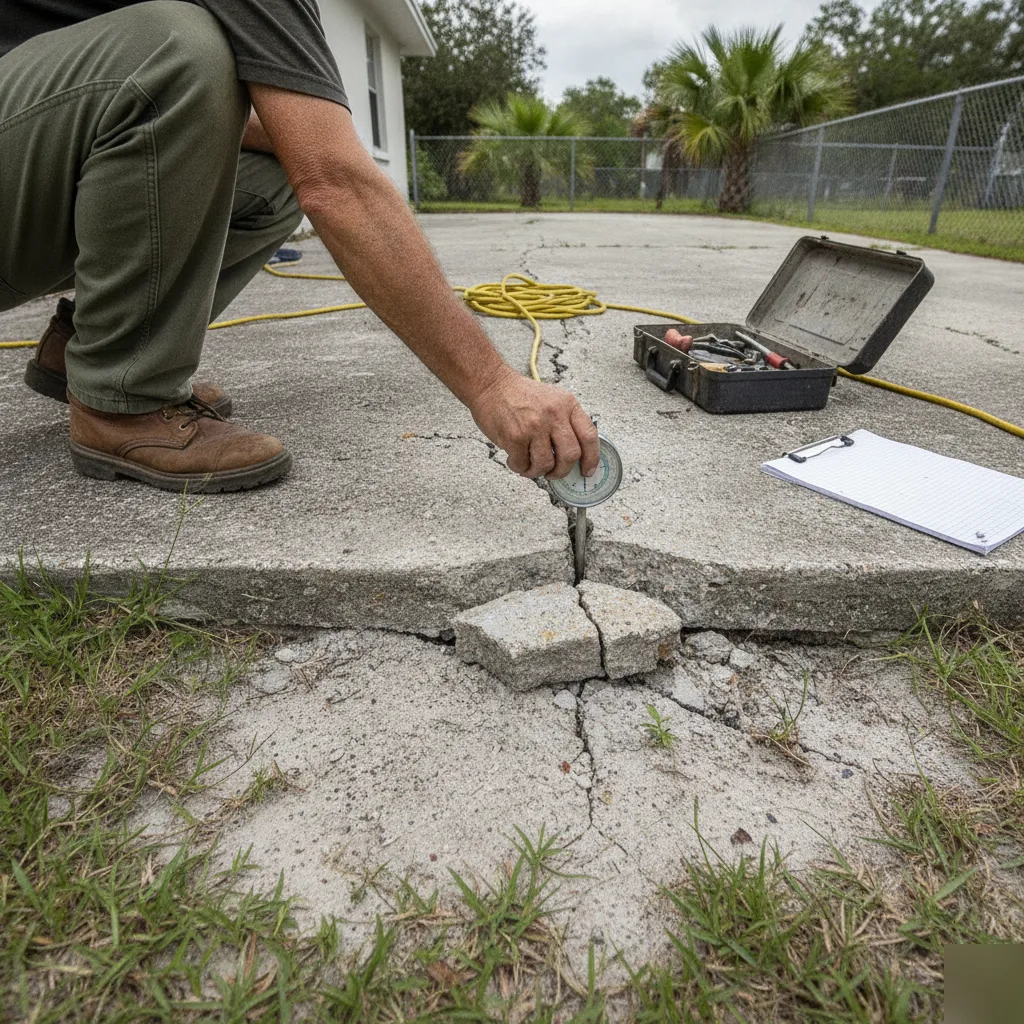
The process starts with a full inspection. We measure the slab at multiple points to map exactly where it's dropped and by how much. Sometimes one corner has sunk two inches while the rest looks fine. Other times the whole center of the home has settled. That map tells us everything.
The Step-by-Step Process
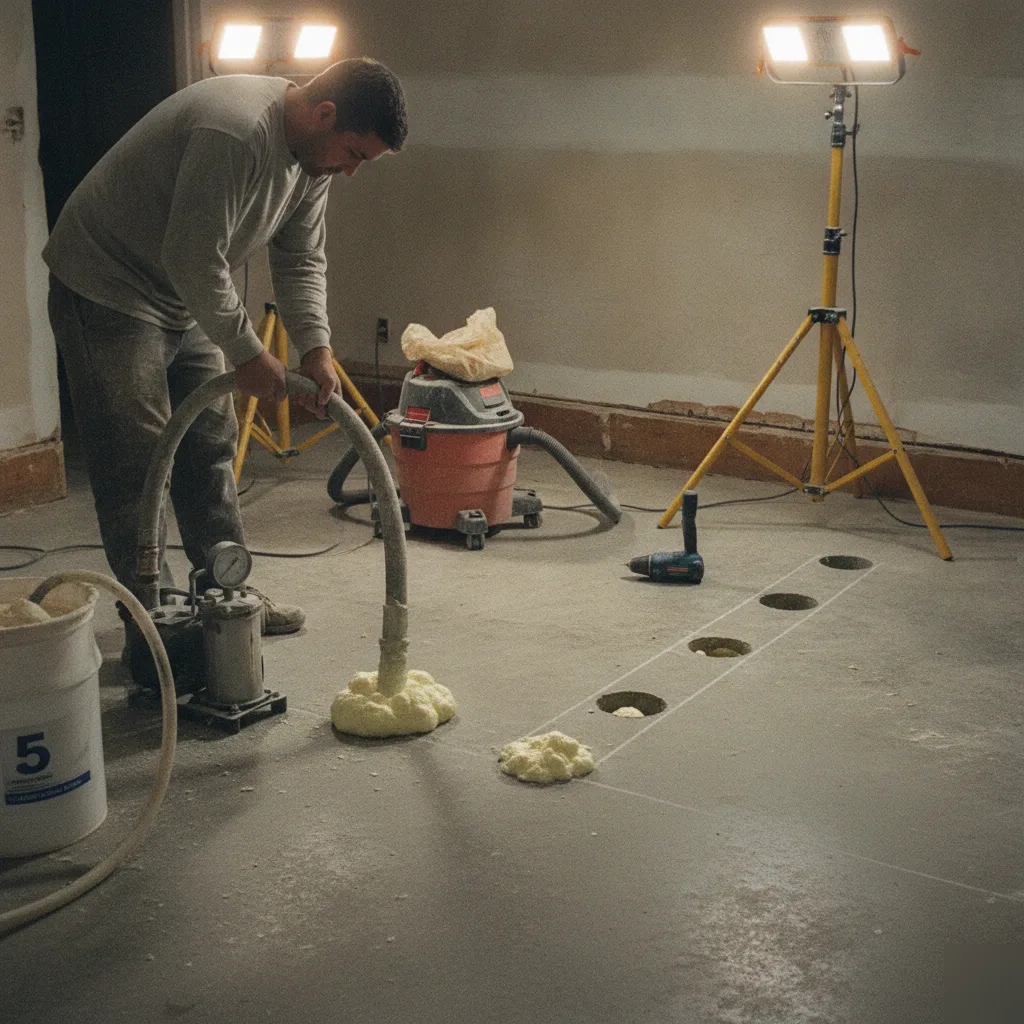
- We drill small access holes through the slab at planned locations, usually about the size of a quarter.
- Depending on the situation, we install steel push piers or injection piers down to stable soil or bedrock beneath the loose sandy layers.
- Hydraulic equipment lifts the slab back toward its original position, slow and controlled.
- We monitor with laser levels in real time to make sure everything moves evenly.
- Access holes get patched, the piers stay permanently in place, and the slab is supported for good.
The sandy soils near Lake Underhill Road and throughout Azalea Park are a big reason slabs sink in the first place. Florida's soil holds water during the rainy season, then dries out and compresses. That cycle repeats year after year. Piers bypass all of that unstable ground and anchor into something solid.
And here's what surprises most homeowners. The whole job is usually done in a day or two. No massive excavation in your yard or tearing up your floors. We've leveled homes right off Semoran Boulevard where the driveway was cracked and the front door wouldn't latch. The homeowner was back to normal by dinner.
It's the soil, not the concrete itself, that caused the problem. The slab is just along for the ride.
Choosing the Right Leveling Method for Your Foundation Type
Not every house leveling job calls for the same fix. The method we use depends on what's under your home, how it was built, and what the soil is doing. Homes near Lake Underhill Road sit on different ground conditions than properties closer to the Orlando Executive Airport corridor. We see that range across Azalea Park often.
Slab Foundations
Most homes in the 32807 zip code sit on concrete slab foundations. When these settle unevenly, we typically look at two options. Polyurethane foam injection works well for minor settling. It lifts the slab back to level without major excavation. For deeper problems where the soil itself has shifted or eroded, slab pier installation gives you a permanent connection to stable ground. It reaches beneath the weak soil layers. We check the severity before recommending one over the other.
Pier and Beam Foundations
Older homes in Azalea Park sometimes have pier and beam foundations. These are the ones with a crawl space underneath. When beams sag or piers sink, the floors inside start to slope. You'll feel it walking from room to room. Pier and beam foundation repair might involve replacing damaged wood supports, shimming existing piers, or installing new steel push piers. This stabilizes the whole structure.
So how do you know which approach fits your situation? That's actually our job to figure out. Here's what goes into that decision:
- Foundation type and age of your home
- Depth and composition of the soil underneath
- How far the foundation has settled and in which direction
- Whether water intrusion or void formation is a factor
We discuss all of this during our free estimate. Sometimes homeowners think they need a bigger fix than they actually do. But sometimes it's the opposite. Either way, we lay out what we find and explain why one method makes more sense than another.
And if your home has block and base supports, that's a different conversation entirely. The point is, the right leveling method isn't a guess. It comes from looking at the actual conditions under your home in Azalea Park and matching the repair to the problem.
What to Expect After Your Slab Is Leveled
You might think house leveling means weeks of disruption. It doesn't.
Most homes in Azalea Park are back to normal the same day we finish. The polyurethane foam we inject cures fast, usually within 15 minutes. That means you can walk on the repaired area almost right away. No waiting around for days wondering if your floor is ready. We work from small injection points rather than tearing up your slab. This means there's very little cleanup involved. A few small holes get patched, the equipment comes off your property, and that's it.
The First Few Days
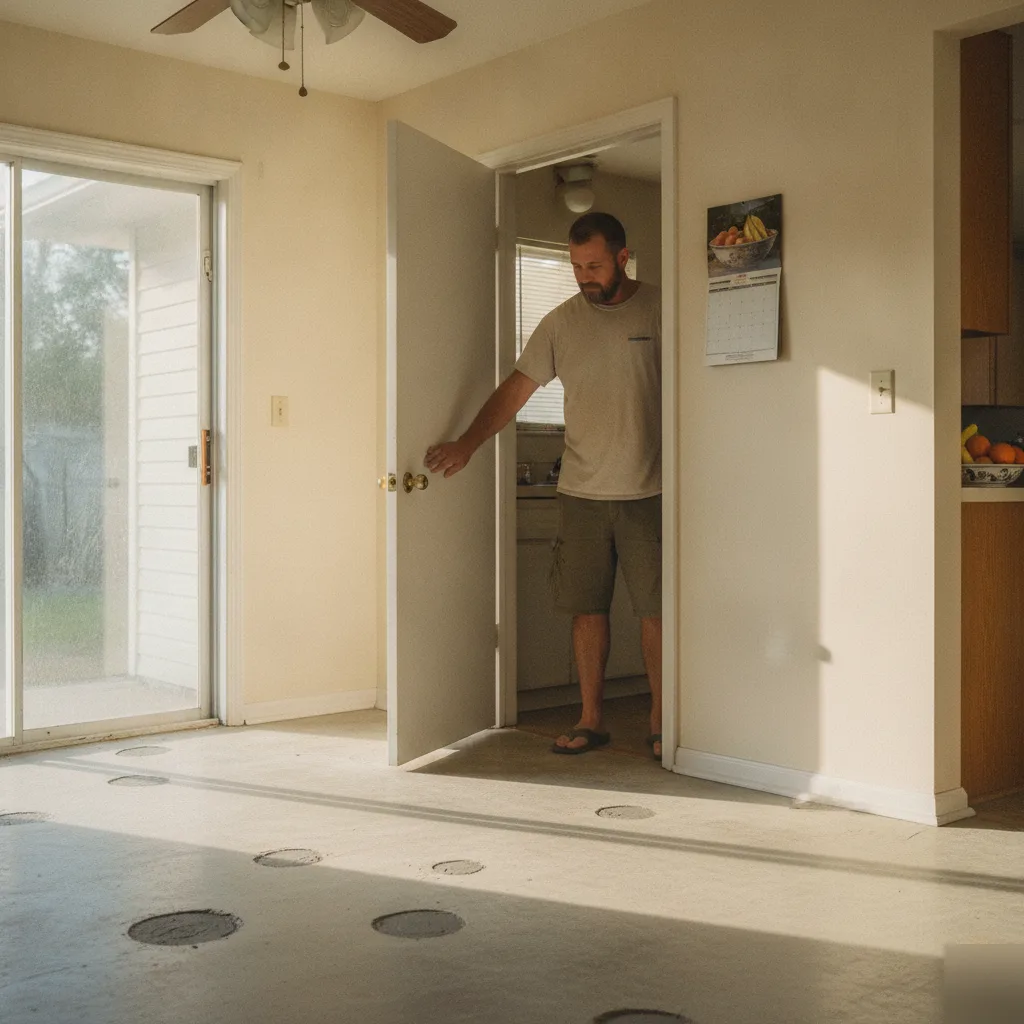
Here's what you'll probably notice right away. Doors that used to stick will open and close like they should. Cracks in your drywall or tile may close up partially or completely. That sloped feeling you got walking through the hallway near the kitchen? Gone. We hear this from homeowners off Lake Underhill Road all the time. They call back surprised at how different the house feels after just one visit.
A few things to keep in mind during the first week:
- Check your doors and windows for improved operation. Most will function better immediately.
- Look at existing wall cracks. Some will tighten on their own as the structure settles into its corrected position.
- Monitor any cosmetic repairs you plan to make. We recommend waiting about a week before patching drywall or re-grouting tile, just to let everything fully stabilize.
Remember, the cosmetic damage you saw before house leveling was a symptom, not the real problem. Once the slab is level again, those symptoms stop getting worse.
Long-Term Performance
The repair holds. Our team serves the entire 32807 zip code, and we stand behind every job with a lifetime warranty and a free estimate upfront. The materials we use don't erode or compress over time. They're waterproof too. This matters a lot in Central Florida where the water table sits high and heavy rains are just part of life.
But here's the honest truth. If the original cause of settlement was a drainage issue or a plumbing leak, that needs to be fixed separately. We'll tell you if we spot something like that during the inspection. Leveling the slab solves the structural problem. Keeping it level means addressing whatever caused the soil to shift in the first place.
Need help figuring out your next step? Give us a call.
Wondering whether your slab has shifted — or whether it's just normal settling? Book a free inspection.
Get your free estimate