
Why Concrete Slabs Settle in Central Florida's Sandy Soil
Many homeowners in Azalea Park, FL don't consider what's beneath their concrete until a driveway corner drops a couple of inches or a pool deck begins to pull away from the coping. The ground beneath your slab is always active, and in Orange County, it can shift more readily than in many other regions. Contact us for professional foundation repair in Azalea Park.
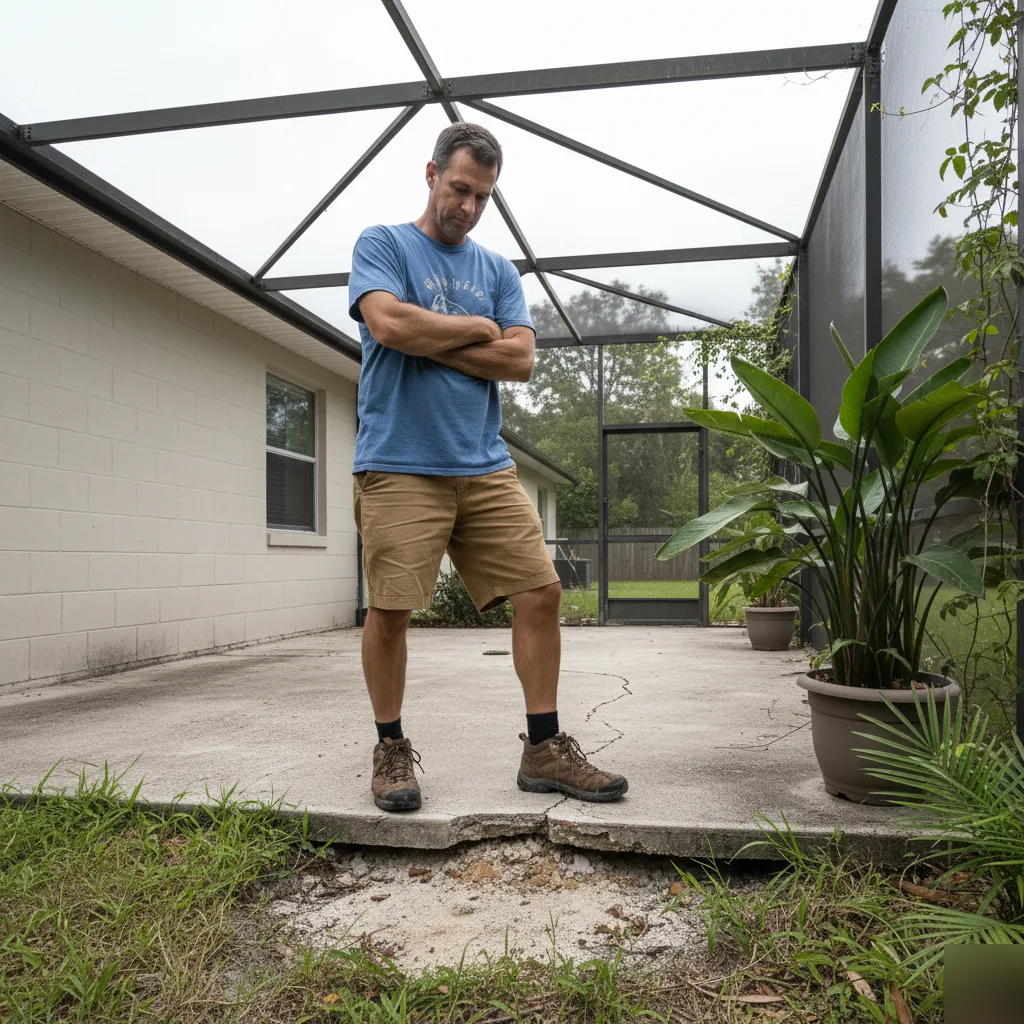
Central Florida features a blend of sandy soil and limestone. This combination leads to nearly every sinking slab we encounter. Sandy soil doesn't compact well; it shifts and settles over time. Heavy rain can push fine particles deeper into the ground, often creating voids directly under your concrete. When a slab lacks proper support, it begins to settle. Gravity completes the process.
What Causes Concrete Settlement
We regularly hear from homeowners near Lake Underhill Road who are dealing with similar problems. Here's what typically happens beneath the surface:
- Washout from poor drainage. Water flows under the slab and carries soil away. Over months, this creates a gap.
- Organic material decomposition. Roots, old fill dirt, or buried debris break down, creating empty space.
- Soil compaction after construction. Fill soil that wasn't compacted properly settles under the weight of concrete.
- Florida's wet-dry cycles. Soil expands during the rainy season and shrinks during dry spells. This constant change loosens the bond between soil and slab.
This is common across Azalea Park, especially in homes built from the 1950s to the 1970s. Many properties in the 32807 zip code used local fill material that wasn't stable enough for lasting support. Often, the concrete slab itself remains sound. The issue is with the ground beneath it.
A trip hazard on your walkway or a gap between your garage floor and wall indicates settlement. The problem won't resolve on its own. The underlying soil conditions persist. Polyurethane foam injection can fill those voids and lift the slab back where it belongs, without tearing anything out.
How Polyurethane Foam Injection Lifts and Stabilizes a Slab
Many homeowners imagine jackhammers and heavy equipment when they consider fixing a sunken slab. That approach is often outdated. Polyurethane foam injection works completely differently, and it's quicker than most anticipate.
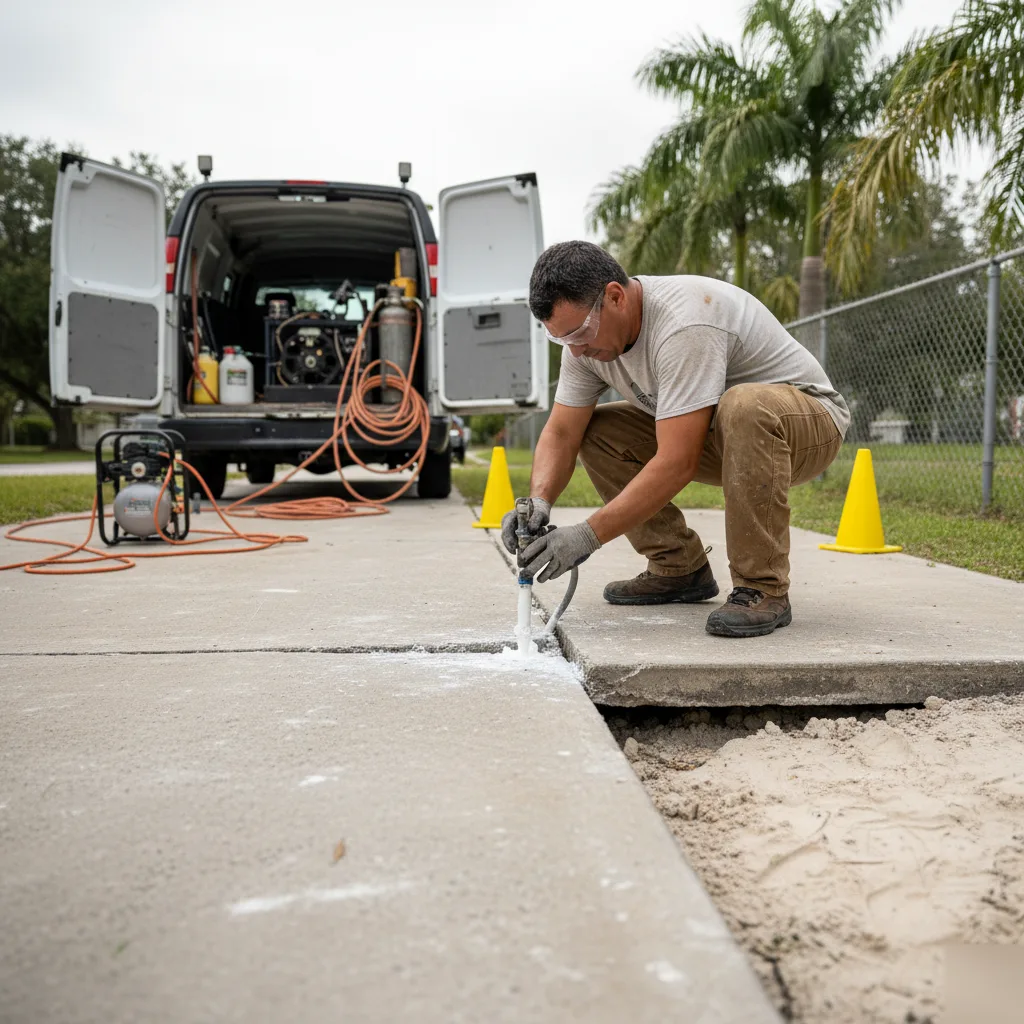
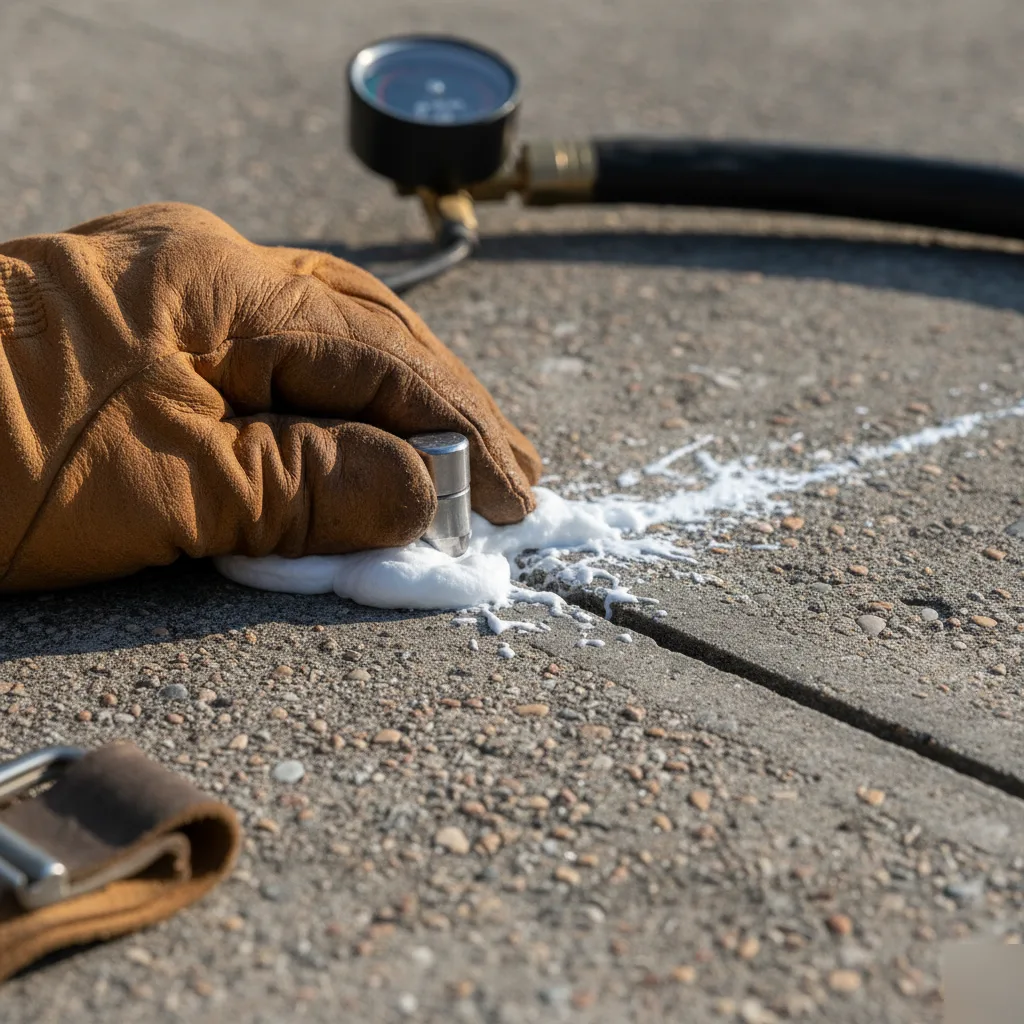
Here's what happens on a typical job near Lake Underhill Road or anywhere else in Azalea Park. We drill small holes into the concrete, roughly the size of a penny. Through these holes, we inject a two-part polyurethane resin directly beneath the slab. The material expands rapidly, filling every void and gap in the soil. As it expands, it generates controlled pressure to gently lift the concrete back into place.
The Step-by-Step Process
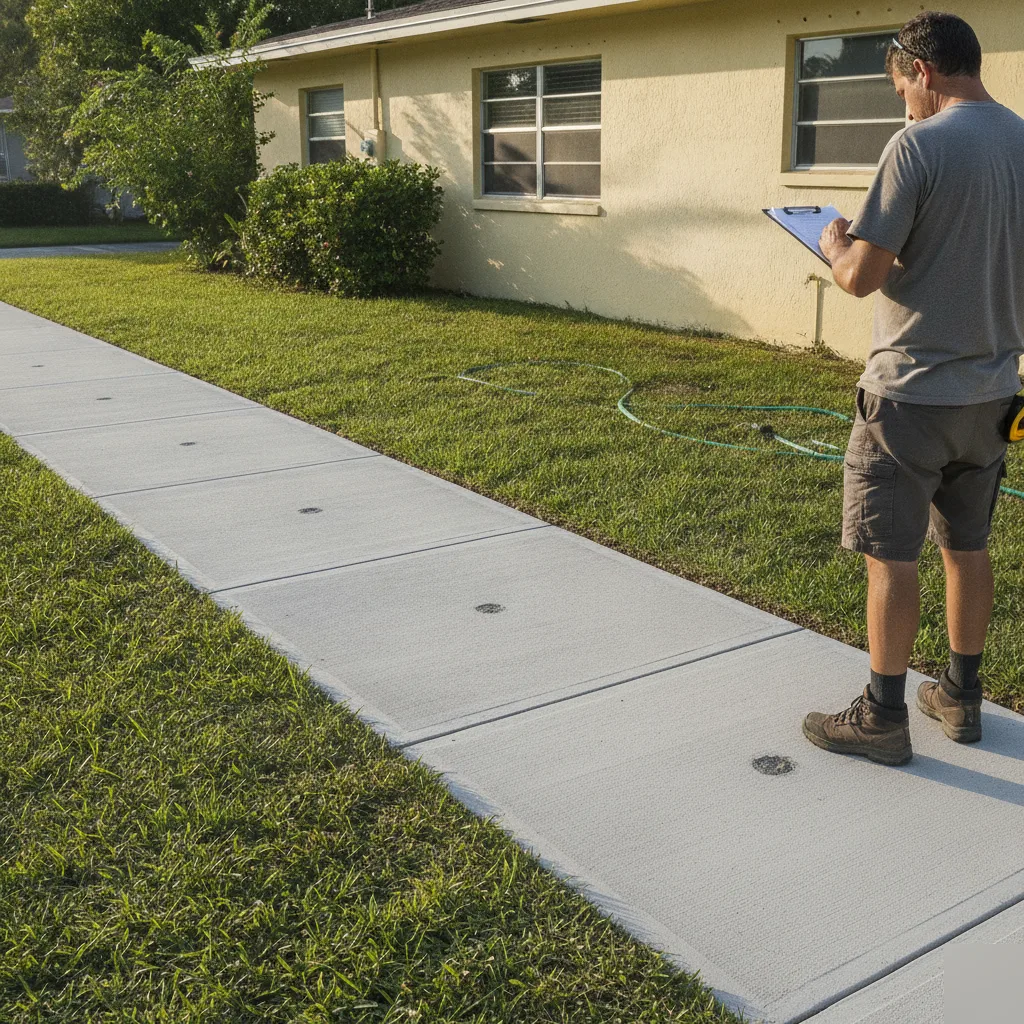
- We survey the slab with laser levels to map exactly where it has settled and by how much.
- Small injection ports are drilled in a strategic pattern across the affected area.
- Our crew injects the polyurethane foam in measured amounts, watching the slab rise in real time.
- We verify the level at each port before moving to the next, adjusting as we go.
- The ports are patched and the surface is ready for use, often within 15 to 30 minutes.
The foam itself cures to about 90 percent strength in under a minute. That's not an exaggeration. You can park on it the same day. We have completed driveways in Azalea Park where the homeowner drove over the repair on their way to pick up groceries an hour later.
What truly matters is this: The cured foam is lightweight, about two pounds per cubic foot, yet it can support thousands of pounds per square foot. It doesn't absorb water or break down in Florida's sandy, moisture-heavy soil. By completely filling voids, it eliminates the empty pockets that initially caused the sinking.
The slab settled because soil washed out or compressed underneath it. Polyurethane foam addresses both problems simultaneously. It fills the gap and stabilizes the ground beneath. This ensures a lasting repair, treating the root cause rather than just the symptom.
Surfaces Around Your Home That Foam Injection Can Repair
While many homeowners initially contact us about a single slab, once we're on-site in Azalea Park, they often reveal other areas they've been overlooking for months.
This is typical. Concrete settlement rarely happens in just one place. The same sandy soil conditions that shifted your driveway often affect your patio, walkway, or even your garage floor. We see this frequently. Here are the surfaces polyurethane foam injection can address around a typical home:
- Driveways and garage floors. These take the most weight and show settlement first. Cracks widen, edges sink, and water starts pooling near the foundation.
- Pool decks. A sunken pool deck creates a trip hazard for your family. It also creates an eyesore. We handle pool deck leveling as a standalone service.
- Sidewalks and front walkways. Raised or sunken joints can catch toes or impede wheelchair access. The city doesn't maintain private walkways, so this responsibility falls to the homeowner.
- Patios and back porches. Older homes near Lake Underhill Road often have rear patios that have pulled away from the house by half an inch or more.
- Steps and stoops. Even a quarter-inch drop on a front stoop changes how your door closes, how water drains, and how safe visitors feel walking up.
Homeowners often don't realize this: Polyurethane foam injection works on slabs as thin as four inches. That old shed pad or the concrete under your AC unit are also suitable for repair.
If you're unsure if your slab qualifies, that's understandable. Some surfaces have too much structural damage for leveling alone. In those situations, we provide an honest assessment. We've been licensed and operating in the 32807 zip code for years, knowing when polyurethane foam injection is the appropriate solution and when it isn't. Honesty saves everyone time.
If concrete around your Azalea Park home has settled, cracked, or shifted, we can often restore its level. We achieve this without disruptive demolition.
When Foam Injection Is the Right Call, and When It Is Not
Not every sinking slab needs polyurethane foam injection. And not every foundation problem calls for piers. Understanding the distinction can save you money and complications. We review this with homeowners in Azalea Park regularly.
Polyurethane foam injection works when the concrete slab is in good condition. It addresses issues where the soil underneath has eroded, compacted, or washed out. This represents the ideal scenario. You have a solid slab that requires underlying support. Here are the situations where we recommend polyurethane foam injection:
- Driveways, sidewalks, or pool decks that have settled an inch or two
- Garage floors pulling away from the foundation wall
- Voids under slabs caused by water runoff or poor drainage
- Warehouse or commercial floors with uneven spots creating trip hazards
- Pool decks near Lake Underhill Road properties where sandy soil shifts after heavy rain seasons
Polyurethane foam injection isn't a universal solution. If your slab is cracked into multiple pieces or badly deteriorated, lifting it won't provide a lasting solution. That would involve simply raising broken concrete. If the problem traces back to deep foundation movement, you might need slab pier installation. Steel push pier installation presents an alternative solution. We see this sometimes in older homes near the Colonial High School area, where decades of moisture changes have affected soil at deeper levels.
We often advise clients: If the slab moves without breaking, polyurethane foam is generally the solution. If the entire structure is shifting, a more in-depth assessment is needed.
A thorough inspection helps us determine the precise approach. We check the slab thickness, the soil conditions, and the drainage patterns around your property. Sometimes a home needs both polyurethane foam injection for the driveway and piers for the foundation. This isn't uncommon in the 32807 zip code. Soil types can vary even within the same lot here.
If you're uncertain about the issue, rest assured it's a common concern. A free estimate from our team provides clarity quickly, eliminating guesswork on your part.
What to Expect After the Job Is Done
The foam is in. The slab is level. What happens next?
Homeowners in Azalea Park, FL are often surprised by how quickly they can return to normal routines after polyurethane foam injection. We're not talking about days of curing time or extensive roped-off areas. The foam reaches about 90 percent of its strength within 15 minutes. You can walk on the slab right away. You can drive on it within an hour in most cases. Clients frequently mention this, having anticipated a much larger disruption.
The First 24 Hours
Immediately after we complete the work, you'll see the injection holes. These are small, typically the size of a dime. We patch each hole before leaving the site. Within a day or two, those patches blend in with the surrounding concrete. The slab itself won't shift or settle further, as the foam securely locks into place beneath it.
- Doors and windows that were sticking may now open and close smoothly.
- Cracks in drywall or tile grout lines may stop spreading.
- Water that used to pool on your patio or driveway should now drain properly.
- Any slight lifting smell from the injection fades quickly outdoors.
See whether foam injection is the right fix for your slab — book a free estimate.
Get your free estimate