
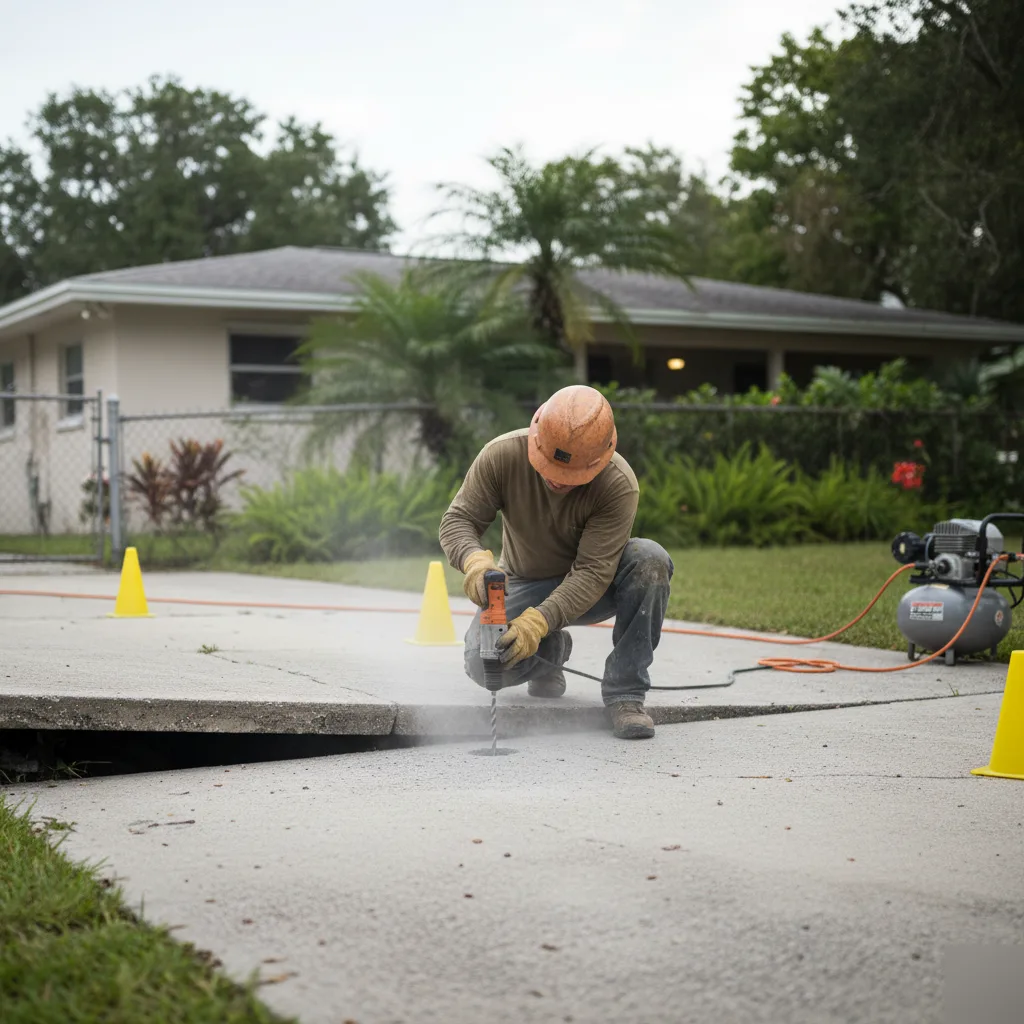
Why Concrete Slabs Sink in Older Central Florida Homes
In Azalea Park, FL, many residences were constructed during the period stretching from the 1950s through the 1970s. As a result, the foundational soil underneath the home is already decades old; this is where our Azalea Park foundation repair services come in. Slab lifting and leveling is an ongoing service we have performed many times in this locale, because here the ground just will not stay in place.
The reason most often associated with Florida slabs sinking is the sandy composition of the local soil. While Florida's sandy soil provides excellent drainage, drainage can be bad news when you are dealing with a sinking concrete slab in central Florida. Heavy rainfall is able to wash the sandy soil and organic materials away from under the slab at a very fast rate. Over the years, this creates voids, and the slab has nowhere to rest but to drop into the ground.
So what exactly is causing slab sinking issues in the 32807 area?
- Soil erosion due to improper drainage. Many homes located along Lake Underhill Road were not built with proper grade surrounding the foundation. When the water is unable to flow properly, it collects around the home's foundation and washes away the surrounding soil.
- Degradation of decomposed organic material. Home builders backfilling around the property in the 1960s utilized whatever materials were at the top of their list, which included tree stumps, peat and other debris. These items decompose and create voids in the soil over time.
- Rising and falling of the water table. The water table in central Florida fluctuates with the changing seasons, which causes the soil structure below your slab to become loosened.
- Tree root activity. Large mature trees are able to draw moisture out of the surrounding soil during dry periods, which causes the soil to shrink and then swell back when it gets wet.
We see the same results of this scenario on a weekly basis. The homeowner starts noticing cracks appearing in the concrete garage flooring or feels like a section of the home is starting to slope. At this point, the homeowner thinks it's the settling process of the home. It's actually just the opposite, the home is still settling.
And the longer these voids remain under the slab, the larger they become. The rainwater continues to wash away the material underneath. And the slab continues to get larger. What started out as a quarter-inch void behind a door in the dining room can turn into a two-foot void under the master bedroom.
This problem is most frequently encountered in the homes along Semoran Blvd. and the streets leading off of it in Azalea Park. When you consider that these are most often homes built prior to 1980, the odds are great that the soil structure underneath the house is a lot different now than what the builders built it on, and there's not really a chance they would have done it all that time ago because of the settling that occurs here.
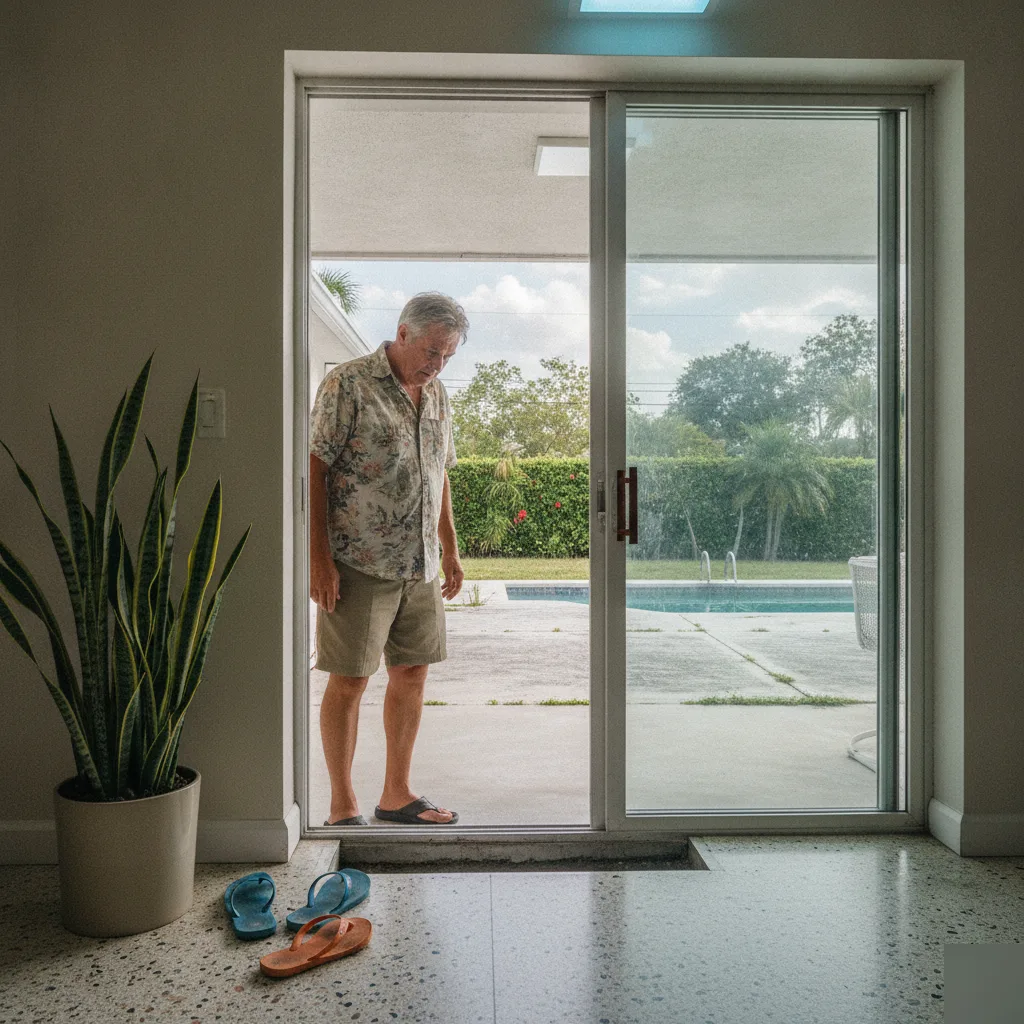
Signs Your Concrete Slab Needs Lifting Now
Not many people will call us when they initially notice that something is wrong. Typically it takes them walking around their home or driveway and noticing some sort of unevenness, a dip in their walkway, or seeing pooling water at the exterior of their foundation wall. When you are able to catch these symptoms early on, it usually means a lot less work needs to be done.
What should you be watching out for when you're checking around your Azalea Park home?
- Uneven or rocking slabs. Any area of concrete patio that rocks when you stand on it means the soil underneath has either washed away or collapsed. This disparity will only expand.
- Cracks on the walkway or garage floor. You shouldn't worry about all of them, but a crack with a slope or a lip between sections is a good indicator of an actively moving slab.
- A new pool of water where it used to be dry. Once the slab settles, water drains differently. After a rainy summer day, you may see standing water adjacent to your home near Lake Underhill Road or elsewhere in the 32807 area.
- Doors or windows that stick inside your home. A sinking slab will pull the house down with it. If a back door suddenly no longer latches well, the floor is shifting under it.
- A tripping hazard at the seams of sidewalk slabs. Even half-inch differences in height can catch toes and the tires of a wheelchair. We see it every week on older concrete surfaces in and around Azalea Park.
That's because of our central Florida sandy ground. Slabs settle in patches, particularly following a rainfall. A soaking rain is followed by a rapid drainage of water, which leaves void spaces under the concrete. Without that support, the concrete slab drops.
A common thing people do is ignore how quickly a small settling becomes significant settling. A quarter-inch drop in January could become an inch in July. And when a slab breaks due to lack of equal support, slab lifting and leveling is still an option, but you're now adding to a previous repair process that wasn't even necessary six months ago.
Can't tell if your home is experiencing typical settling or something more severe? It's pretty typical for homeowners to not know the difference. But it takes one of our team a quick walk through the property to let you know what you're up against.
Our Slab Lifting and Leveling Process
We get this question a lot from homeowners. They assume jackhammers, heavy machinery, and a week's worth of time spent in tears over their driveway.
That's not what our process looks like at all. Here are the four steps in our slab lifting and leveling:
- We drill a small hole — about the size of a penny — in various places on the sunken slab where settlement is most evident.
- We inject polyurethane foam into those holes. The substance flows under the slab and through any empty spaces beneath it. Once it expands, it has filled all the voids.
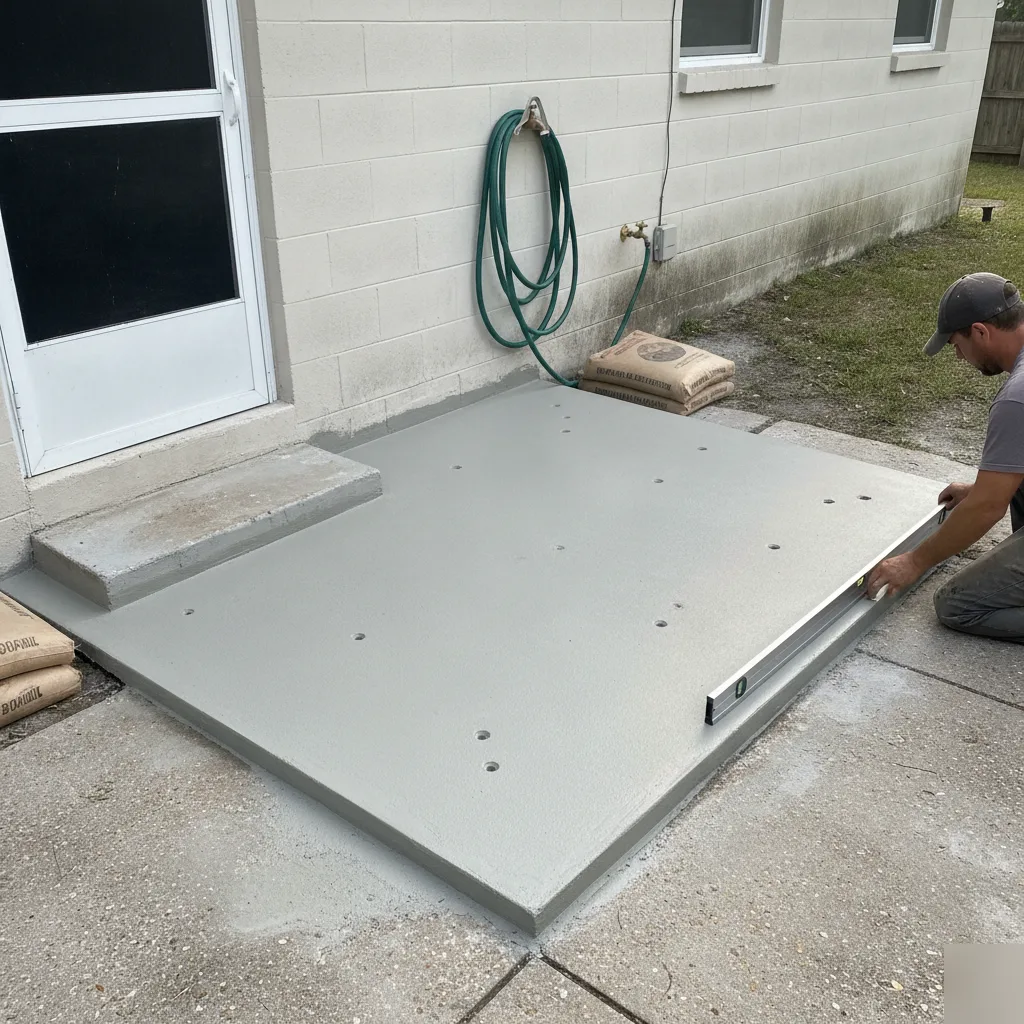
- The slab comes back to level. We monitor the process with laser-leveling tools as it happens. A fraction at a time, the concrete lifts until it hits where it needs to be.
- We cover the drill holes and clean up the site. Most repairs are finished the same day. People can walk on it in minutes and cars can drive on it within a couple of hours.
That's it. There's no excavation or other messy work needed, and absolutely no multi-day waiting period involved. It's actually something that really catches homeowners by surprise, especially in the neighborhoods close to Lake Underhill Road, because it all happens so quickly. Most patios and driveways in Azalea Park only require a few hours of work, not a few days. Our polyurethane foam injection material is lightweight, yet it can handle thousands of pounds per square foot, and it does not wash away in the ground the way other fill materials do — something we need to keep in mind given the sandy nature of our local Central Florida ground.
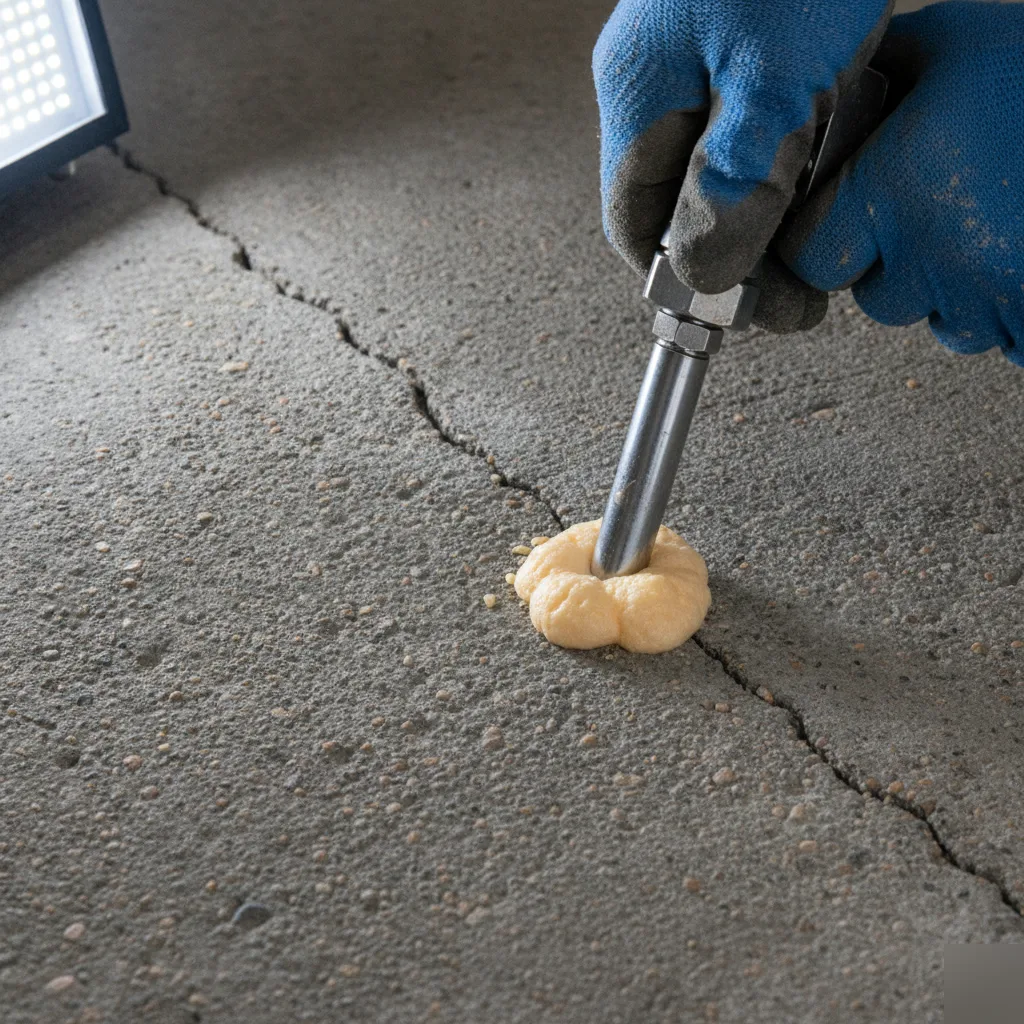
How It Works on Florida Slabs
Most of the time, the issue with these concrete slabs in Azalea Park is not the slab itself, but what is underneath it causing the slab to settle. The ground under the concrete can be affected by sand compacting, organic material decomposing, or water washing away and leaving voids. Polyurethane foam injection fills in the void so it does not happen again, and since the foam is waterproof, we don't have to worry about the ground degrading like it can with a grout method after several years. We have been performing this work in the 32807 zip code for years and know exactly how Azalea Park ground reacts, so we can fix it the first time. Need help determining if your slab is a candidate? Contact us now.
Slab Lifting vs. Full Replacement Decisions
Most residents in Azalea Park tend to assume that if the slab is sinking, a new concrete slab is required and it needs to be demolished and started completely fresh. That's a very common statement we hear. However, that is rarely the situation. Having a concrete slab replaced is messy, time consuming, and very costly. The process involves demolition of the existing slab, removal, prep, a new concrete pour, and then the concrete must cure for several days. The driveway or walkway can be completely unusable for days. With much of the settling occurring on the driveways and walkways near Lake Underhill Road, in and around the 32807 zip code, such disruption would be totally unnecessary.
Slab lifting and leveling works on the slab that is already in place. Polyurethane foam is injected through small holes to elevate the concrete to the correct level. The concrete surface is never touched, the work takes only a few hours instead of days, and the driveway or walkway is almost immediately usable after the work is completed.
There are some scenarios when replacing a concrete slab is necessary. We often discuss the following with our customers:
- Heavily cracked or disintegrating concrete. This is not a job for slab lifting and leveling, because concrete that has crumbled into many fragments cannot effectively be stabilized.
- Significant damage. Cracks that span the width of the slab or branch out in multiple directions may not be suitable for concrete lifting and leveling.
- Sound surface. A slab that is in reasonable condition but only uneven or sunken will typically be addressed with slab lifting and leveling.
- Settling no more than 4–6 inches. It is rare for Azalea Park residential properties in the 32807 zip code to sink more than 6 inches.
In the case of many Azalea Park concrete slabs, the concrete itself was not damaged — the soil underneath failed. Over time, the soil beneath the slab shifts, organic debris and water erode away, and voids form. Replacing the concrete doesn't resolve this; you're simply putting a new slab on the same compromised soil, and it will settle in the same spot again. We look at what's going on under the slab instead. The foam stabilizes the ground, fills any voids, and lifts the slab back to level in one simple step. It won't wash out like mudjacking material, and it cures in minutes. Not sure if foam injection or slab replacement is right for your case? That's normal. We're happy to give you a free estimate so you know what we recommend. We provide the right solution.
Concrete Slab Applications We Lift and Level
Many people think that slab lifting and leveling is only necessary to correct a sunken concrete driveway. Not even close. We work on every type of concrete slab that might appear on a residential or commercial property in Azalea Park, FL.
The most common calls we receive are for garage floors. If even an inch of your garage floor settles, you'll notice the garage door not sealing properly, rainwater pooling inside the garage, or simply a tripping hazard every time you walk in. We see this every week in residential homes near Lake Underhill Road, where the sandy soil shifts during the rainy season.
Residential Concrete Slabs
Homeowners call us for a variety of concrete problems, including:
- Driveways that have sunk next to the concrete apron at the garage opening
- Sidewalks or front walkways where sections are sunken, tilted, or broken apart
- Patio slabs that are pulling away from the house
- Pool decks where the surface is uneven and collects standing water
Those last two come up a lot. Azalea Park is located in zip code 32807, which is filled with residential properties that have a pool. Those Florida homeowners get the full brunt of the weather on their pool deck. Our pool deck leveling services restore the proper slope, ensuring water drains away from your pool and does not sit on sunken concrete.
Commercial Slabs and Industrial Concrete Floors
We also handle commercial projects like warehouse floors that have settled and disrupted forklift and storage operations, or loading docks with uneven or sunken concrete that slows down loading. Sidewalks, including those adjacent to storefronts along Semoran Blvd., must also be level so they can be used safely by customers and stay compliant.
Even though concrete is concrete and our method of leveling and lifting it is the same — we inject polyurethane foam under the slab to fill voids and raise the concrete back to grade — we adjust our approach for each job. Each slab's thickness, its anticipated load, and the type of soil below it all dictate how we lift and level it. A patio slab and a slab supporting a heavy forklift rack, even if both look simply sunken, are two entirely different jobs.
Whether it's been an annoyance on your residential walkway or a major disruption to your commercial business, we'll determine from your slab what kind of support it needs. It all comes down to listening.
Catch a sinking slab early — book a free estimate before the next rainy season.
Get your free estimate