
Warning Signs Your Slab Foundation Needs Pier Support
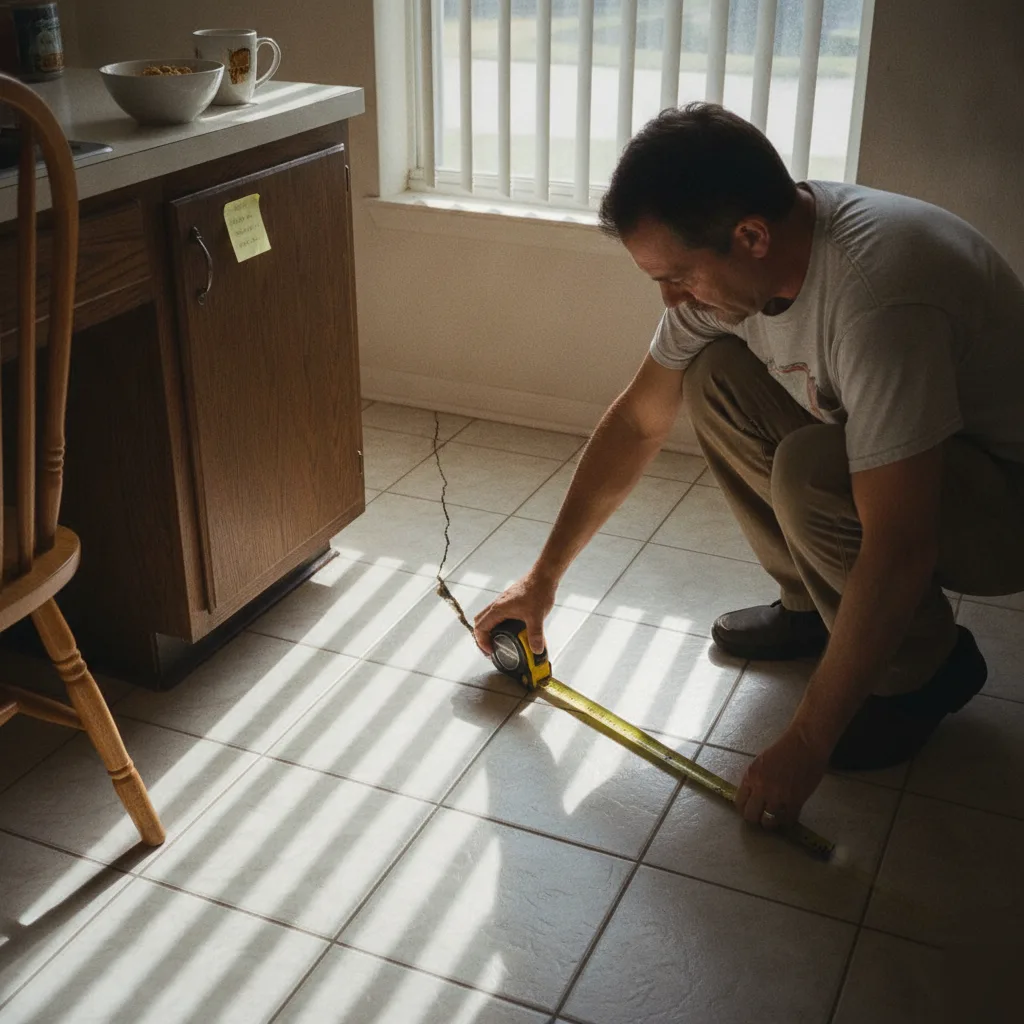
Most folks don't wake up thinking about their foundation. They notice something small, like a door that sticks or a crack running across the living room wall. Then one day, they realize the tile in their kitchen has a gap that wasn't there six months ago.
This is a common start for homeowners in Azalea Park, FL, who may require structural construction work in east Orlando. The sandy soils here shift, particularly near Lake Underhill Road where the water table often sits close to the surface. Minor issues can become significant if not addressed early.
Here's what to watch for:
- Cracks in drywall, especially diagonal ones near door frames or window corners
- Doors or windows that won't latch properly or drag against the frame
- Visible gaps between the baseboard and the floor
- Uneven or sloping floors you can feel when you walk across a room
- Cracks in the exterior stucco or block, even hairline ones
We see these signs every week. Often, a homeowner will say, "I thought it was just the house settling." While some settling is normal, two or three of these symptoms appearing together usually point to a deeper issue beneath your slab.
We often see scenarios like this: A family off Woodbury Road calls because their back door won't close right. We inspect and find the slab has dropped almost an inch on one side. The soil underneath has eroded or compressed, meaning the concrete no longer has solid support. This is when injection pier installation becomes the right call.
Don't wait for cracks to widen. Foundation movement doesn't reverse itself; it usually worsens with each rain cycle. Here in Azalea Park, we certainly get plenty of rain. If you're seeing any of these signs, a free estimate can tell you what's happening under your home. There's no need for guesswork.
Why Central Florida's Soil and Seasons Drive Foundation Movement
Most people in Azalea Park don't think about what's under their slab until something cracks. But the ground beneath homes here in the 32807 zip code constantly shifts. We see evidence of this every week.
Central Florida has a mix of sandy soils and pockets of clay. This combination reacts to moisture. During the rainy season, water saturates sandy layers and softens clay deposits under your foundation. Then, the dry months pull that moisture back out. The soil shrinks, and your slab settles unevenly. According to the Florida Geological Survey, much of Orange County sits on karst terrain. This means the limestone beneath the surface can dissolve over time and create voids that allow soil to collapse downward.
Azalea Park presents unique challenges. Homes near Lake Underhill Road and areas closer to Lake Barton are often at lower elevations. Water tables run high in these spots, so seasonal fluctuations have a greater impact. You might notice a door that sticks in August but swings freely in January. This indicates active movement beneath your foundation with each weather cycle, not a one-time settling event.
Beyond rain, other factors contribute. Irrigation systems, broken pipes, or even poor drainage from a neighbor's yard can push extra water under your slab. Saturated sandy soil loses its structural integrity and shifts. This creates gaps between the bottom of your concrete and the ground that should be supporting it.
Why does this matter for injection pier installation? Because the solution must match the problem. Surface-level patches won't stop foundation movement when the soil itself is the underlying issue. Injection piers go deep enough to bypass unstable upper layers. They reach load-bearing strata that don't shift with the seasons. This makes the difference between a repair that lasts and one you'd be redoing in five years.
Not sure if your foundation is actually moving or if you're just seeing normal settling? That's a fair question. We offer a free estimate so you can find out before it gets worse.
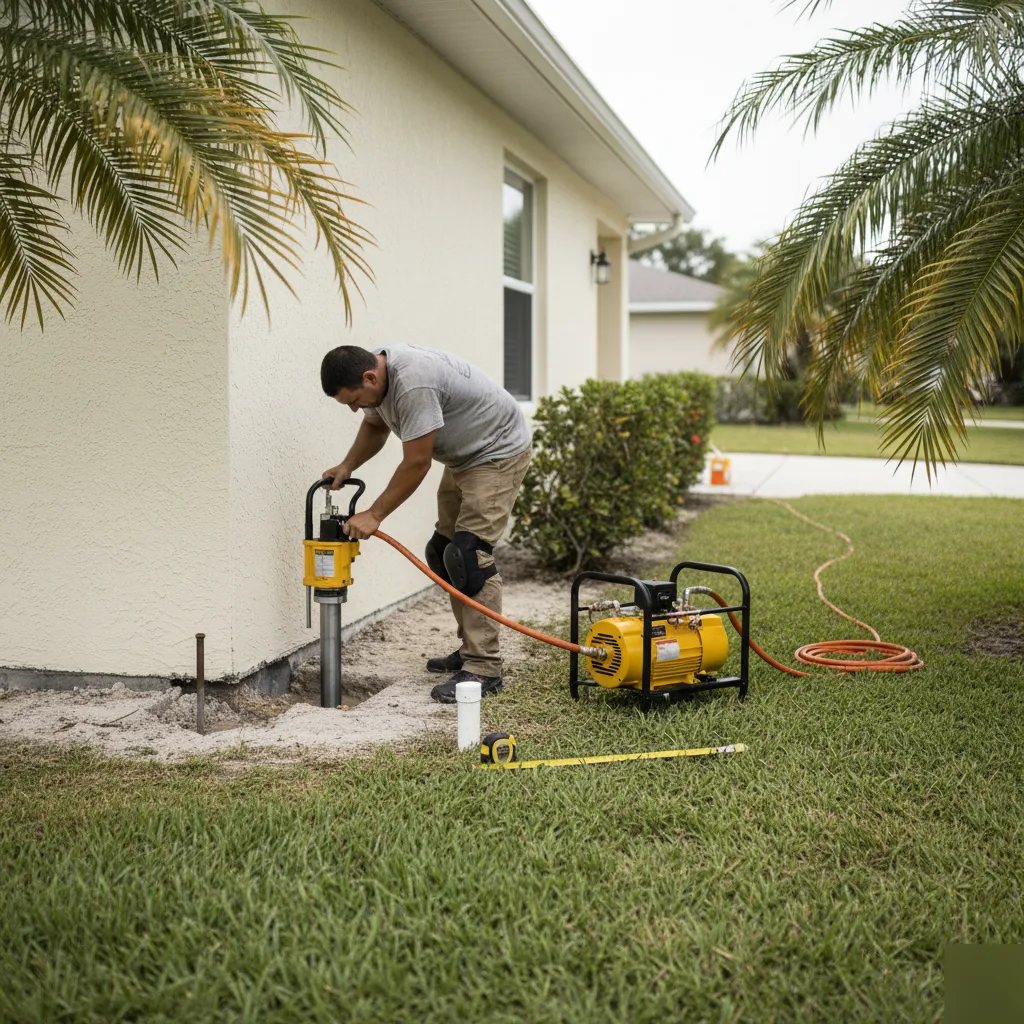
How Injection Pier Installation Works Step by Step
People often ask what happens during the process. It's a fair question. Here's how we approach injection pier installation from start to finish.
- Drill the access point. We bore a small, few-inch-wide hole through your slab at the spot our assessment identified, causing minimal disruption to your floor.
- Drive the pier sections. Steel pier tubes are driven down through the hole, one section at a time. This continues until they hit load-bearing soil or bedrock. In Azalea Park, that depth varies. Homes closer to Lake Underhill Road often sit on sandier soil, requiring deeper pier placement.
- Inject the structural grout. Once the pier is seated in stable ground, we pump high-strength grout through the pier shaft. This fills voids around the pier and secures the system. The grout cures quickly, bonding the pier to both the soil below and the slab above.
- Lift and stabilize. Using hydraulic pressure through the pier system, we carefully raise the settled section of your foundation back toward its original position. We monitor elevation with laser levels at multiple points to precise, controlled movement.
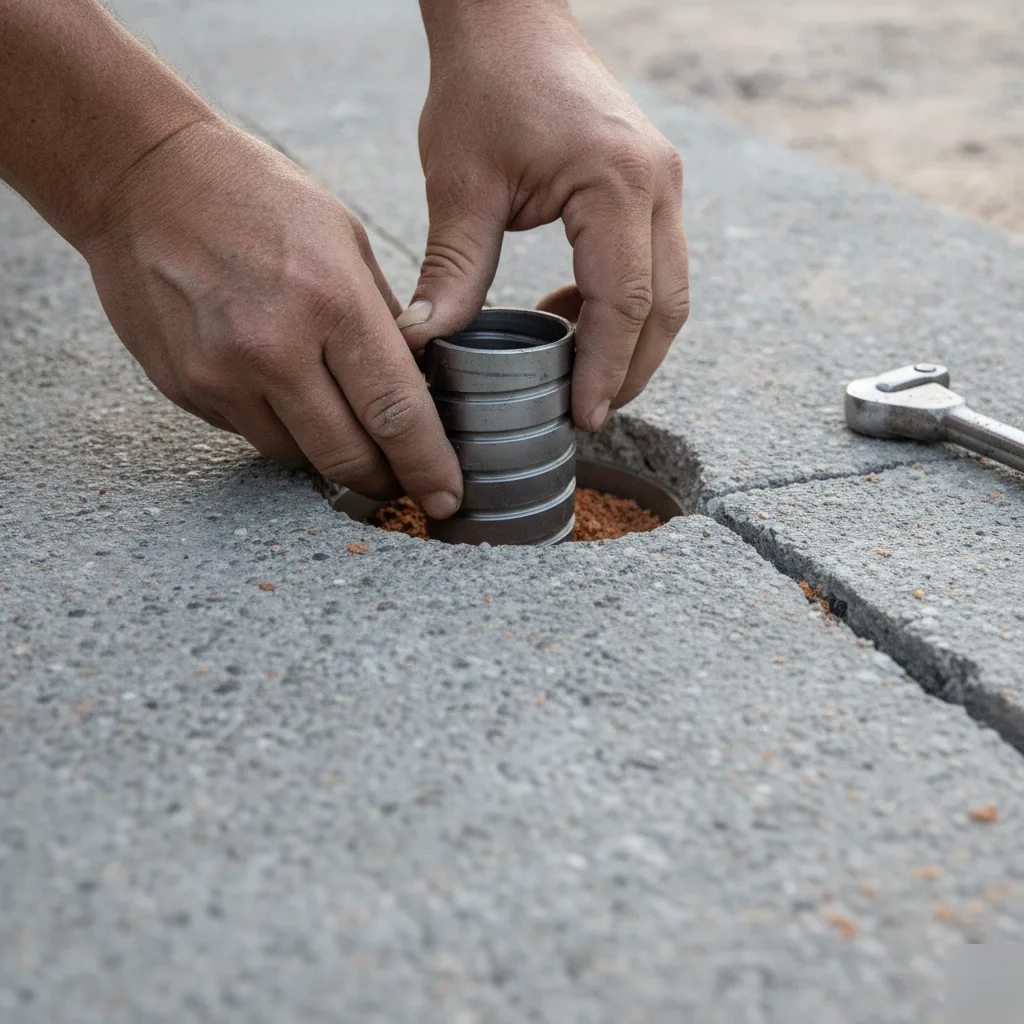
- Cap and finish. The access hole gets patched and sealed flush with your existing slab. Most homeowners can't even tell where we worked after a couple of weeks.
The whole process usually wraps up in a single day for most residential jobs. We've done this on block homes in the Colonial High School neighborhood that took half a morning. And we've worked on larger structures off Semoran Boulevard that needed a full crew for two days. Every house is different.
We often hear surprise at how quiet the work is. There's no massive excavation happening in your yard, and no heavy equipment tearing up landscaping. The process works from inside or directly next to your foundation, preserving your property's condition.
The real advantage lies in what happens underground. The piers are not merely resting in loose soil. They are anchored in rock or dense bearing soil, then secured with structural grout that won't wash out or shift. This provides lasting foundation stability for your home.
What Azalea Park Homeowners Should Expect After Installation
After our crew has finished the work, what comes next? This is a key part of the process that matters just as much as the installation itself.
Right after we finish, you'll notice small injection ports in your slab or foundation wall, about the size of a quarter. They are sealed flush and will blend in within a few weeks. Any minor cosmetic cracks patched during prep will need time to cure, which is normal for our climate here in the 32807 zip code, where humidity stays high most of the year.
The First Few Weeks
Your foundation won't shift overnight. But here's what you should watch for in those early days:
- Check doors and windows that were sticking. Many will begin operating more smoothly within the first week or two.
- Observe any drywall cracks you'd noticed. Some will close on their own as the structure settles into its corrected position.
- Walk the perimeter of your home near Lake Underhill Road, or elsewhere in Azalea Park. Confirm that gutters and downspouts are directing water away from the foundation.
We see this every week. A homeowner might call, worried because a hairline crack appeared in a new spot. This is simply the house adjusting to being level again. The structure spent months or years settling unevenly; it requires some time to stabilize in the correct position.
Long-Term Performance
Injection piers are designed to reach load-bearing strata deep below the sandy surface soils common near the Orlando Executive Airport corridor. Once cured and locked in, they provide lasting stability.
We recommend a simple visual check every six months. Walk around your home. Look at the baseboards. Open and close your doors. This takes five minutes and helps you monitor your foundation's condition.
And if something appears amiss down the road? Our lifetime warranty means you call us, and we return. We believe in direct, honest service. Whether homes near Dover Shores, older blocks closer to Semoran Boulevard, or newer builds further south, we have installed injection piers across all of them, and we stand behind every one.
Orange County Permits and Choosing the Right Pier Method
Most homeowners in Azalea Park don't realize that injection pier installation often requires a permit from Orange County. The requirement depends on the scope of work and whether structural elements are involved. We handle the permit process for you, keeping you informed.
Orange County typically requires a building permit when foundation repair affects load-bearing capacity. If we are stabilizing your home's foundation with injection piers, we will pull the permit, schedule the inspection, and make sure everything meets code. You won't have to stand in line at the county office or figure out which forms to file. We have done this hundreds of times across the 32807 zip code, and what inspectors look for.
How We Pick the Right Pier Method for Your Home
Not every foundation problem calls for the same fix. We evaluate this on every job. Injection pier installation works well in specific soil conditions and for certain types of settlement. However, sometimes a home near Lake Underhill Road sits on fill dirt that responds differently than the sandy soil two blocks over. The repair method must match the ground conditions.
Here's what goes into that decision:
- Soil type and depth to stable bearing strata
- How much settlement has already occurred
- Whether the home is slab-on-grade or pier and beam
- Access around the foundation perimeter
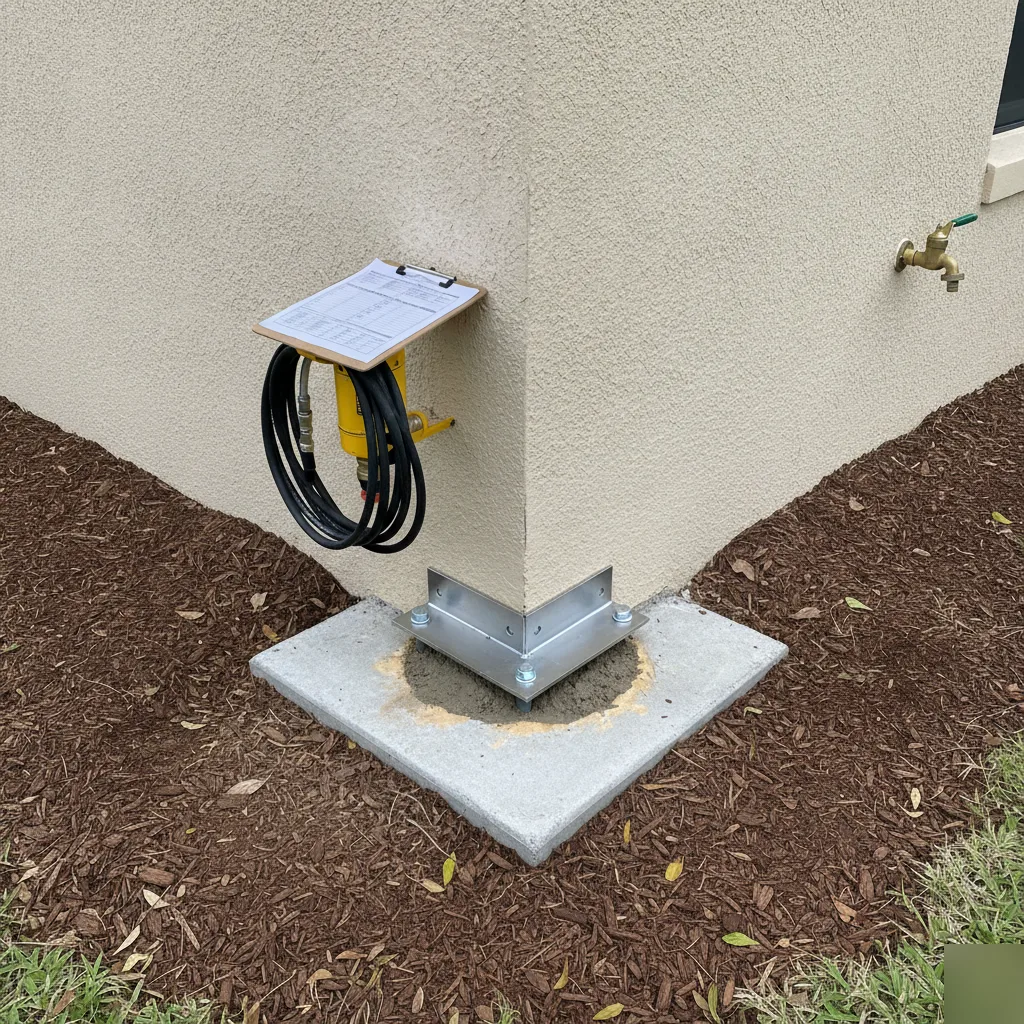
We also consider whether steel push pier installation or helical pier installation would be more effective. Sometimes, a combination approach makes the most sense. We've seen homes on the east side of Azalea Park where one side of the foundation needed injection piers and the other side required a different solution. Each house presents unique structural needs.
Find out exactly what's happening under your home — book a free estimate.
Get your free estimate