
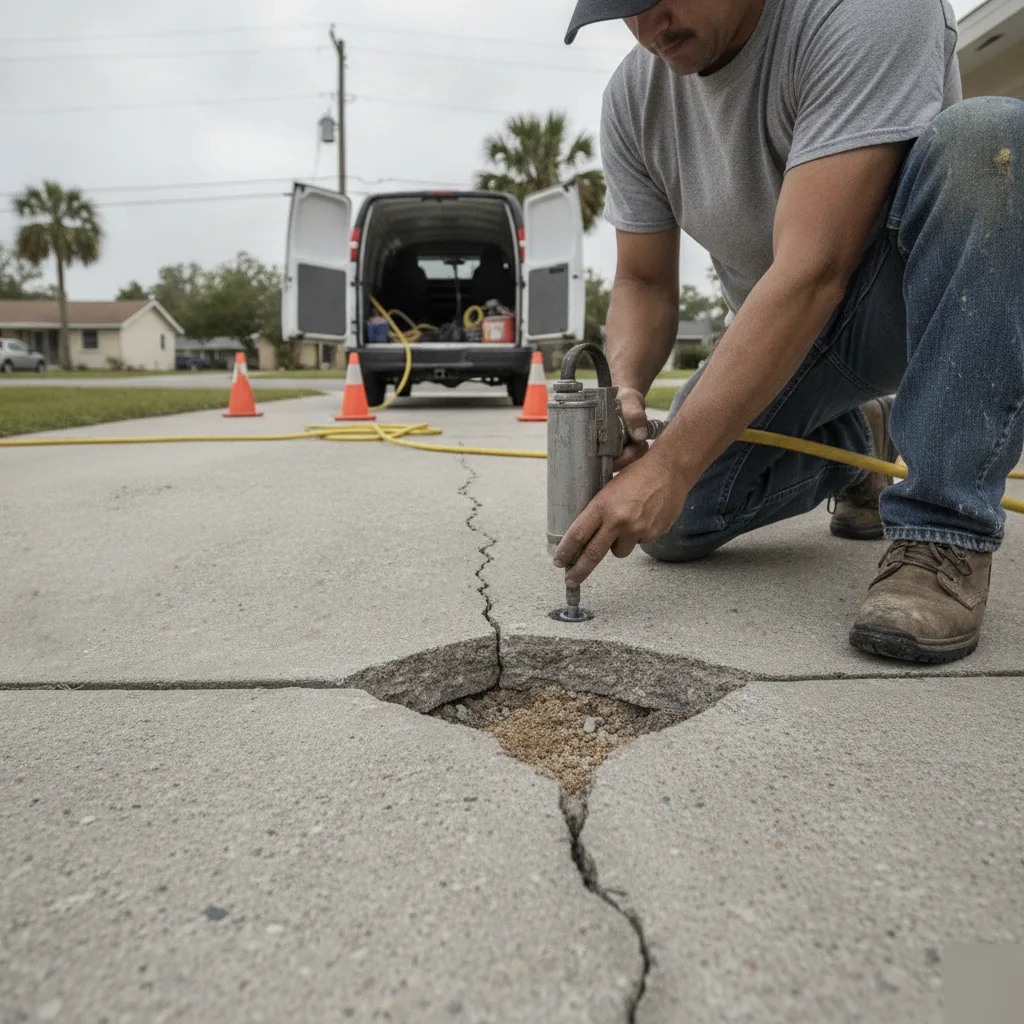
Why Slab Support Soil Fails in Azalea Park
When you live here in Azalea Park, FL, you probably don't give much consideration to the ground under your concrete. Or at least, you don't until you begin to notice that your front door is sticking, or a crack shows up in your garage floor. At that point, Azalea Park Foundation Repair is often who local homeowners turn to for help. The earth under your slab is an active substance, and under the Central Florida climate, it frequently loses strength and begins to crumble.
We have a mix of sand and organics in Central Florida, and in Azalea Park, we frequently run into a fine sand that lacks the inherent cohesion to self-compact. The presence of a high water table on, or near, Lake Underhill Road and in low areas closer to Lake Barton results in soils that move substantially during each significant rain event; that is something we see here week after week.
Here are the specific conditions that result in poor soil support under slabs here:
- Poor drainage causing washout. Water passes through sand quickly, which allows fine material to be carried with it, often leaving sizeable cavities behind.
- Organic breakdown. Many older Azalea Park properties will have tree roots or fill materials buried under them. These decompose over long periods of time, resulting in soil settling that can damage slab stability.
- Density loss. Sand not properly compacted in the initial build will gradually begin to loosen and settle under the load of the concrete slab sitting on top.
- Wetting and drying cycles. The wet season brings water into the sub-grade, the dry season removes moisture. This is a repeated cycle that puts strain on the soil over time.
It's a recurring situation. The water finds a place it shouldn't be and the sand moves. The slab sits on the voids instead of the substrate.
It might start with a small depression you see in the garage floor. Or perhaps the outside corner of your pool deck is half-inch low. Maybe it's a hairline crack in your driveway that widens over time. These aren't happenstance. These mean the underlying soil is losing support for the slab.
And every day that you postpone addressing a slab stability problem, things get worse. Voids under the slab don't fill on their own, they get bigger. This is why soil stabilization is important in 32807. These are the conditions that make proactive treatment necessary, and catching these types of issues early prevents them from becoming a much bigger expense.
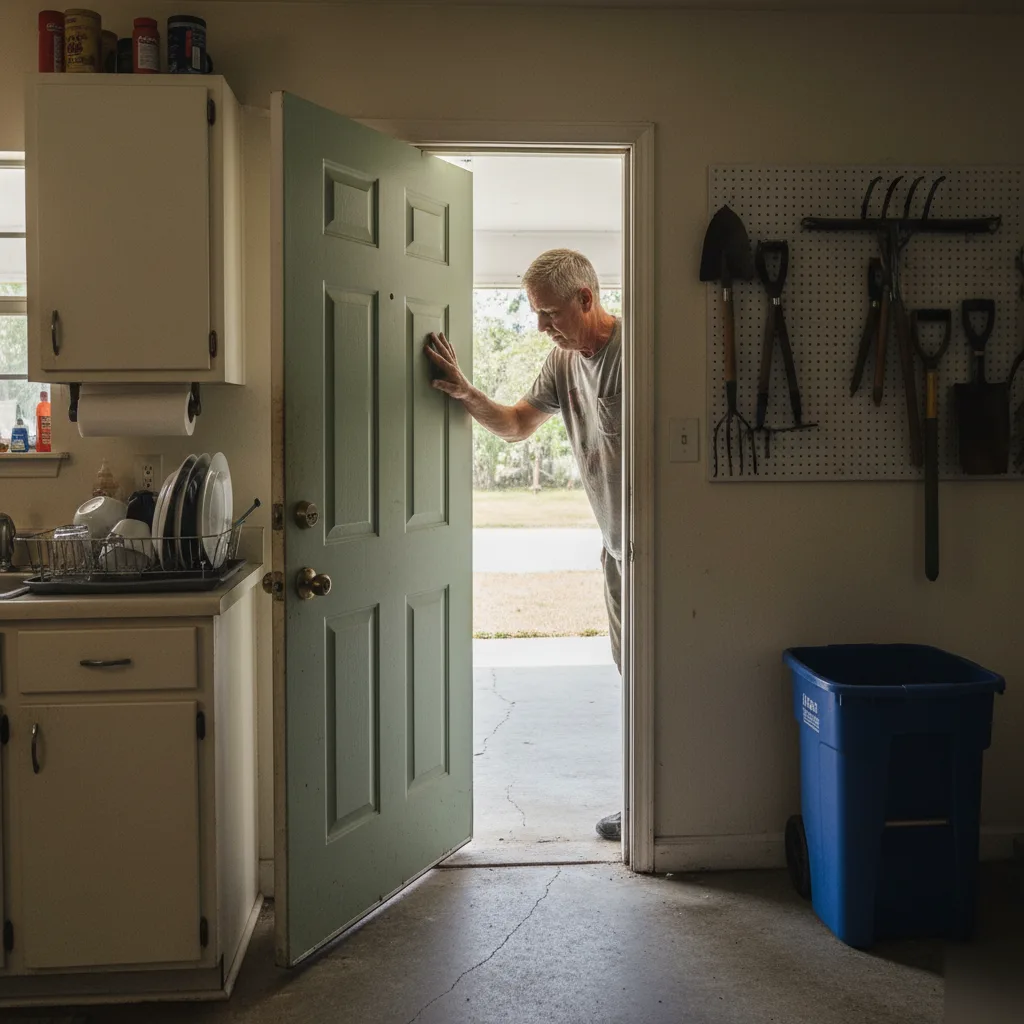
How to Know If Your Slab Requires Stabilization
Generally, customers don't call us until they start seeing something that's clearly out of the ordinary. Like a door that won't latch anymore. Or a crack that's opened up across the garage floor that wasn't there last July.
However, what we've learned through our work in Azalea Park, FL is that when you first notice these symptoms, the soil below may have been moving for months.
Orange County's subfloor is anything but simple. Layers of sand often overlay deposits of clay. Florida's seasonal rain and dry spells encourage soil to swell and contract. Movement like that can be a continuous process, and it won't magically cease.
What to Look Out for
Some indicators are barely perceptible. Others are more pronounced. Most homeowners throughout Colonial High School or along the residential streets near Lake Underhill Road report our services after seeing any of the following:
- Cracks that angle through corners at doors or windows. (Especially if they are becoming wider with time.)
- Floors that are clearly not level beneath your feet (when walking through a single room.)
- Gaps between your flooring and baseboard or between your walls and ceilings.
- Stair-step cracks across an exterior stucco wall following the mortar joints.
- Doors or windows that are suddenly hard to open and close or are swinging shut or open on their own.
These are not aesthetic concerns; these are structural issues that mean your concrete slab is no longer able to bear the load on top of it. Covering a crack with fresh wallboard or re-attaching a door will not remedy what is taking place below the surface.
An example that is too common: A homeowner notices a thin crack through the living room. They seal it, paint over it and it's left be. Six months later, you have a crack that's a quarter of an inch in width. Now the tiles in the kitchen are loosening. Now, you have to do far more work than was necessary.
The sooner you act, the better. The Federal Emergency Management Agency reports that soil and foundation damage cost billions annually throughout the country. Most of this destruction continues to get worse due to homeowners not being proactive in response to the warning signs.
If you think that something might be wrong with your slab in Azalea Park, do not dismiss this. Pay attention to what you're seeing. The soil will have something to tell you.
How Does the Soil Stabilization Method Work? — Step-by-Step
People will often ask me what occurs on the day of our arrival. A valid inquiry. The procedure is easy to follow once explained.
Here is what a typical project in Azalea Park entails:
- On-site investigation & subsurface evaluation. We'll visit the property, assess what's above, and understand what lies beneath. Soils around Lake Underhill Road operate very differently than those around South Goldenrod Road. The nature of the soil is a major factor.
- Injection location identification. We'll precisely mark where material must be injected. There is no guessing here. We use data gathered from the evaluation process to identify unstable areas, hollowed-out spots and areas lacking structural integrity.
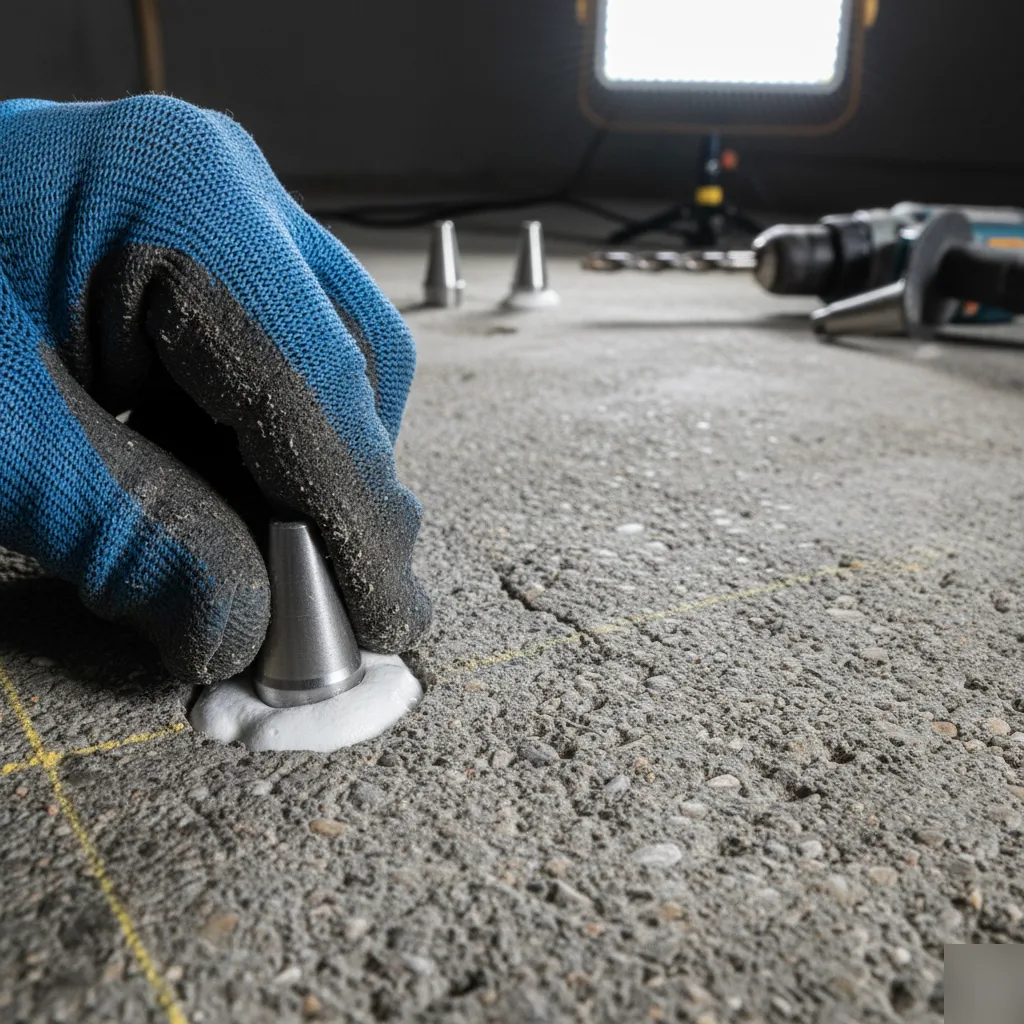
- Polyurethane foam injection. At each marked point, we'll drill a small hole and then inject an expanding foam deep into the problematic soil, where it will fill any existing voids, compact the loose material, and bind to the surrounding soil to provide a solid base. The mixture cures quickly, generally within minutes.
- Monitoring and checking levels. While the foam is being injected, we monitor the ground's elevation so it's responding as intended. If a slab only needs to move 1/4 inch, then we'll ensure that it does exactly that.
- Final verification. Once the injection is done, we'll make sure everything is level and the soil is now stable. The small drill holes will be patched, and we will leave your work site clean.
We can generally finish most residential projects in Azalea Park within a day; this typically comes as a surprise to people.
There's no heavy digging, no torn-up yards, no weeks of drying time before concrete is cured; the foam we employ is impervious to moisture and won't wash away during Florida's summer downpours (important for the 32807 zip code, where you'll see a lot of water during these afternoon showers), and the chemical stabilization agents work by binding soil particles together and making them less sensitive to moisture, according to the EPA Stormwater Chemical Stabilization Guide, which explains how these chemicals can work under saturated conditions, and we've done this on everything from a Colonial High School residential driveway to a commercial slab near SR 408. More often than not, the hardest part is explaining to the homeowner that we're actually finished already.
How to Stabilize Ground as a Preventive Step Before Sinkholes in Orange County
Orange County is characterized by karst topography, meaning that limestone lies underneath, which naturally dissolves over time and forms voids within the soil, voids that eventually become sinkholes, and the presence of sandy topsoil and a limestone foundation in Azalea Park means stabilization is a wise step to take, since it tackles the issue early, while it's still minor.
Our team receives a lot of calls from Azalea Park homeowners in the Lake Underhill area regarding cracked or uneven driveways, patio areas tilting toward the house, etc. This isn't cosmetic: It's a signal that something is happening to the soil below. Stabilizing your ground before your issue gets so bad that you have to replace it with new ground is what sinkhole mitigation is all about. As per the Florida Geological Survey, Orange County is one of the top sinkhole-vulnerable counties in the state, which isn't meant to scare you but rather help you take the correct preventative measure at the right moment.
Why This is a Sinkhole Prevention Process
While some sinkholes appear without notice, most form over a period of time, typically over months or years, as an underground void becomes larger, and soil stabilization fills these voids and strengthens the surrounding soil. This is how we do this:
- We use ground-penetrating radar technology (or similar) to identify the location and size of underground voids.
- We drill a handful of small injection holes strategically around the affected area.
- We inject specialized polyurethane foam or cementitious grout deep into the soil to fill the voids and compact loose earth.
- We observe surface elevation changes in real-time so the ground is settling properly as we fill the cavities.
- Once stabilization is achieved, we confirm the results with follow-up measurements and a detailed visual assessment.
By intervening early, you save yourself the massive disruption and expense of dealing with a fully developed sinkhole after the structural damage has already occurred. We've been servicing homeowners in the 32807 zip code for years now, and they usually appreciate the heads-up we provide. When you see warning signs in your backyard or driveway, don't wait for it to get worse. Call us. We can help you determine whether or not there's a problem that needs immediate addressing.
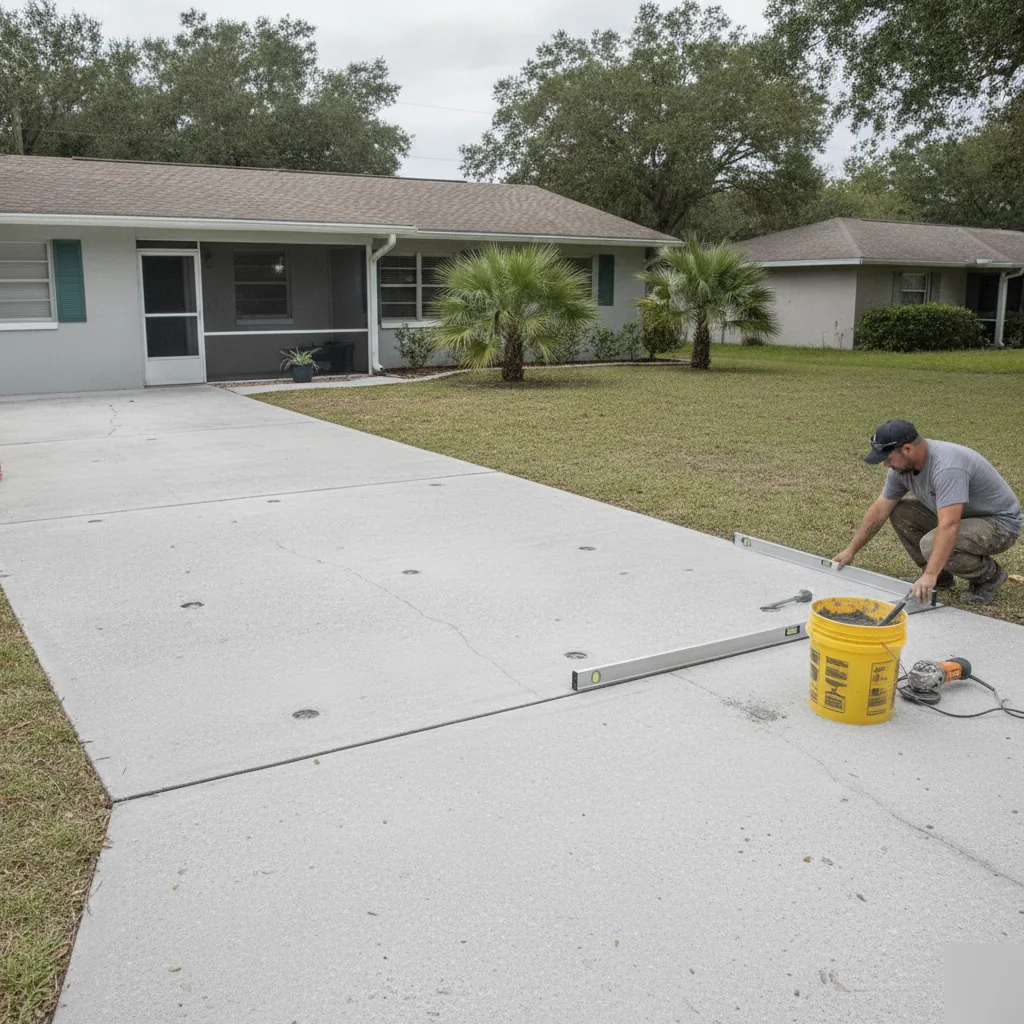
What Happens After Stabilization
Our teams take pride in finishing their jobs cleanly and leaving your property looking almost exactly the same. There are no massive holes or heavy machinery tracks left behind. Once we drive away, you might not even realize we ever showed up because the injection points are so small. Most of our customers tell us that they were pleasantly surprised by how minimal the impact on your property was.
The treated soil begins to cure immediately. The exact timeline for the material to reach full strength will vary depending on the type of material selected and what kind of soil conditions you have. Just let us know how you're doing and we'll go over the expected timeline before we wrap up. In the vast majority of cases, the treated soil reaches peak stability and can support intended loads within just 24 to 72 hours. It is incredibly efficient.
Safety Monitoring
We ask all of our customers throughout the 32807 zip code to keep an eye on their properties after we have left for a few months just to be safe. We recommend keeping track of the following indicators to be sure the stabilization was successful:
- If your doors and windows were previously sticking, you should be able to open and close them smoothly again.
- You should stop seeing any existing cracks in your block wall or drywall grow larger.
- Your rainwater and water drainage should look different in spots around your property.
- Your floors should no longer seem uneven or bouncy when you step on them.
Many homeowners report that they notice the improvements right away. Maybe that front door you used to have to lift by hand every morning to make sure it was closed is now swinging shut on its own? That is a good thing. It means the ground is holding the home in place again.
Should you have any questions, or think something does not seem right, please call us to come take a look. It will cost you nothing at all. Your sinkhole remediation doesn't end the moment we pull out of your driveway. If you need us, we'll come right back.
You also should do your part to keep your gutter system and downspouts cleaned and cleared out to prevent water from accumulating near your home. Our team fixes what is below the ground, but what you do on top also plays a part in how well it will last. The sandy soil in Azalea Park can be especially unstable when saturated with water, so it's critical to keep your foundation as dry as possible.
You probably won't have to give this issue a second thought for quite a while. That is what the whole procedure is for.
Catch slab movement early — book a free soil stabilization estimate.
Get your free estimate