
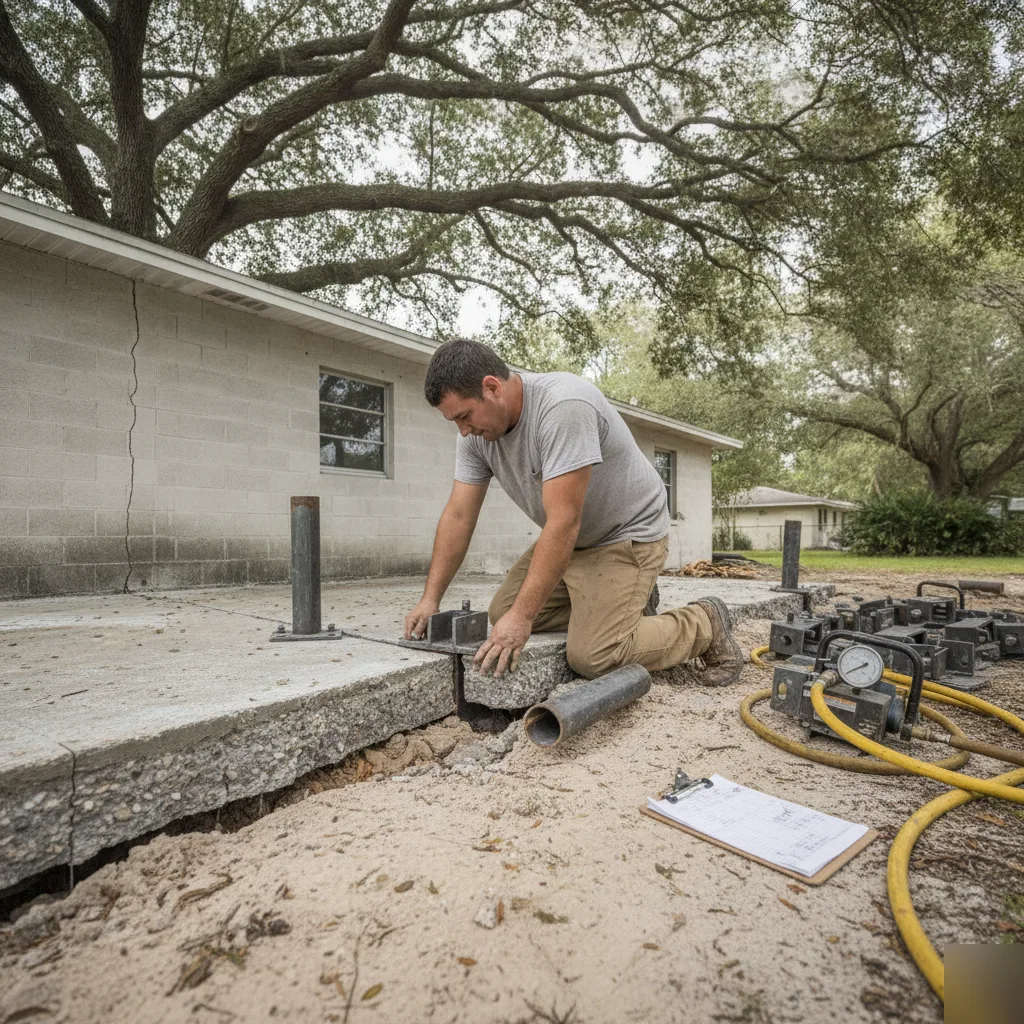
Signs Your Foundation Is Settling and Needs Steel Push Piers
You might not notice it right away. A crack here, a sticky door there. But your house is trying to tell you something.
Foundation settling in Azalea Park, FL happens more often than most people think; as a residential and commercial construction contractor, we witness sandy soils and a fluctuating water table near Lake Underhill Road create conditions where the ground beneath your slab can shift over time. We see this every week in homes across the 32807 zip code. The signs usually start small before they get serious.
Here's what to watch for inside and outside your home:
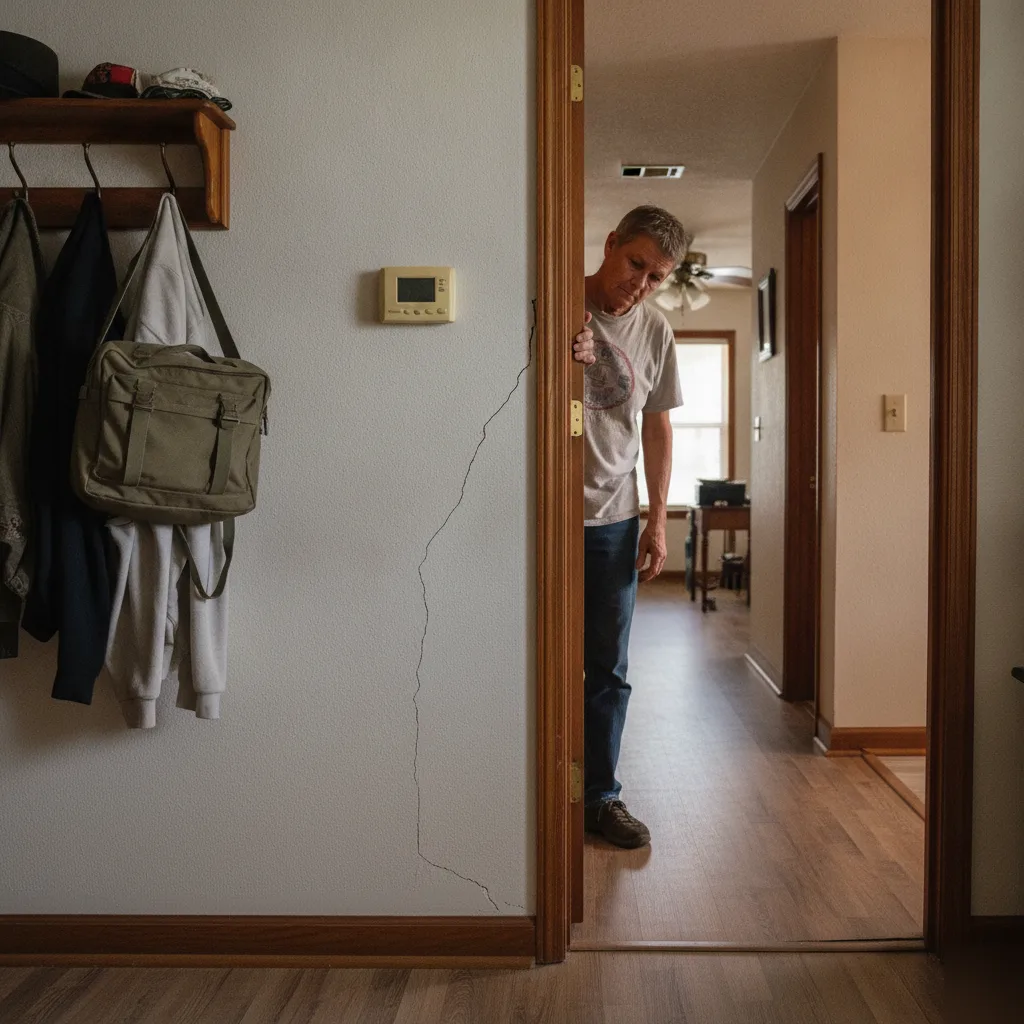
- Diagonal cracks running from the corners of windows or door frames
- Doors or windows that suddenly won't close right or stick halfway
- Visible gaps between walls and the ceiling or floor
- Uneven or sloping floors you can feel when you walk across a room
- Cracks in exterior stucco or block that weren't there six months ago
Many homeowners tell us, "I thought it was just the house settling." There's a difference between normal settling and active foundation failure. Normal settling happens in the first few years after construction and stops. What we're talking about is ongoing movement, the kind that gets worse if you ignore it.
You're standing in your kitchen near the back of the house and set a ball on the floor. It rolls toward the wall. That slope didn't happen overnight. Your foundation has been sinking on one side, probably for months or even years.
Many homeowners in Azalea Park call us unsure if what they're seeing is a real problem, often thinking they might be overreacting. They're not. The cracks and gaps they noticed are early warning signs that the soil beneath the foundation can no longer support the load.
But here's the good news. When you catch it early, steel push pier installation can stop the settling and often lift the foundation back toward its original position. The sooner you act, the less damage your home takes.
Why Older Slab Homes Settle Faster in Central Florida
Most homes in Azalea Park, FL were built between the 1950s and 1970s. That matters more than you'd think.
Back then, site prep was different. Builders didn't always compact the fill soil the way we do now. They poured slabs over loose sandy soil, and for a while everything looked fine. But decades of Florida rain cycles do real damage underneath a foundation. The sandy soils common across Orange County drain fast during dry spells. They then swell when heavy storms roll through. This constant back-and-forth loosens the ground beneath your slab. We see this on almost every job near Lake Underhill Road and the neighborhoods south of East Colonial Drive.
Here's what actually happens underground. Organic material in the fill soil breaks down over time. Pockets form, and water channels through them, washing fine particles away. The soil volume shrinks, your slab loses support in spots, and gravity takes over. One corner drops a quarter inch, then half an inch. Before you know it, you've got a crack running across your living room floor.
Older homes are hit hardest for a few reasons:
- Thinner slabs with less reinforcement than modern building codes require
- Original fill soil that was never properly tested or compacted
- Decades of root growth from mature trees pulling moisture from under the foundation
- Aging or broken plumbing lines leaking water directly into the sub-slab soil
We've pulled up carpets in Azalea Park homes and found cracks the homeowner didn't even know were there. In many cases, the house sat fine for 30 or 40 years, but then settlement picked up speed once the soil finally gave way. And it rarely stops on its own.
Steel push pier installation solves this because it bypasses that weak surface soil entirely. The piers reach down to load-bearing strata that won't shift with the seasons. For homes in the 32807 zip code sitting on decades-old fill, that's the only real long-term fix.
What the Steel Push Pier Installation Process Looks Like
We often get asked, "What actually happens on install day?" It's a fair question. Here's how we approach the process, step by step.
- Excavation around the footing. We dig small access points along the foundation where each pier will go. These holes are tight and controlled. We're not tearing up your whole yard near Lake Underhill Road or anywhere else in Azalea Park.
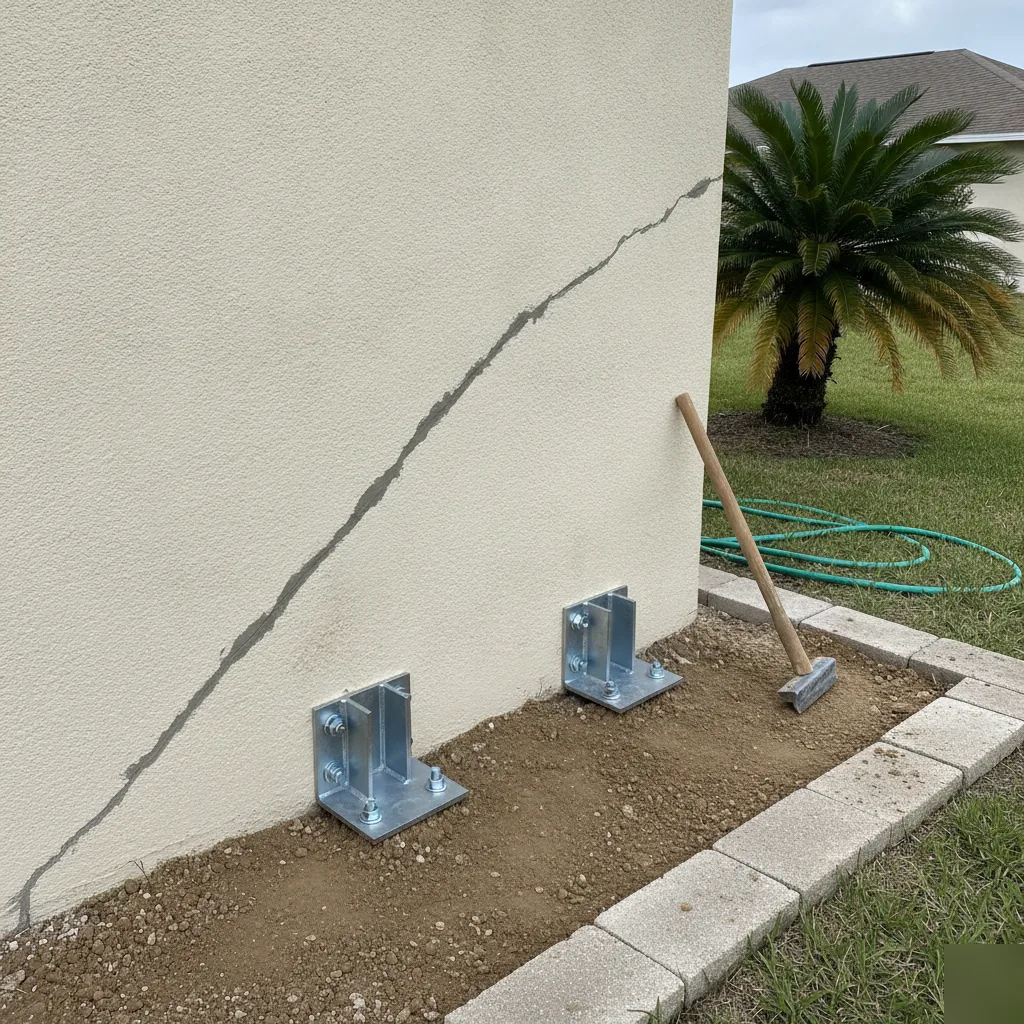
- Bracket placement. A heavy steel bracket gets mounted directly to the underside of your foundation footing. This bracket is what connects your home's weight to the pier below.
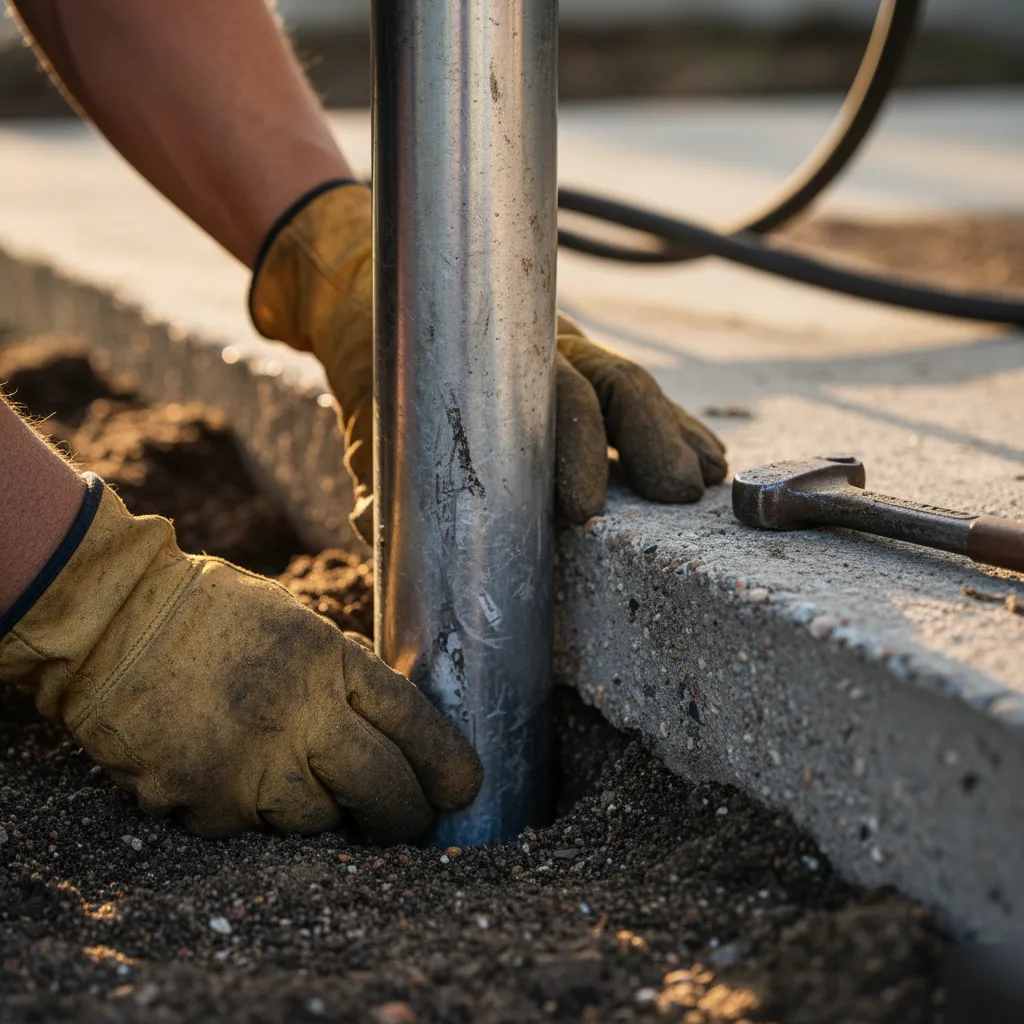
- Driving the pier sections. Steel tubes get hydraulically pushed one at a time through the bracket and down into the ground. Each section locks into the next. The pier keeps going until it hits load-bearing soil or bedrock that can actually hold your home's weight.
- Load testing. Once the pier reaches refusal depth, we verify it can support the structure. The hydraulic equipment tells us exactly how much resistance the soil is giving back. No guessing.
- Lifting and stabilizing. With all piers driven and tested, we use the hydraulic system to carefully raise the foundation back toward its original position. This is the part where you might see cracked drywall gaps start to close.
- Backfill and cleanup. We fill in the excavation points, compact the soil, and leave your property clean.
The whole process usually takes one to two days for a typical home. Most of the work happens outside, so you can stay in your house the entire time.
One thing we notice on almost every job in Azalea Park is how surprised homeowners are by how little disruption there is. No massive equipment blocking the driveway for a week. No jackhammering through your slab unless interior piers are needed. It's quieter and faster than people expect.
And because the piers are driven by the actual weight of your structure, the system is self-proving. The foundation itself confirms each pier can do its job before we ever start the lift. That's not a sales pitch. It's just how the physics works.
Karst Geology and Knowing When Push Piers Are the Right Call
Central Florida sits on limestone. That's the short version. The longer version matters more if your home in Azalea Park, FL is showing cracks or sinking on one side.
Limestone dissolves over time when groundwater moves through it. Geologists call this karst terrain, and Orange County has plenty of it. The Florida Geological Survey has mapped karst features across the region for decades. What that means for you is simple. The ground under your foundation isn't always as solid as it looks. Sandy topsoil near Lake Underhill Road might sit on top of clay pockets, loose fill, or eroded limestone layers. When those layers shift or compress, your slab moves with them.
So how do you know steel push pier installation is the right fix? Not every foundation problem calls for piers. Here's what we look for when we assess a home:
- Cracks in block walls or drywall that keep growing over weeks or months
- Doors and windows that stick, bind, or won't latch properly
- Visible gaps between the foundation and the exterior walls
- One side of the house sitting noticeably lower than the other
- Floors that slope enough to feel it when you walk across the room
We see these signs every week in the 32807 zip code. The cause traces back to soil movement beneath the foundation. Push piers work because they bypass all that unstable material. They're driven down through weak soil until they hit load-bearing strata, sometimes 15 to 30 feet below grade. That's where your home's weight actually gets transferred.
But not every situation calls for push piers specifically. If your home has a pier and beam foundation with minor settling, a different approach like block and base foundation repair might make more sense. That's why a proper evaluation matters before anything gets installed.
We've worked on homes near the Orlando Executive Airport corridor where the fill dirt was brought in decades ago during development. That old fill compresses unevenly, leading to the differential settlement push piers are built to correct. Wondering if your situation fits? Give us a call for a free estimate and we'll tell you straight.
Permits, Licensing, and What to Confirm Before Hiring in Azalea Park
Here's something most homeowners don't think about until it's too late. Not every company doing foundation work in Azalea Park actually carries the right credentials. We've seen it more times than we'd like to admit. A crew shows up, drives piers, leaves, and then the homeowner finds out the work wasn't permitted or the contractor wasn't properly licensed in Orange County.
Steel push pier installation in Azalea Park, FL falls under structural repair. That means the contractor needs a valid Florida general contractor's license or a specialty foundation license. Don't just take someone's word for it. You can verify any license through the Florida Department of Business and Professional Regulation's online portal. It only takes about two minutes.
What You Should Ask Before Signing Anything
Before any work starts on your property near Lake Underhill Road or anywhere else in the 32807 zip code, there are a few things worth confirming:
- Active Florida contractor license with no disciplinary actions
- General liability insurance and workers' compensation coverage
- Experience with steel push pier installation specifically, not just general concrete work
- Willingness to pull permits through Orange County if required for your project scope
Some smaller jobs may not require a building permit. But if your home has visible structural shifting or the piers need to reach load-bearing depth beyond a certain threshold, Orange County will likely want a permit on file. A trustworthy contractor won't dodge that conversation, they'll bring it up first.
And here's what separates a good hire from a risky one. The right company carries insurance that protects you if something goes wrong during the install. We carry full coverage on every job we do in Azalea Park. That's not a sales pitch. It's just how legitimate foundation work should be done.
Time and again, the homeowners who call us after a bad experience with another company say the same thing. They never checked credentials. So check. It takes five minutes and saves you real headaches down the road.
See whether steel push piers are the right fix for your foundation — book a free estimate.
Get your free estimate