
Why Loading Dock Slabs Sink Faster Than You Expect
Most people think concrete lasts forever. It doesn't. And loading docks take more abuse than almost any other slab on your property. For expert assistance, contact Azalea Park Foundation Repair.
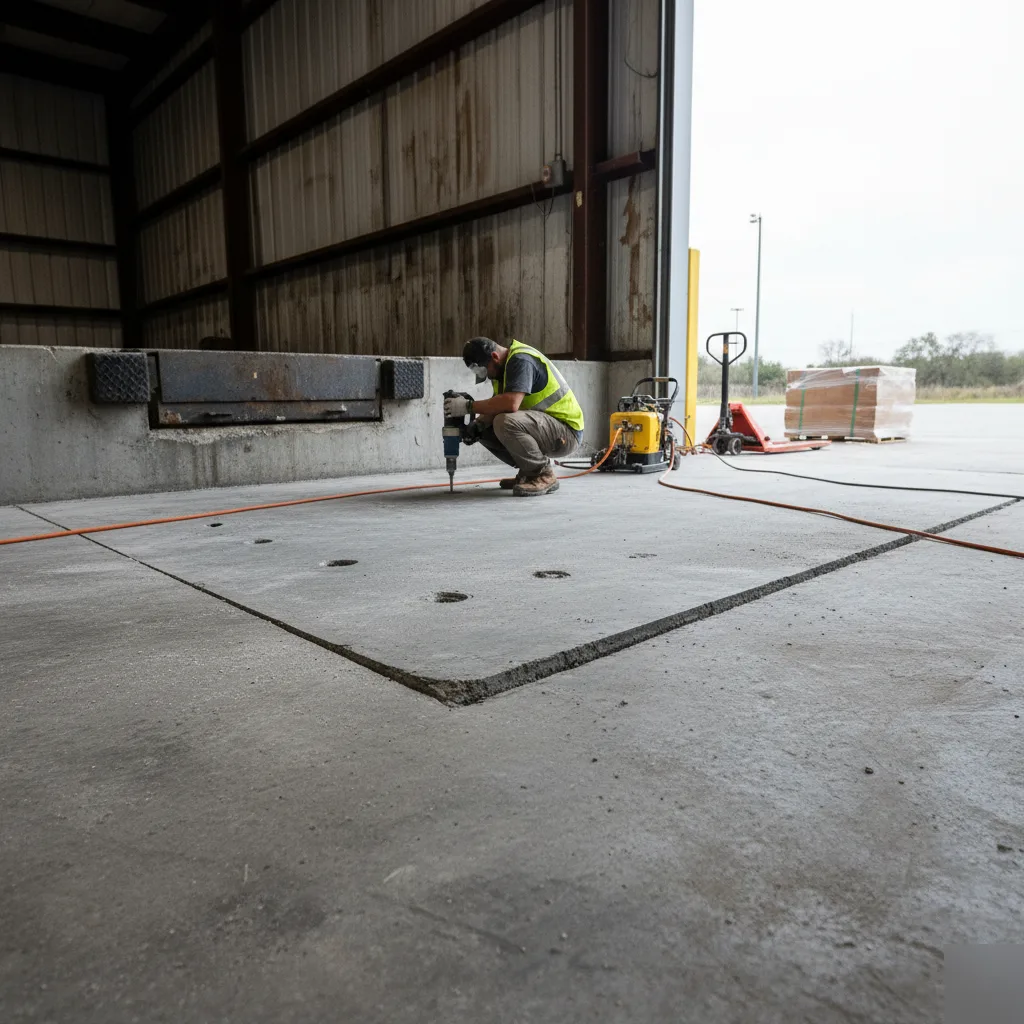
Consider what happens at a busy dock in Azalea Park, FL. Heavy trucks back in dozens of times a day. Forklifts roll across the same spots, each carrying thousands of pounds. This constant pounding does more than just wear the surface; it pushes the soil underneath into areas it was never intended to occupy. The ground compacts, shifts, and eventually pulls away from the bottom of your slab. This gap is where serious problems often begin.
We see this every week. A dock that looked fine six months ago now shows a two-inch drop at a key point. Here's why this happens so quickly around the 32807 area:
- Sandy Florida soil compacts and erodes quickly under repetitive, heavy loads.
- Poor drainage washes out critical fill material beneath the slab during our heavy rain seasons.
- Vibration from trucks loosens soil particles that were already barely holding on.
- Original backfill settling occurs when material was not properly compacted during initial construction.
Commercial properties along the Orlando Executive Airport corridor experience this often. The combination of heavy traffic and Florida's high water table causes voids to form under dock slabs faster than many expect. A single hard rainstorm can move enough soil to create a gap the size of a basketball under your concrete.
So, what does this look like from your perspective? You'll notice forklifts bouncing at the dock edge. Trailer doors won't line up correctly with the bay. Drivers start complaining about the bump or unevenness. It's a common scenario: the soil has washed out, and the slab now rests on nothing but air in certain spots.
The longer you delay, the worse it gets. Every truck that rolls over a void pushes that slab down a little more. What begins as a quarter-inch lip quickly becomes a serious safety problem and a significant headache for your operations. Loading dock concrete leveling addresses the problem before it escalates to a point where it shuts down an entire bay.
Warning Signs Your Dock Slab Needs Professional Attention
You might not think about your loading dock slab until a forklift starts bouncing. That's how most calls begin for us in Azalea Park, FL. A driver notices the ride becoming rougher, or a pallet jack won't roll straight. By then, the slab has likely shifted enough to cause significant issues.
Some signs are clear. Others are less obvious. Here's what to watch for before minor settlement grows into a full shutdown:
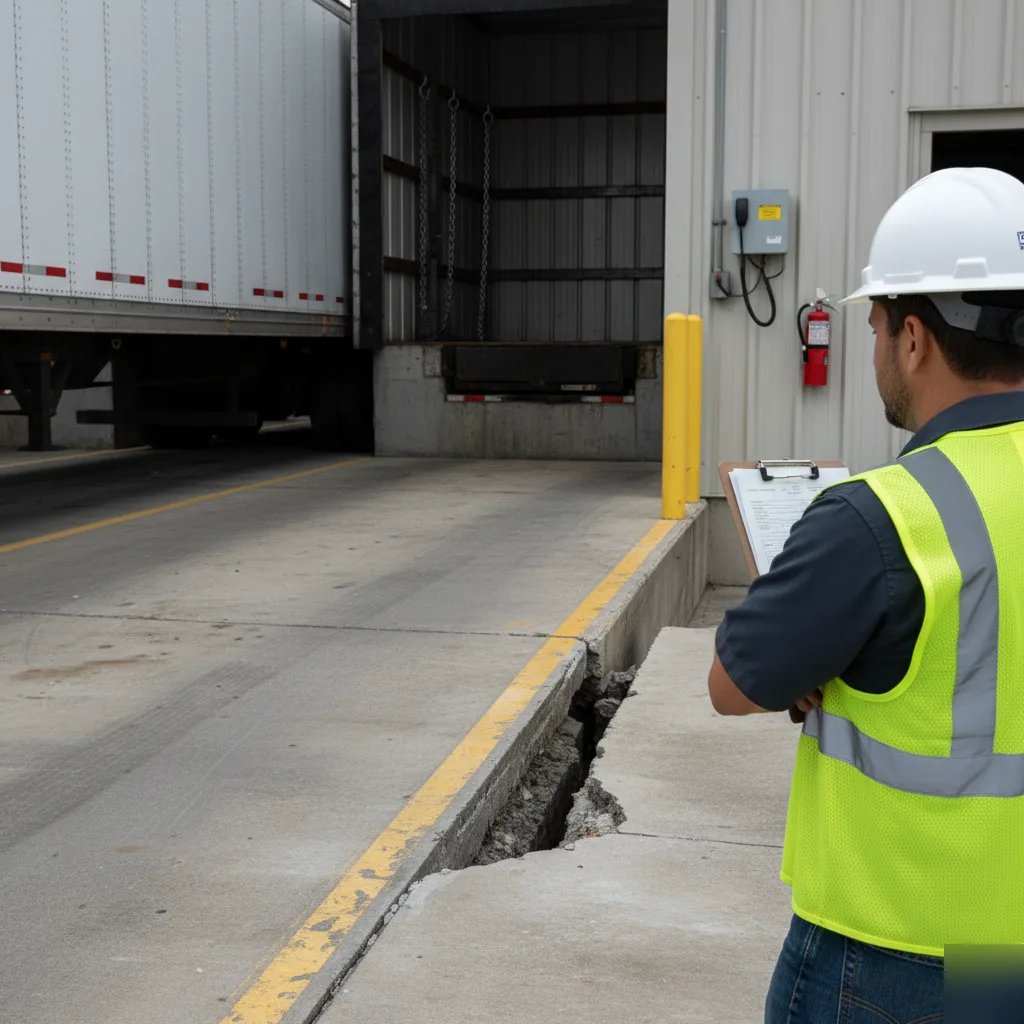
- Visible gaps between the dock slab and the building wall. Even a quarter-inch gap indicates the concrete has moved. Water infiltrates quickly, especially during our intense summer storms.
- Rocking or tipping when trucks back in. If the dock plate does not sit flush, your slab has likely dropped on one side.
- Cracks running across the approach apron. While not every crack signifies a major issue, cracks paired with unevenness usually point to soil washout underneath.
- Pooling water near the dock edge. Water should always drain away from the structure. When it collects against the slab, the grade has undeniably changed.
- Doors that won't seal properly. A settled slab affects the alignment of overhead doors and dock seals. This results in increased energy costs and pest control challenges.
We see these issues frequently at commercial properties along Semoran Boulevard and near the SR 408 corridor. Sandy Florida soil is often the primary cause. It erodes and compacts under heavy, repeated loads, and loading docks endure more concentrated weight per square foot than nearly any other slab on your property.
The damage we typically find almost always started small.
A slight dip develops into a trip hazard. A minor settlement expands into a two-inch void. That void continues to grow every time a loaded trailer pulls in. According to the American Concrete Institute, soil consolidation beneath heavy-use slabs accelerates once initial settlement begins. Delaying repairs does not save money; it only increases the scope of the repair needed.
Unsure if what you're observing is serious enough to warrant a call? This is actually quite common. Most facility managers in Azalea Park tell us they waited longer than they should have. If your dock feels different than it used to, trust that instinct and get it inspected.
Leveling vs. Full Slab Replacement for Industrial Dock Aprons
We receive this question almost every week. A facility manager near Lake Underhill Road calls and asks, "Should I just tear the whole thing out and start over?" Most of the time, our answer is no.
Full slab replacement appears to be the most permanent solution. However, here's what that process actually entails for a busy dock in Azalea Park. You face shutting down operations for days, sometimes even longer. Crews must demolish the old slab, haul away tons of concrete, prepare the subgrade, pour new concrete, then wait for it to cure completely. Your trucks cannot dock. Your freight sits idle. Your entire schedule falls apart.
When Leveling Makes More Sense
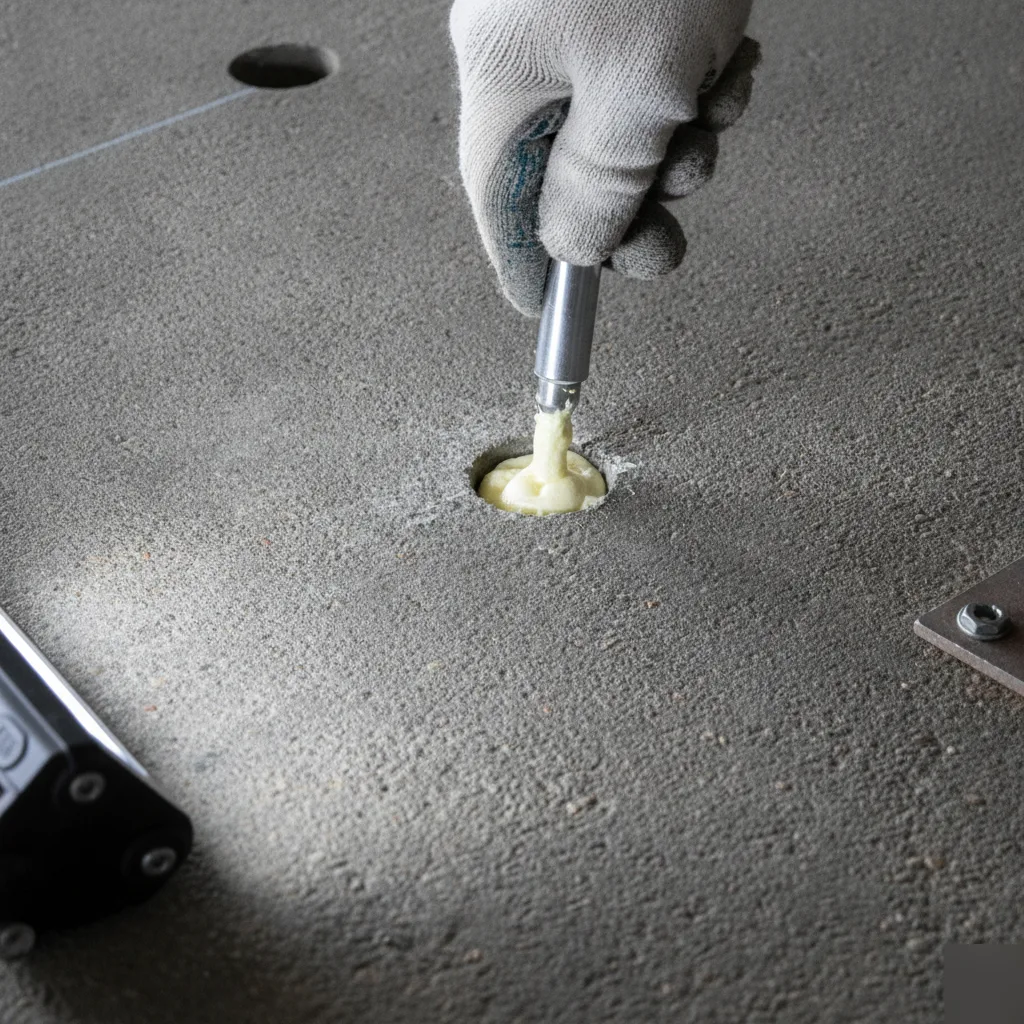
Loading dock concrete leveling with polyurethane foam injection is effective for slabs that are structurally sound but have settled or shifted. This accounts for the majority of issues we encounter. The concrete itself is not crumbling; it is simply no longer in its correct position. We drill small holes, inject the foam underneath, and the slab lifts back into place. Most docks can return to service the same day.
Here's what matters to you as a business owner or property manager:
- Leveling costs less than full replacement.
- No heavy demolition means no risk of damage to adjacent structures.
- Downtime is reduced from days to mere hours.
- The foam effectively fills the voids that caused the initial sinking.
- The foam will not compress or wash out the way loose fill material does under Central Florida's heavy rain cycles.
When Replacement Is the Right Call
There are indeed situations where a new concrete pour is the only viable option. If the slab exhibits deep structural cracks, rebar corrosion, or large sections that have completely broken apart, leveling cannot provide a lasting solution. We will tell you directly if that is the case. We have advised owners near the SR 408 corridor to contact a concrete contractor instead, explaining that leveling would not hold. Honesty saves everyone time and money in the long run.
However, for the majority of dock aprons in the 32807 area, the slab itself remains sound. It simply needs to be brought back up to the proper grade. That is precisely what we do.
How the Foam Injection Process Works at a Commercial Loading Dock
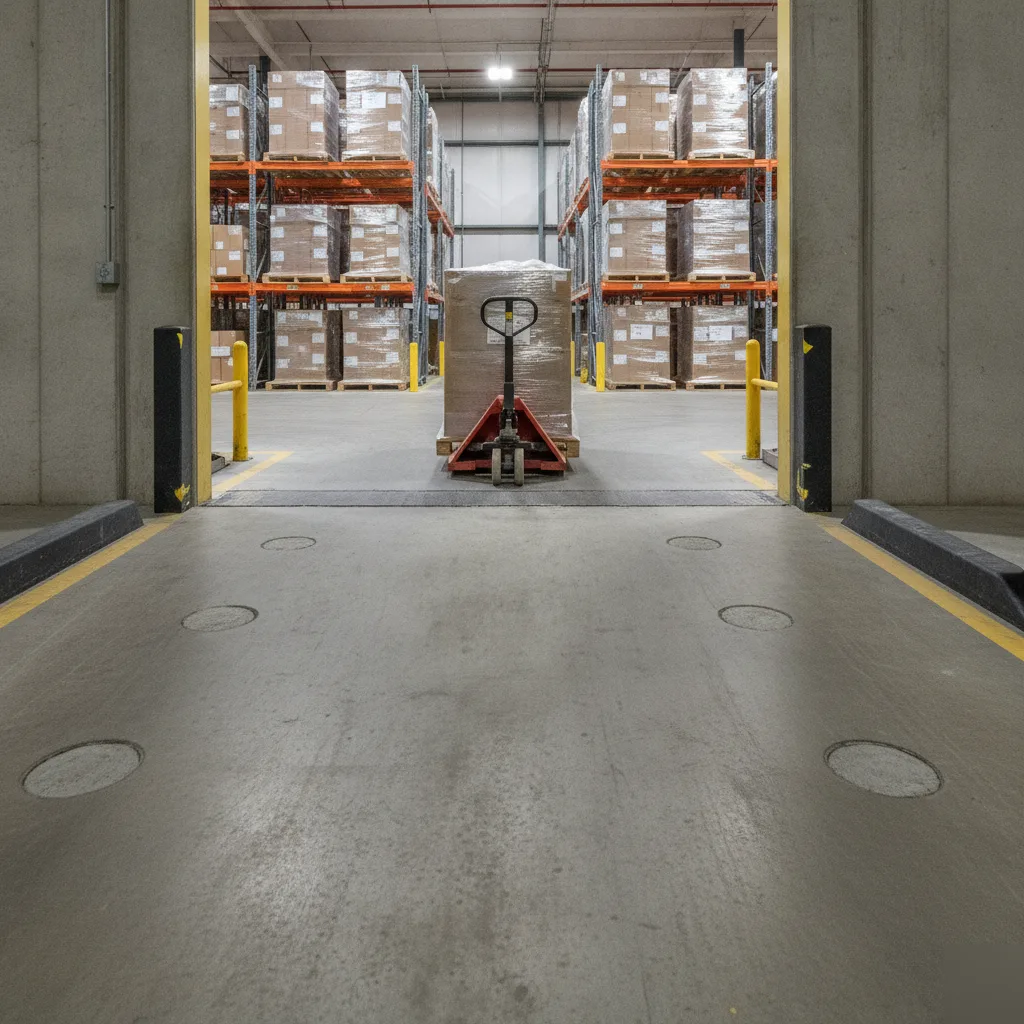
Most dock managers anticipate a large, messy production. The process is actually the opposite. Our polyurethane foam injection service is fast, clean, and does not shut your dock down for days. We have completed this work on busy loading docks along Semoran Boulevard and at various commercial properties throughout the 32807 zip code, often while trucks continued operating on adjacent bays.
Here's how a typical loading dock concrete leveling job progresses from start to finish:
- Survey and map the slab. We use laser levels and ground-penetrating assessment to precisely locate where the concrete has dropped and where voids exist underneath. Every dock presents unique challenges; some sink at the apron edge, while others settle right where the dock leveler meets the slab.
- Drill small injection ports.
See whether leveling is the right fix for your dock — schedule a free assessment.
Get your free estimate