
Warning Signs Your Block and Base Foundation Is Failing
Most people do not call us immediately, but instead seek out professional masonry repair services after months of noticing small issues, like a door that won't latch or a crack that keeps expanding, even after patching. By the time homeowners in Azalea Park contact us, these minor signs have usually been present for some time.
Here is what to look for:
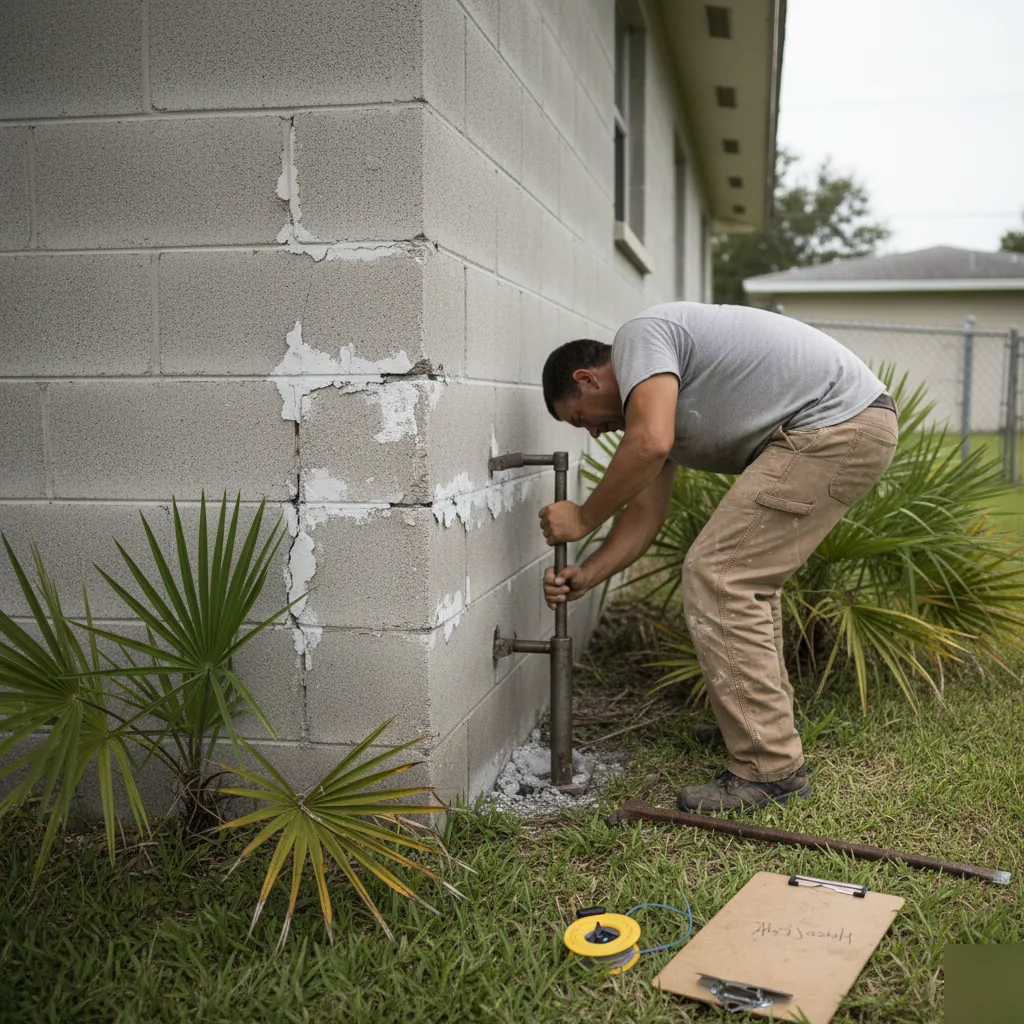
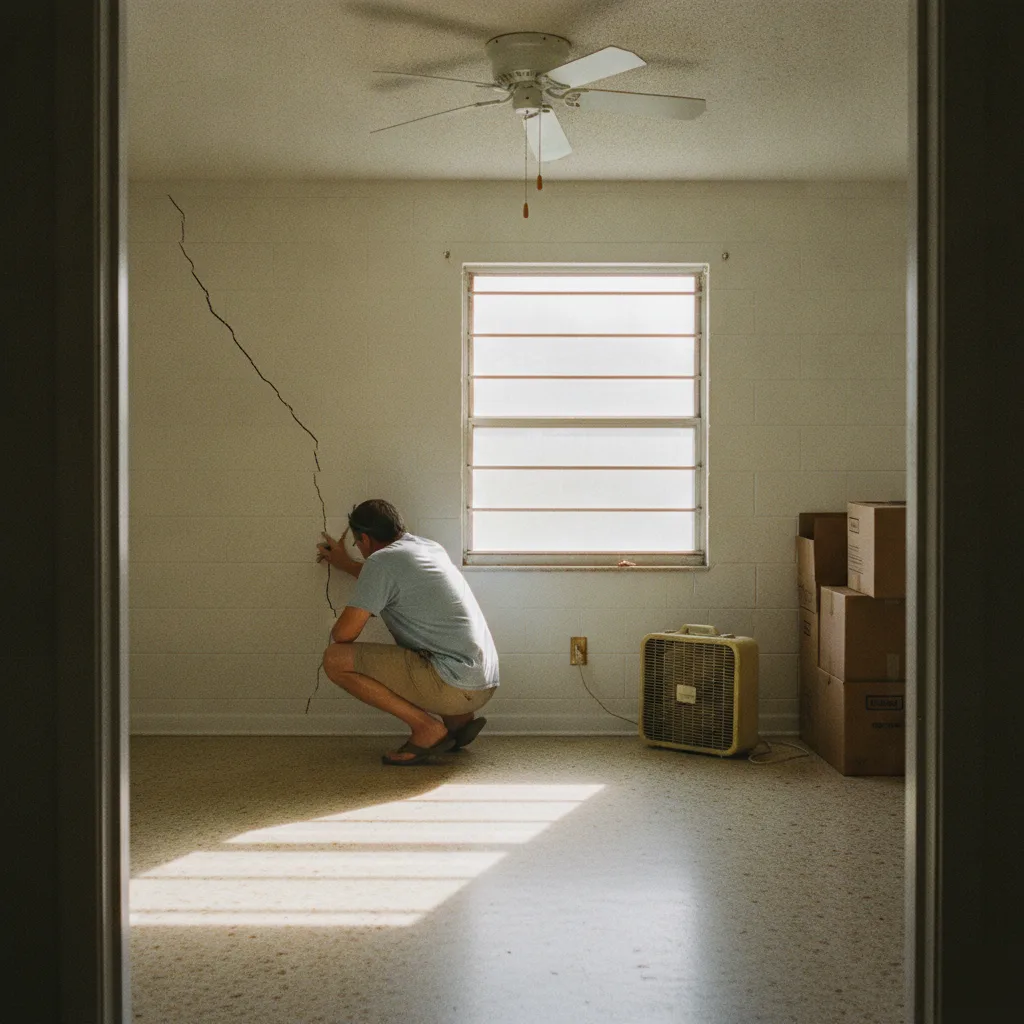
- Stair-step cracks in block walls. These cracks follow the mortar joints in a zigzag pattern. We see them often in homes near Lake Underhill Road, a frequent sign of foundation movement.
- Gaps between the wall and floor. When a block foundation shifts, the floor framing separates from the wall. You might spot daylight or feel a draft along the baseboards.
- Doors and windows that stick or will not close. One sticky door could be humidity. Three or four throughout the house indicates structural movement.
- Sagging or uneven floors. Walk through your hallway barefoot. If you feel a slope or a soft spot, the support blocks underneath may have shifted or cracked.
- Visible crumbling or spalling on concrete blocks. Florida moisture erodes block over time. You will see the surface flaking off, sometimes exposing the hollow core inside.
We see this every week. A homeowner in Azalea Park notices a hairline crack and assumes it is just normal settling. They wait. Six months later, that crack may be a quarter-inch wide, and the floor slopes toward the back of the house. Early signs do not fix themselves; they only worsen.
Sandy soil is a significant factor in the 32807 area. It does not hold moisture evenly. After heavy rain, the ground swells; then it dries out and shrinks. This cycle puts constant pressure on block foundations. Blocks are strong in compression but weak against lateral force. So, when soil pushes sideways, mortar joints crack and blocks rotate.
Unsure if what you are seeing is serious? This concern is common. A crack might be cosmetic, or it could mean the entire pier system needs attention. A hands-on inspection is the only way to know. We inspect the blocks, base pads, and soil conditions. We also assess the overall level of your home before providing our findings.
What Florida's Wet and Dry Seasons Do to Block Foundations
Central Florida's weather does not just affect your lawn. It impacts your foundation year-round. Block and base systems take a harder hit from these conditions than many realize.
During the wet season, from roughly June through October, Azalea Park experiences heavy rainfall. Orange County typically sees over 50 inches a year. This water saturates the sandy soil around your foundation. It pushes laterally against block walls, fills voids beneath your base, and raises the water table. Homes near Lake Underhill Road or closer to Lake Barton often sit on ground that holds moisture longer. We frequently observe mortar joints between blocks absorbing water through capillary action during summer inspections.
Then the dry season arrives.
From November through May, that same soil dries out and contracts. It pulls away from your foundation walls, and gaps form. The ground that supported your blocks and base settles unevenly. This back-and-forth cycle of wet expansion followed by dry shrinkage causes the most damage over time. One season alone will not ruin a foundation. But five years? Ten? That is when cracks appear and floors begin to slope.
Here is what that seasonal movement does to block foundations specifically:
- Horizontal cracks along mortar joints from soil pressure during heavy rains
- Stair-step cracking at corners where blocks shift during dry periods
- Separation between the block wall and the concrete base as the ground shrinks
- Water intrusion through hairline cracks that were not visible six months ago
The sandy soil in the 32807 zip code makes matters worse. Sand drains fast, so the shift between wet and dry happens quickly. Your foundation has no slow adjustment period. It is soaked one month and bone dry the next. We have seen homes along the SR 408 corridor where the soil completely separated from the footing on one side. A gap like that does not fix itself.
Most homeowners in Azalea Park do not connect a sticky door in January to the rain from August. Yet, that is exactly how it works. The damage is cumulative, often appearing months after the initial cause.
How Block and Base Foundation Repair Works
Many people imagine foundation work as a massive, complicated project. It can be. The repair process, though, follows a clear sequence. Understanding these steps helps you feel more at ease about what is happening beneath your home.
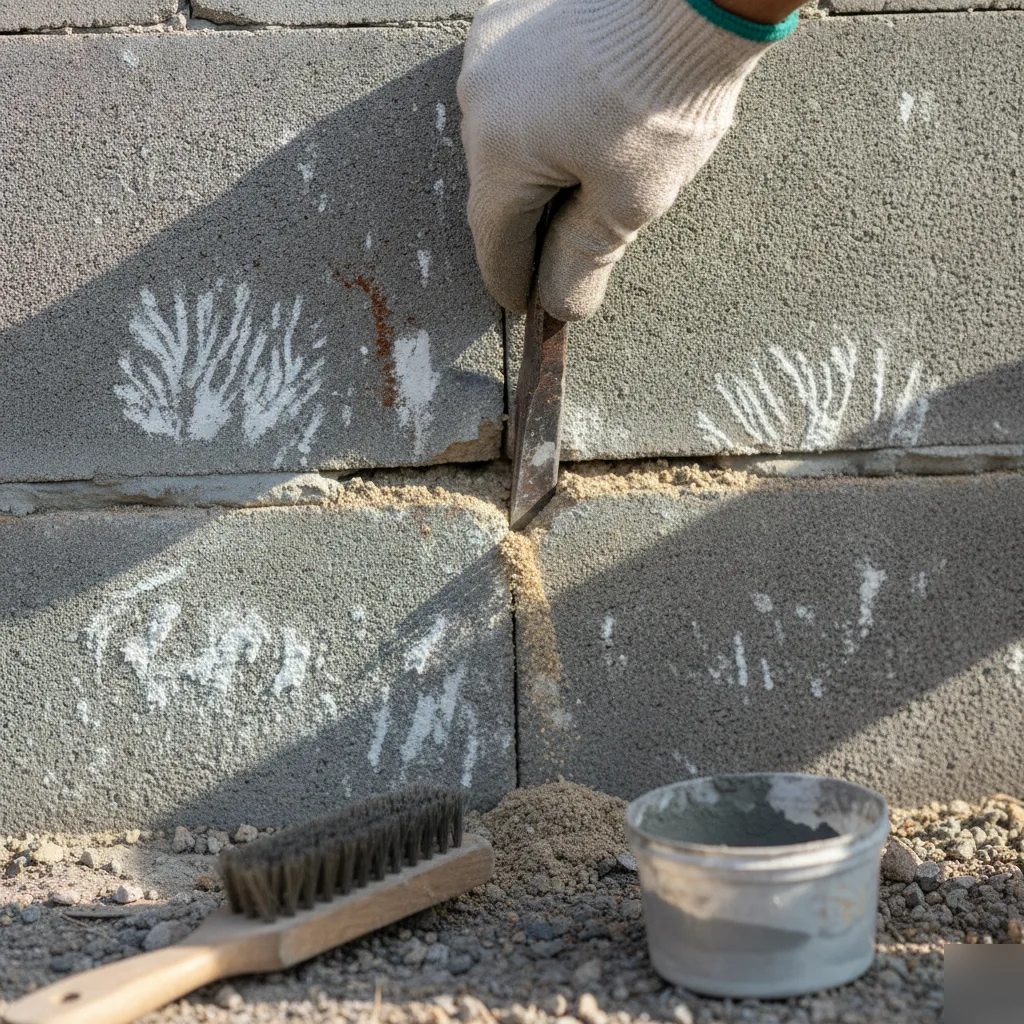
We start every job in Azalea Park with a hands-on inspection underneath the house, literally crawling through the crawl space. We check every pier, block, and base pad. We examine how the floor joists sit on the blocks and look for any shifts or cracks. We also assess the soil around each support point. Often, we identify the main problem within the first few minutes.
The Step-by-Step Process
Once the inspection is done, here is how the actual repair moves forward:
- We clear debris and old materials away from the damaged piers so we can work safely.
- We excavate around the base pads that need replacement or resetting.
- New concrete base pads get poured and leveled on stable soil.
- We stack CMU (concrete masonry unit) blocks on the fresh pads, shimming to exact height.
- The home gets slowly lifted back to level using hydraulic jacks placed at key points.
- Final shimming and securing locks everything into place under the floor joists.
That sequence is important. You cannot just jack a house up and hope for the best. The base pad must be correctly installed first, the blocks must be plumb, and the load transfer needs to be even. Skip a step, and you might be back where you started in two years. For a deeper look at how old masonry foundations deteriorate and what sound repair methods involve, the Building Science Corporation's guide on repairing and strengthening old foundations is a useful technical reference.
Homes near Lake Underhill Road sit on sandy soil, which shifts with Florida's wet and dry cycles. We pay close attention to soil conditions before pouring any new pads. Sometimes, we need to stabilize the ground first.
Here is something many people do not expect: most jobs like this take one to three days, not weeks. Your home remains livable the entire time, as we work from underneath. You might hear some noise, but that is generally the extent of the disruption.
We have been doing this work across the 32807 zip code for years. Our crew is licensed and insured. The process is proven, but it requires someone who knows what they are doing underneath your home.
Orange County Permits and Licensed Contractor Requirements
Block and base foundation repair in Azalea Park falls under Orange County's building permit process. You cannot just start digging around a foundation without the right paperwork. And you would not want someone who skips that step working on your home.
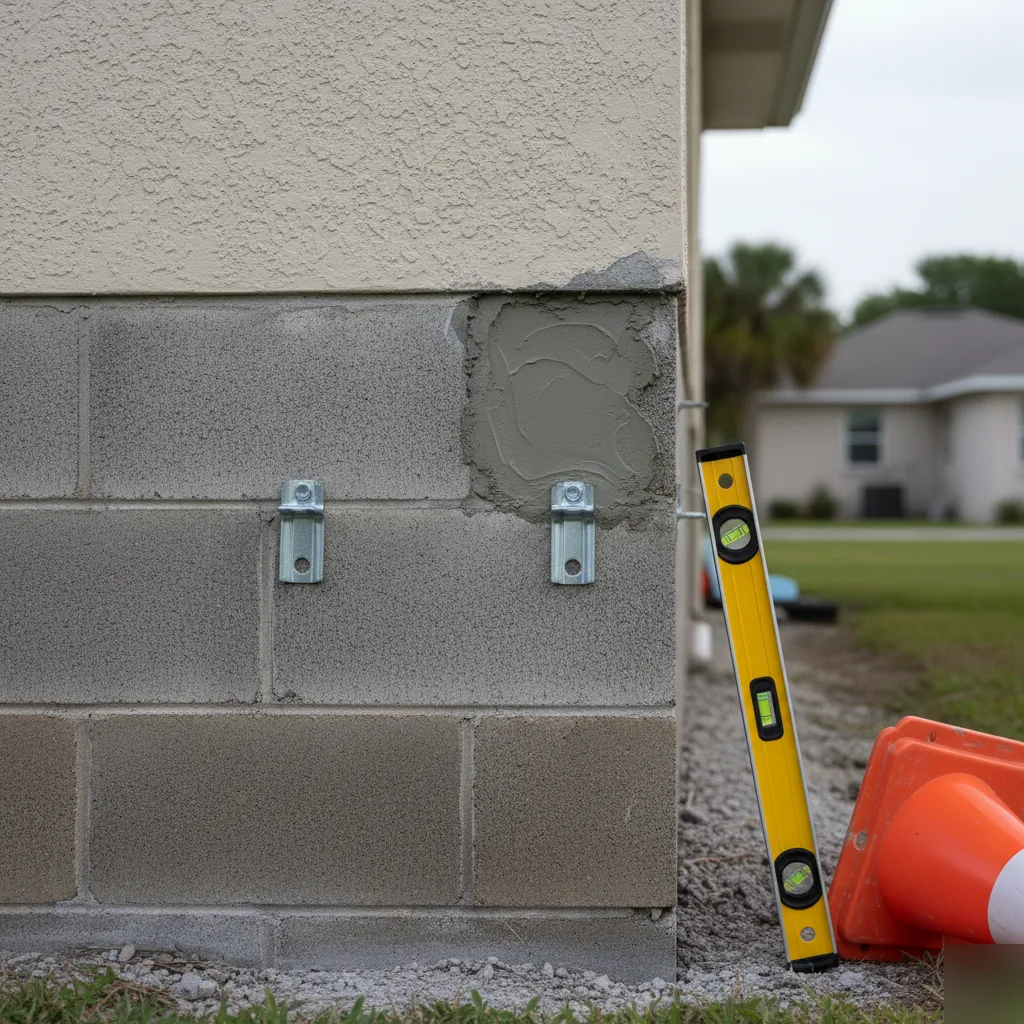
Orange County requires permits for structural work on residential properties. This includes repairs where we lift, stabilize, or replace foundation components. The permit process involves a plan review, an inspection during the work, and a final sign-off from the county. We handle the permit application for you, taking one less thing off your to-do list.
Why Licensing Matters More Than You Think
Florida law requires foundation contractors to hold a valid state license. This is not a handyman license or a general labor permit. It is a genuine contractor's license, backed by insurance and bonding. We have seen homeowners near Lake Underhill Road hire unlicensed crews to save money. Often, they end up with worse damage six months later. No permit on file also means no recourse if something goes wrong.
Here is what a licensed contractor brings to the job:
- Proof of liability insurance that protects your property
- Workers' compensation coverage so you are not liable for injuries
- A license number you can verify through the Florida DBPR website
- Accountability to the state licensing board if disputes arise
We are fully licensed and insured to perform this work across the 32807 zip code and surrounding areas. Our team pulls permits before every job in Azalea Park. That inspection record protects you long after we leave.
So, what happens if you skip the permit? The county can issue fines. Your homeowner's insurance might deny a future claim. If you ever sell the property, unpermitted structural work often appears during title searches. This creates real problems.
The biggest risk is safety. The final inspection confirms the repair meets Florida Building Code standards. Block and base systems carry the full weight of your home. The county inspector verifies everything is level, stable, and built to last. We welcome that second set of eyes on every project; it helps keep everyone honest.
Protecting Your Block Foundation After Repairs Are Done
Fixing the problem is only half the job. Keeping it fixed is what truly matters.
Once we finish the repair work on your home, we focus on making sure water and soil conditions do not return you to where you started. Azalea Park sits in a low-water-table zone near Lake Underhill Road and surrounding drainage areas. The ground around your foundation stays saturated longer than you might think, particularly during summer storms. We often see homeowners do everything right during the repair process, then overlook the maintenance side. A year later, they call us again. We want to help you avoid that scenario.
Drainage and Grading Come First
The biggest thing you can do after repairs is control where water goes. Soil around your block foundation should slope away from the house on all sides. Even a slight dip toward the wall can funnel rainwater right into the base of your blocks. We recommend checking your grading at least twice a year: once before hurricane season and once after. If you notice pooling near the foundation after a heavy rain, that indicates something has shifted.
Here is what we tell every homeowner in the 32807 area after we wrap up a job:
- Keep gutters clean and make sure downspouts discharge at least four feet from the foundation
- Do not stack soil, mulch, or landscaping material against the block wall
- Watch for new cracks, even hairline ones, and call before they grow
- Trim tree roots that creep toward the foundation; they push blocks out of alignment over time
If you have irrigation zones near the house, check the spray pattern. We have seen homes off South Goldenrod Road where a sprinkler head soaked the foundation wall every morning for months. Nobody noticed until the mortar joints started crumbling.
Block foundations are tough when supported correctly. They just need a little attention after the work is done. Our team is always a phone call away if something looks off later. We prefer to take a quick look rather than let a small issue become a major problem.
Worried about a crack or a sloping floor? Book a free crawl space inspection.
Get your free estimate