
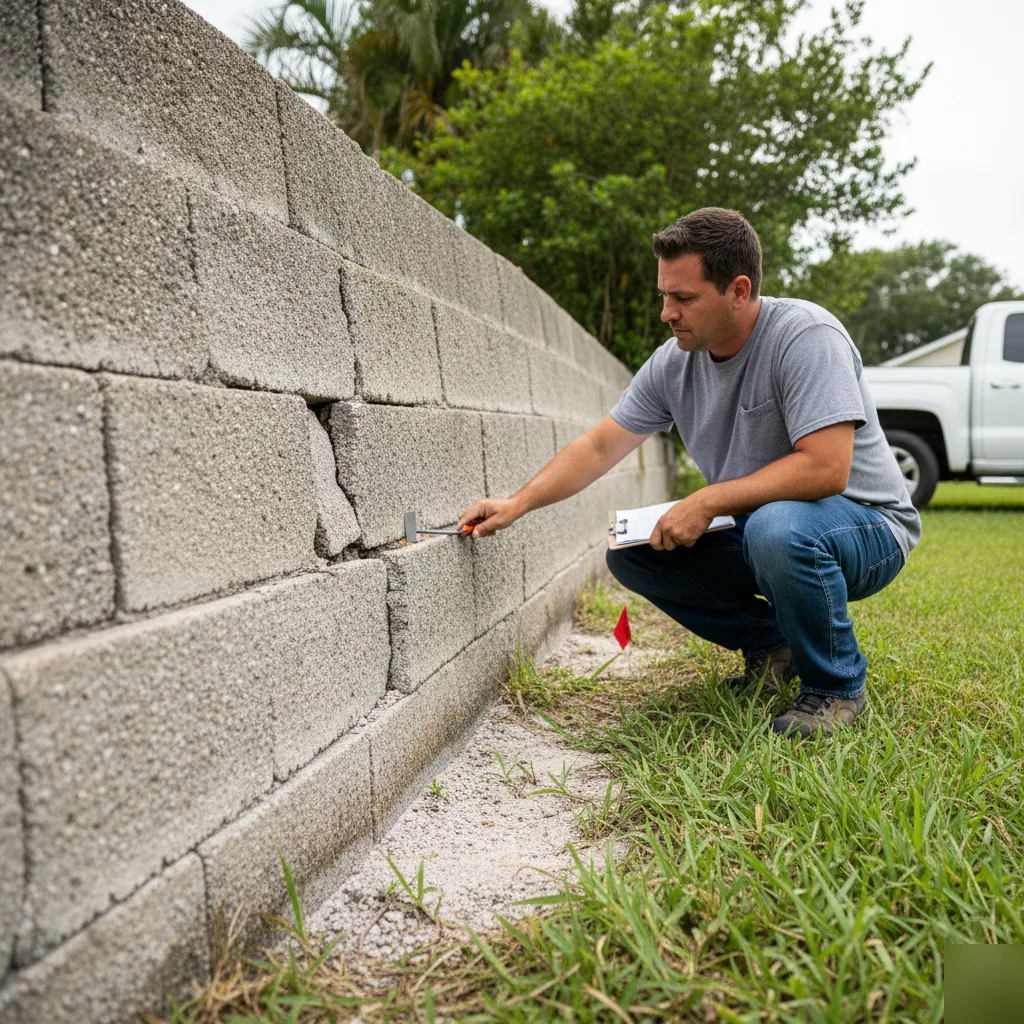
Is Your Retaining Wall Showing These 4 Failure Signs?
Your retaining wall likely goes unobserved until it begins to visibly lean or crack. This is typical of most retaining walls in Azalea Park and throughout Central Florida. We provide professional block wall and retaining wall repair in east Orlando. However, when you do see something amiss with your retaining wall, it is probably more urgent than you think.
Each week, Azalea Park homeowners who have noticed something wrong with their wall but are unsure of whether or not it is a serious problem will contact us. It almost always does. Here are just some of the red flags you want to keep an eye out for:
- Any noticeable lean or tilt to the wall. A wall that has even the slightest lean is fighting the battle of soil pressure and losing. After heavy rains and monsoon seasons, the wall will likely tilt even more.
- Horizontal cracks between mortar joints. These cracks indicate that a wall is bowing under pressure (horizontal forces). Vertical cracks are signs of settlement underneath the wall.
- Any gap forming between the retaining wall and the soil behind it. The existence of gaps indicates that a wall has already started to shift forward, allowing soils to push the structure forward.
- Any water seeping or flowing through a retaining wall. Retaining wall failure in Central Florida most frequently occurs due to inadequate drainage. You will know that drainage is an issue if the wall is staining, showing wet patches, or actual water can be seen flowing from the face of the wall.
- A crumbling retaining wall. The sandy soil found closer to Lake Underhill Road retains lots of moisture. Moisture breaks down block and mortar over time.
Here's one of the most common ones that our experts see: One of the many times we see homeowners who are concerned about a leaning wall is when they have a fence along the top of the wall, they then notice some of the fence posts are no longer aligned. A fence is often not the problem here, it's actually the retaining wall that has moved forward, taking the fence with it.
You should also pay attention to any soft, sunken areas at the bottom of the wall. That is a sign of water erosion or a void forming beneath your wall, which could mean that your current repairs may need to expand to more than what was thought if not resolved immediately.
While most of these signs are visible, sometimes the signs can be gradual and hard to notice until you take a closer look. For instance, a crack may be adding up to ¼ inch over the course of a year, and a wall may be slowly leaning at an angle that causes you to wonder if you are right in assuming that it is an issue. Unfortunately, soil pressure continues to push regardless of whether it is being observed or not.
If you have spotted any of these issues on your property here in Azalea Park, FL 32807, you should not wait to see how far the wall will eventually lean before you act. A quick inspection will let you know where it stands and what it will take to restore it to good health.
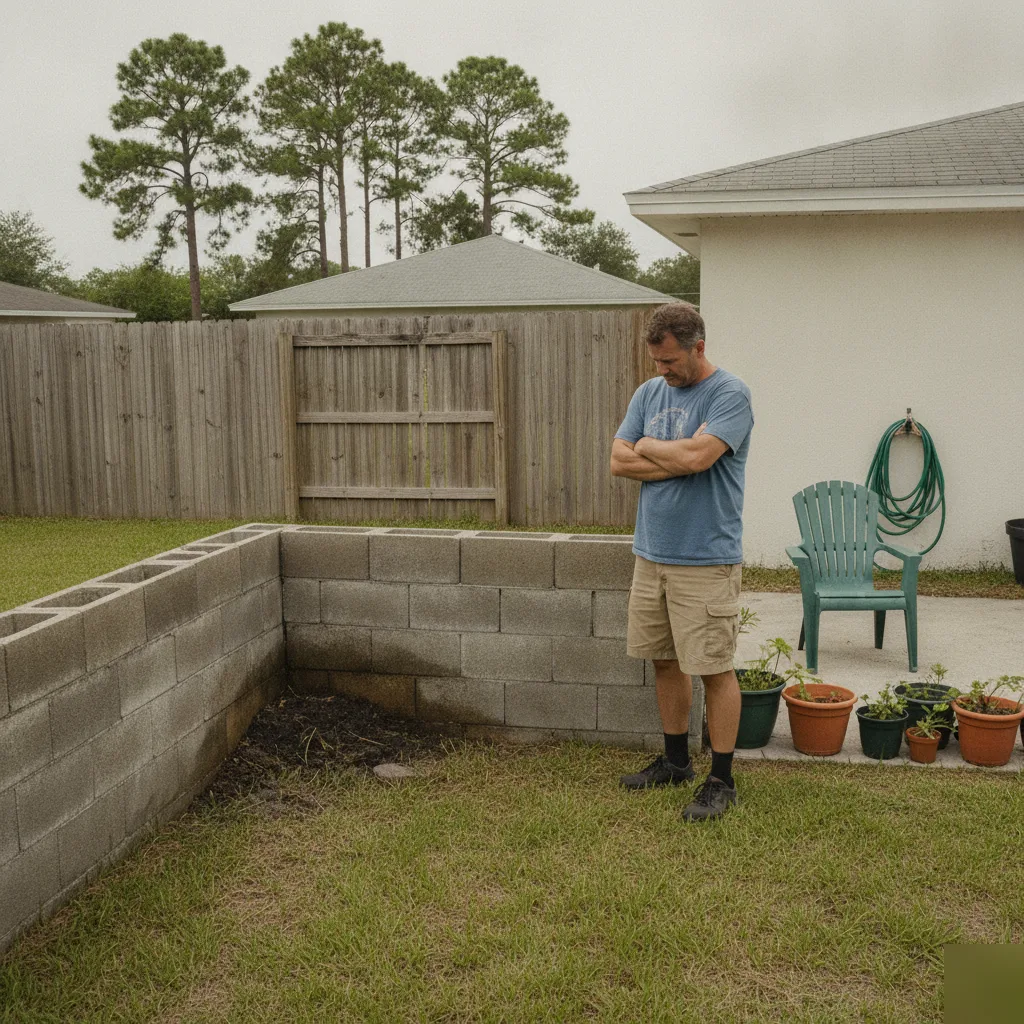
What are the Common Causes of Retaining Wall Failures in Florida?
We hear this question every week from homeowners in Azalea Park. The simple answer to this question is: water. While the issue is more complicated than that and consists of a combination of factors that work together to cause damage and deterioration over time, it still boils down to water.
Central Florida contains loose, sandy soil that does not stick together in the same way clay-rich soil does in the north. That means that when a heavy downpour occurs (and we do get lots of rain, especially between May and October), that sandy soil shifts, and pressure builds up behind your wall. If the wall's drainage system was never installed correctly or gets blocked up, water is left with no way out and begins to press directly against the rear of the wall. We regularly see the following as a cause for wall failure in the 32807 area:
- Hydrostatic pressure caused by poor drainage, or blocked weep holes
- Soil erosion compromising the wall's base
- Tree roots cracking block or moving the footing
- Wall built improperly, lacking proper reinforcement or compaction
- Florida's wet-dry cycle over the years expanding and contracting the soil
The wet-dry cycle is one major one. In the wet season, which in Lake Underhill Road and throughout Azalea Park means summer storms, the soil becomes wet. But it dries quickly. This constant motion of the soil stresses and cracks all parts of the wall, which is why the cracks in that wall were originally found during a wet period, followed by a dry one.
People rarely think about root intrusion, but it is one major issue. If a tree is only fifteen feet from a wall, it can grow its roots right under a footing and cause a wall to lean forward over a matter of several months. By the time it's noticed, it's probably quite damaged.
And it's often surprising to most people that a wall that looks fine from the front can be failing from the back. The soil back there will erode, the footing will move a small amount each season. And if a wall is more than a decade old and it hasn't been checked, the probability is very high that a problem already exists. I don't say that to scare you; it's just how Florida weather behaves.
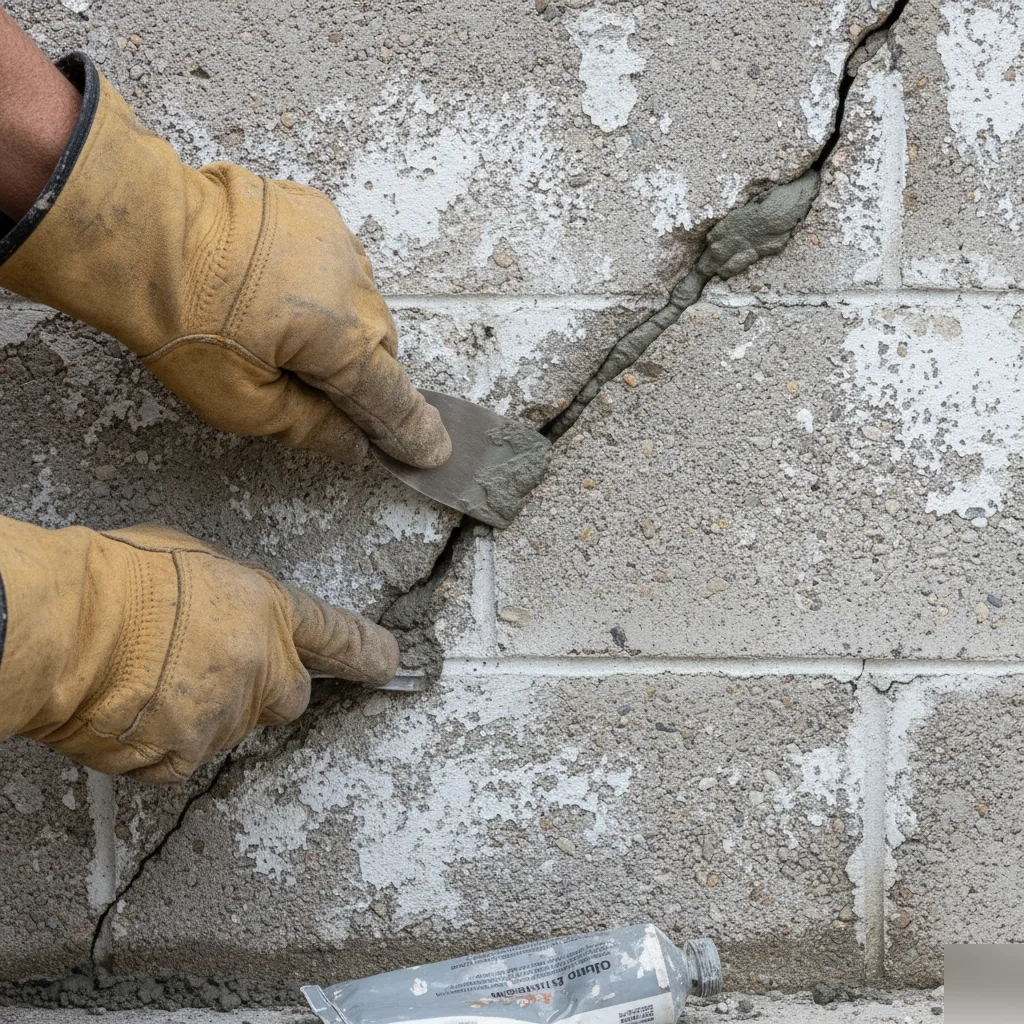
When To Repair Your Retaining Wall and When You Need A New One
That is the question that comes up in most of our conversations. Most people will think that their retaining wall has to be replaced, but often times that's not the case.
The reality is, in most cases, a retaining wall can be repaired: Eight out of ten of the Azalea Park retaining walls we have checked can indeed be repaired. Full replacement is costly, destructive, and often unnecessary. But there are scenarios in which a repair isn't going to solve the problem, and in those instances we will certainly let you know.
When A Retaining Wall Repair Works
Wall repair is a good option when the primary structure of a wall is still functioning properly, i.e. the footing isn't moving a great distance, and the wall material has mostly stayed in one place. Examples include:
- Cracks no bigger than half an inch, which haven't made their way down to the base of the wall.
- Slight tilting or tilting that has developed over time.
- Minor erosion or a loss of mortar between blocks on an otherwise solid block wall.
- Improper drainage leading to a pooling of water behind a wall.
We will deal with the above problems, for example, by installing helical piers or soil stabilization. The wall will stand, and your yard won't be wrecked.
When Replacement Is the Better Option
There are times when a retaining wall can't be saved, and in those instances, replacement is the only option. When a wall along Lake Underhill Road has been leaning for multiple years, and the footing has rotated more than a few inches, there is a good chance repair will only postpone a future replacement. A wall with catastrophic footing failure or that was initially built without adequate drainage is sometimes just better off replaced entirely.
We encounter this on rare occasion with some older block walls in the 32807 area, for instance, which were never adequately reinforced. Florida's building code outlines retaining wall design and construction standards that govern proper reinforcement and drainage requirements — standards that many older walls in the area were simply never built to meet.
Patching up a poor base will not correct a bad footing.
Hence, how can you tell whether your situation calls for repair or replacement? You likely can't tell by merely gazing at it, which is precisely why we offer free estimates, during which time we'll evaluate your wall, the soil conditions, the drainage, and give you a straight answer as to whether repair or replacement is what's called for.
Hesitant as to whether your wall requires help or needs a replacement? Contact us and we'll go over it with you!
The Retaining Wall Repair Process in Azalea Park
Every Azalea Park retaining wall repair project begins the same way: we come out and evaluate the entire condition before we get to work.
We have a process, and we use it on every single repair we perform, every single time. No winging it.
- Site and soil assessment. We'll scope out the wall, look at the grade behind it, and check the flow of drainage. A sandy hillside near Lake Underhill Road doesn't react the same as a clay-filled yard closer to South Goldenrod Road, and that can make a difference to how we repair it.
- Diagnosing the problem. The fact that a wall is leaning is the sign. We have to diagnose the source of the problem. Hydrostatic pressure, lack of initial drainage, soil erosion, and footing failure are all potential causes. Often, there are several reasons at play.
- Development of a solution and choosing a method. Based on the problems we identify, we'll recommend the installation of helical piers to re-anchor the wall to the ground, injection of polyurethane foam for void fill behind the wall, and perhaps soil stabilization if that's what caused the problem in the first place. We then tailor the solution to the specific issue.
- Structural repair. This is where we actually do the work. This might mean installing piers, foam, reconstructing the damaged portions, or reestablishing drainage. Most residential Azalea Park retaining wall repairs are completed in one to two working days.
- Quality check and final grade. We'll use a laser level to confirm proper wall alignment after repair. We'll also check that drainage is flowing properly away from the wall. We won't leave until everything's good.
That particular homeowner, we found out, had waited way too long in calling us: The wall has been leaning for a year or more, at which time enough soil has moved that the walkways near it as well as part of the patio slab are now impacted. But that's no worry, because we handle that scenario all the time throughout the entire 32807 zip code.
And one of the things a lot of people don't know is that properly repairing a retaining wall deals with what's happening below grade, not just what is visible above the grade. When a quote comes in for what only repairs the visible crack, that is something to be very wary of as the wall will move all over again.
We're licensed and insured and have been in the business long enough to differentiate a simple repair from a major repair. And we'll let you know which one you need either way.
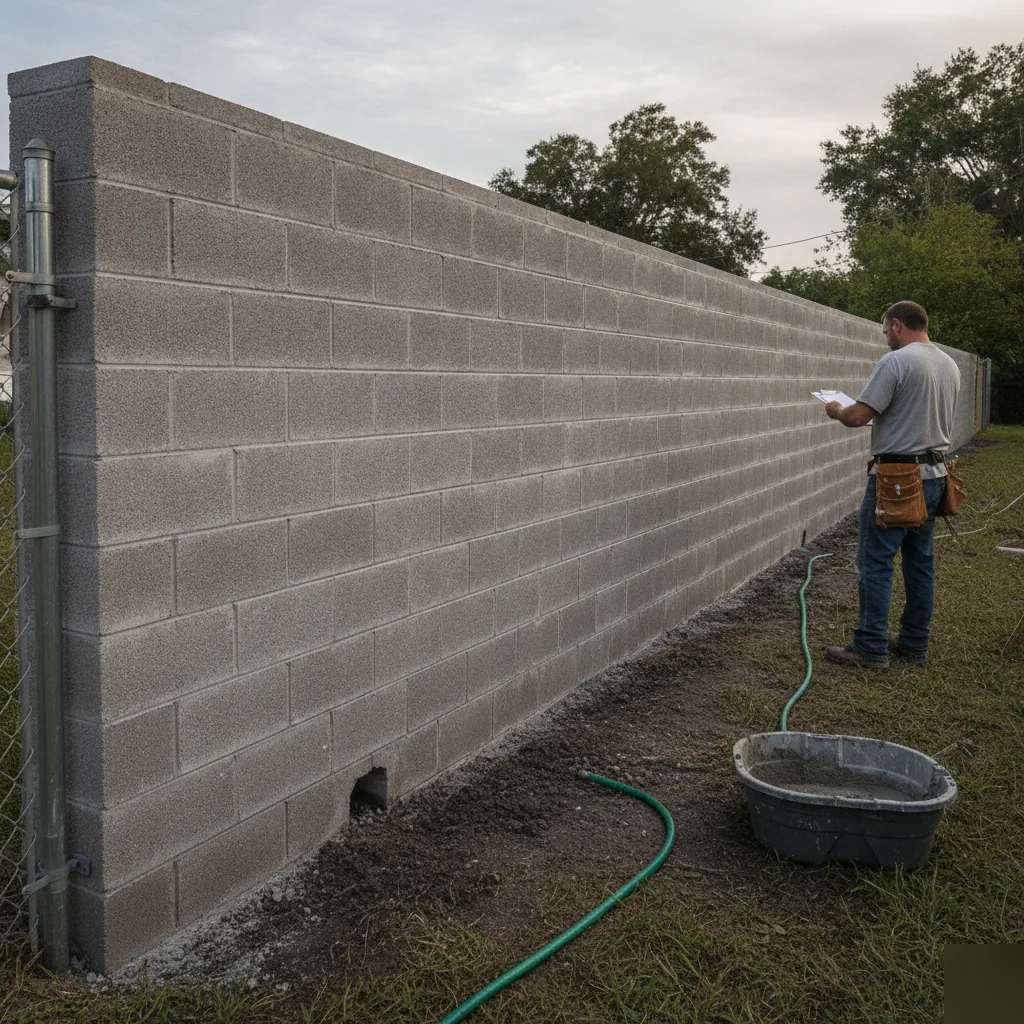
How a Retaining Wall Can Tell You It Is Undermining Your Home Foundation
One of the things people often don't know is that a cracked, leaning or otherwise failing retaining wall may not just tell you that your wall is suffering from structural deficiencies but that you may have a serious problem with your home's foundation.
We encounter this situation quite a lot throughout Azalea Park, FL, and most in neighborhoods that border Lake Underhill Road in the moisture-rich soils along Lake Underhill Road. The sandy soils in Orange County can shift and settle throughout their existence. And that shift and settlement will first show itself on a retaining wall since it is under constant stress from gravity and the pressures of the retaining soil. However, the same shift and settlement causing a retaining wall to fail can also undermine other neighboring structures on the site as well.
Tips on Determining if Your Soil Movement Issue Goes Deeper Than Your Retaining Wall
Just because a retaining wall has failed doesn't necessarily mean that you have foundation trouble. But there are some patterns that we've noticed that should give you a hint that your soil problem may be more involved. Take a look at your property for these issues in addition to your retaining wall issues:
- Your doors or windows that have recently begun to stick or refuse to latch.
- New cracks in your interior drywall, especially ones that form diagonally across your wall surfaces.
- Gaps forming between your wall and the slab or structure it supports.
- Pooled water in spots that are known to normally drain water well.
And more than once, we've gone out to inspect a homeowner's leaning wall after they've contacted us about a wall leaning and they've also mentioned that their back door was refusing to close properly. In these cases, we find soil settling beneath their house as well. Their retaining wall just displayed signs of the problem first.
Which is why when we come out to inspect your retaining wall failure, we always make sure to get a full picture of the situation as it relates to your home and other structures. Not just the wall. We go under it and behind it. We check the other nearby structures. In the instance that your home's foundation is indeed affected, we provide helical pier installation or steel push pier installation for that problem in addition to your retaining wall issue.
It can save you money if you catch this sort of problem early, too, as an effective retaining wall repair can potentially prevent an expensive foundation repair from occurring further down the line. We've worked with a number of homeowners along the SR 408 corridor and throughout the 32807 zip code on this scenario where both their foundation and retaining wall were suffering, and the sooner you can get a qualified person out to take a look at your issues, the better your options will be.
Spotted a lean, crack, or gap? Book a free retaining wall inspection today.
Get your free estimate