
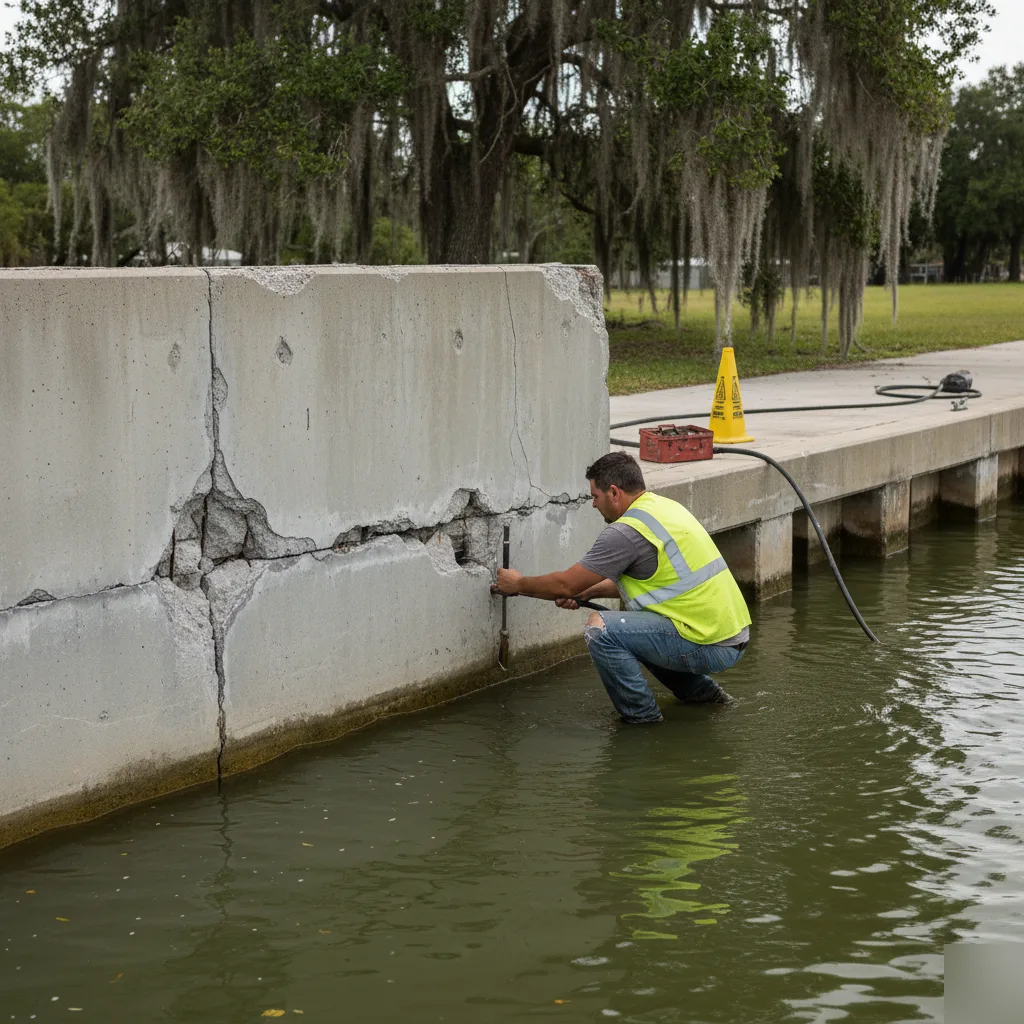
Warning Signs Your Seawall Is Already Failing
Usually, the seawall isn't on your radar until a major issue arises. And by that point, things could have been deteriorating for months. Even years.
In Azalea Park, FL, the water table is high. Many homeowners here also seek concrete block foundation repair for 1950s homes in Orange County to protect their property. Along with this, properties on Lake Barton and other low-lying parts of town contend with constant hydrostatic pressure exerting against the seawall panels from the earth side. That pressure never sleeps. When it finds a weak spot, things deteriorate quickly.
It always comes down to the same things that we see on almost every call. If you notice any of these, your seawall needs your immediate attention:
- Soil loss behind your wall. The ground level behind the wall will sink or pull away from the cap. You might notice a space between the seawall edge and your yard. This indicates the soil is washing into the water through cracks and seams.
- Cracks or gaps that are visible. Horizontal cracks in your panels. Vertical cracks in your seams, which means the panels aren't moving together.
- Leaning or bowing. If you look across and slightly toward the back, you might not realize the wall is tilting toward the water and losing its base of support.
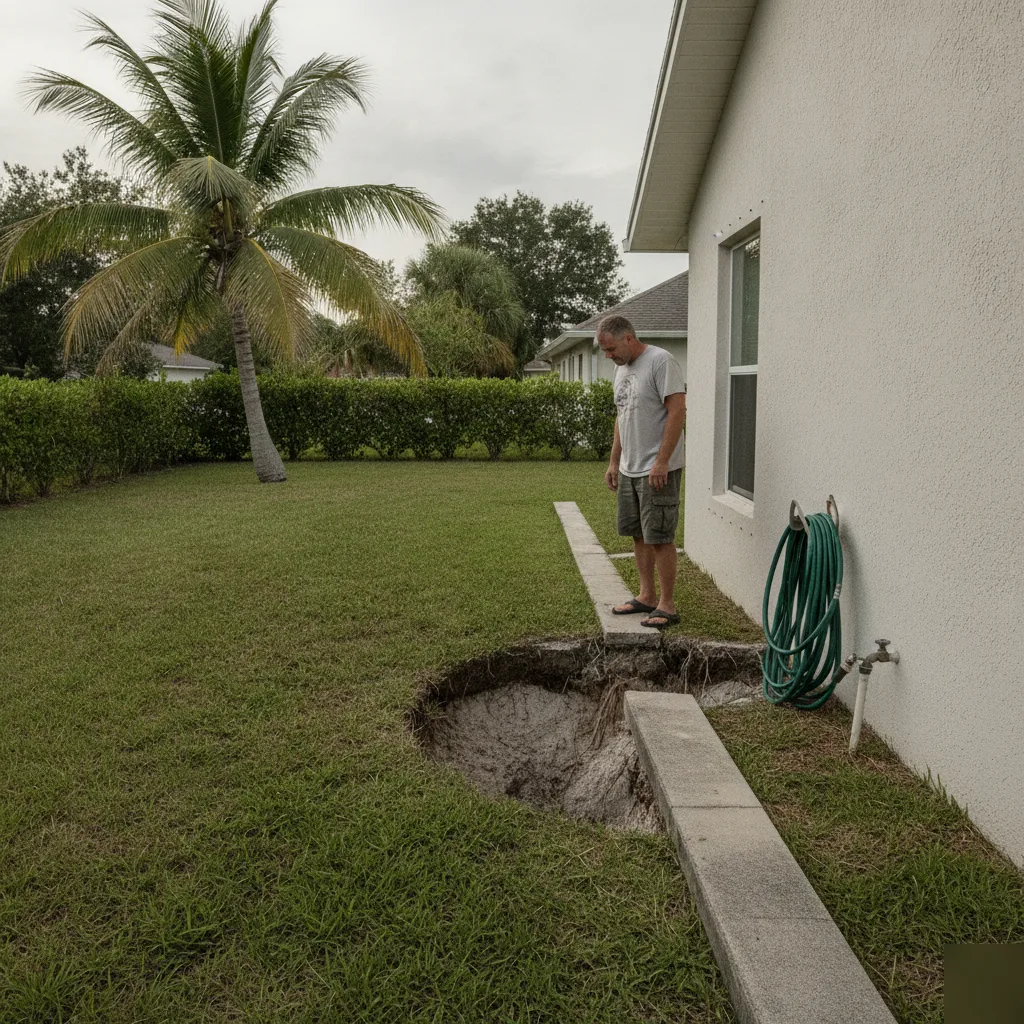
- Soft spots or sinkholes in your yard. If the ground is soft to the touch within ten feet of the wall, soil erosion is happening beneath.
- Water leaking out the wall face. Look for staining or signs of minerals or actual wetness in the cracks in your wall even on days that aren't wet.
The problem is always the same. Water found a way into the deteriorating seams or cracks, carrying soil away and leaving voids behind the wall. A seawall needs the support of the earth behind it to maintain its upright posture and keep its foundation intact.
What surprises many Azalea Park homeowners is that the wall might look completely sound if you view it from a distance. But walk right up to it after it rains and you might notice small trenches forming along the cap where the soil has sunk. Or you might catch mulch disappearing into the gaps you didn't even realize you had.
Don't wait until the panel gives way and drops into the water. That makes the project a much bigger one. If you think something is off, it probably is.
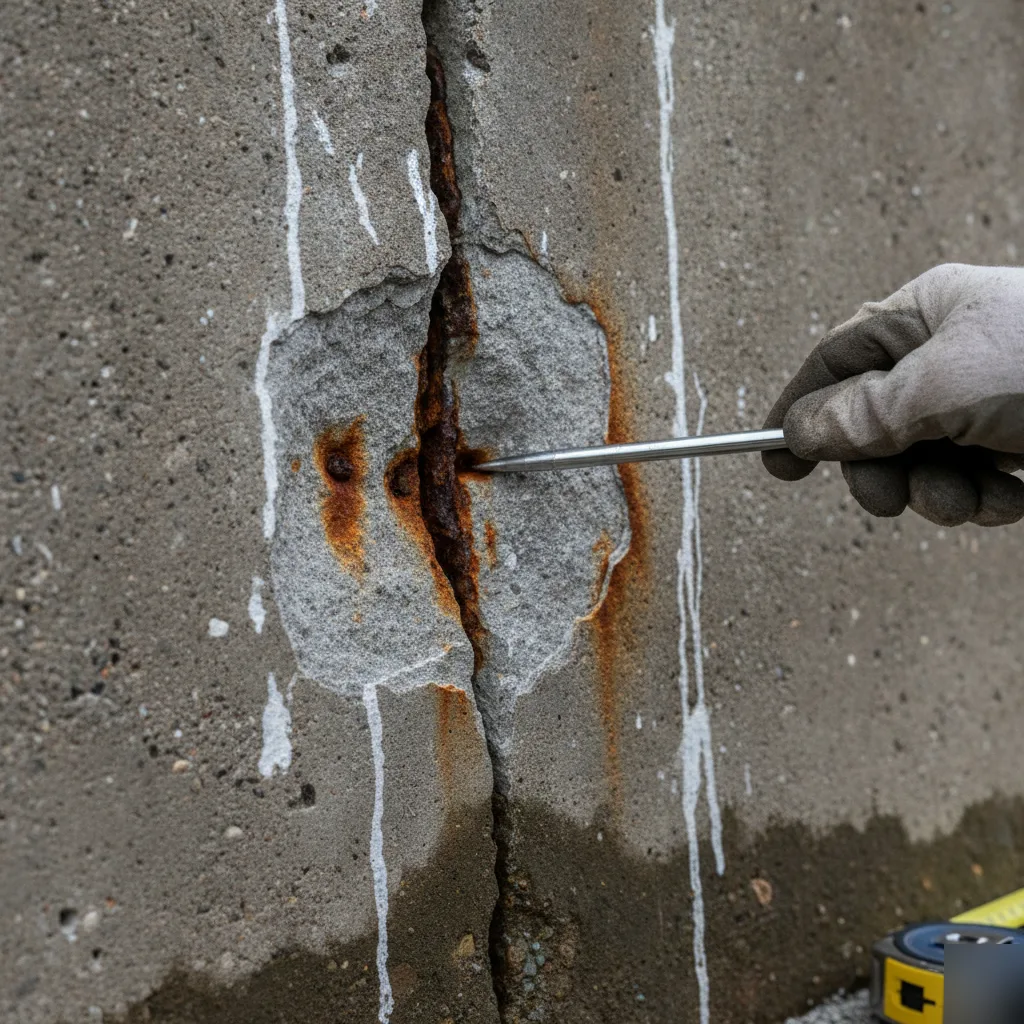
What's Going On Inside Your Wall When You Put Off Damage
Most people look at a cracked seawall and think they can just fix it when they get around to it. We hear that a lot from Azalea Park residents. But they are not always aware of what is going on while the cracking goes ignored.
The thing is, water is persistent. Once it gains entry into your seawall, no matter how slight the crack, it starts to pull the soil from behind it. That is called soil erosion. In Azalea Park, with its sandy ground, this happens very quickly, as properties along Lake Underhill Road are sitting on very sandy, very porous soil. One tiny crack or gap there can actually shift a lot of soil over just a couple of months.
How the Seawall Chain Reaction Plays Out
When soil washes away, you start getting empty voids directly behind your wall panels. And without backfill behind it, you've got no support to hold it up. You can expect it to develop in the following way, typically:
- A crack forms or a joint pulls apart and water starts coming through the front of the wall.
- Hydrostatic pressure then washes out fine sand and some organics through that gap, often into the canal or the lake.
- Voids grow larger behind the wall, stretching out several feet into your yard or the area around your dock.
- The seawall starts leaning, bowing, or settling because the wall isn't supported by the backfill material.
- Yards start to sink toward the waterline. Your patio, walkway, or even the pilings supporting your dock may drop or start to tilt.
The consequences don't end there. The U.S. Army Corps of Engineers considers unattended erosion behind seawalls to be among the biggest reasons seawalls collapse in residential waterfront properties. This is not gradual; this is the point where a storm or a king tide may be enough to make the wall collapse.
We've been to several Azalea Park homes (zip 32807) that customers thought was just superficial damage. But once we probe behind the wall, we find three or four feet of missing soil. From ground level, everything seems okay, until you get too close to the edge and the ground starts to drop.
That sinking feeling around the waterline? That is no normal settling. This is the warning sign that you are quickly running out of time. As those voids behind your wall continue to grow, the seawall repair cost increases and becomes far more involved. But early detection in Azalea Park means we can typically repair this with void fill and polyurethane injection, which is a much simpler and more affordable fix than installing an all new panel system.
Seawall Repair Explained: From Inspection to Completed Wall
Most homeowners want to know what we do once we get on-site. Fair enough. So below is what the full process looks like for any seawall repair here in Azalea Park.
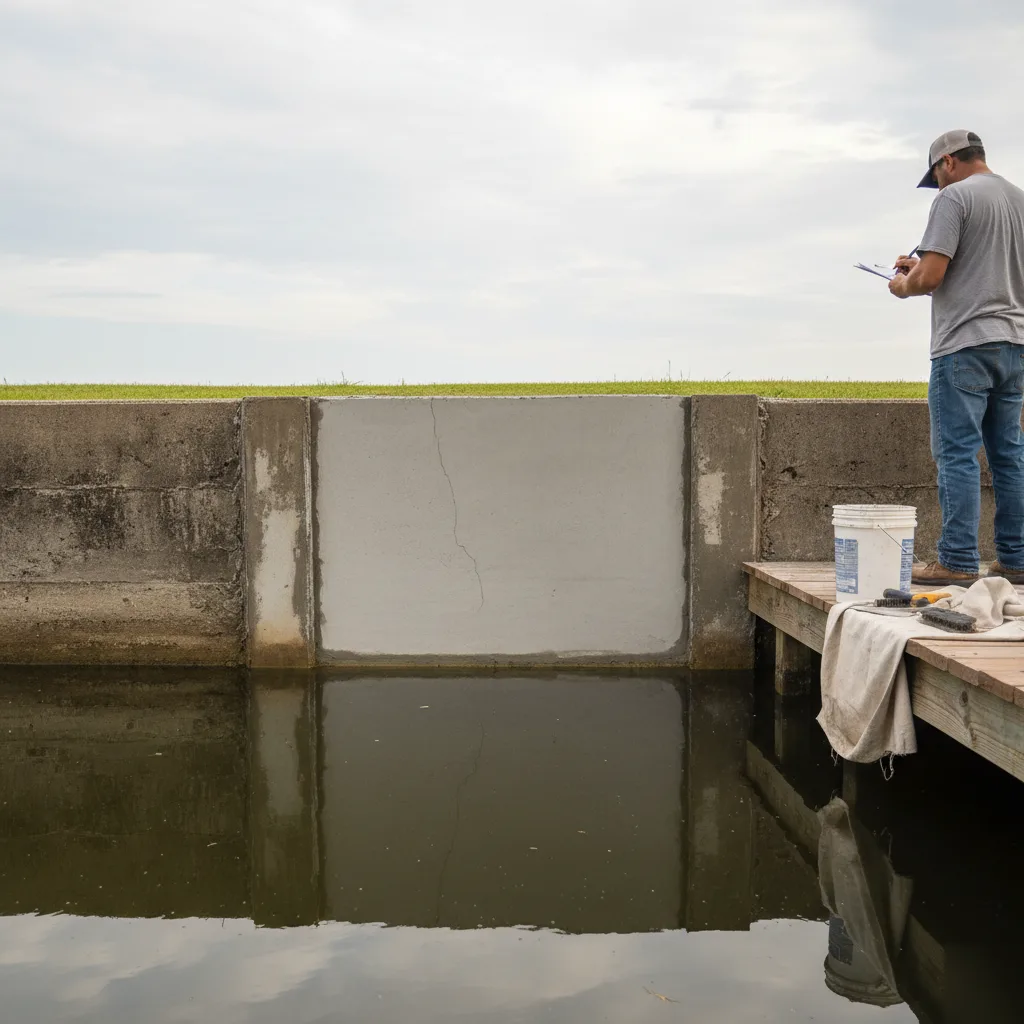
Every job starts with a close visual inspection. We inspect both sides of the wall, plus the ground behind the wall and on top of the cap. We're looking for where the walls are cracking, any signs of joints pulling apart, what the movement pattern looks like, and the location of any visible water seeping through. In just a single site visit, we can determine the extent and cause of damage.
Here Is Our Seawall Repair Sequence
After determining what we're dealing with, the procedure follows this step-by-step protocol:
- Locate all voids behind the wall with probing tests and visual assessment of the adjacent ground.
- Drill small injection ports into targeted areas on the face or top cap of the seawall.
- Inject polyurethane foam via those ports to fill any voids, re-solidify loose soil, and seal any active leakage channels.
- Watch foam expansion live so we do not apply too much pressure to the seawall structure.
- Then we patch the injection points and inspect the wall for any remaining instability or water leaks.
Foam hardens quickly. In fact, many projects near Lake Underhill Road or down the canals closer to South Goldenrod Road can be finished in one day. And because polyurethane foam won't wash out over the years, you don't have to worry about water undermining the repair.
The one thing we tell clients all the time is: "It isn't about plugging holes. It is about backfilling the voids in the soil to allow your seawall to do what it's supposed to do." If your seawall does not have soil backing, there is just a stand alone piece of concrete there that is not enough to sustain against water and earth pressure.
We have repaired a seawall in 32807 which appeared to be in imminent danger of collapse but only required a few injections of seawall repair and soil stabilization to get the job done. There have also been many walls in the 32807 that required the full repair method as well as soil stabilization to address erosion issues that went deeper and below.
However, no matter which service we provide, the process remains the same. Inspect, determine what is wrong, inject, verify success. No guessing allowed.
Seawall Repair vs Seawall Replacement: How to Know Which You Need
This is easily the most common question we get from property owners. It's understandable, too. Most homeowners will assume the worst scenario before the technician has arrived. The good news, though, is that around 80% of the seawalls that we assess here in Azalea Park, FL are able to be repaired rather than replaced entirely.
It all comes down to what is actually breaking. Just because a seawall is visibly broken and may look like it could topple at any second doesn't mean there isn't enough structural integrity to repair it. Issues like cracks, slight tilts, soil washout or voids behind the wall are all issues that can be fixed with our seawall repair methods, such as polyurethane foam and void filling. The wall is allowed to stay where it is. What is done instead is to stabilize what remains there, and put a stop to the erosion that created this failure.
When It Makes Sense to Repair
If your seawall is still mostly standing straight up and the panels themselves are not broken down through and through, repair is likely the way to go. Here are some signs to watch for:
- Cracks in the wall (but no splitting of the wall into sections)
- Soil washout or voids behind the wall (but no significant tilting)
- Seepage through cracks or joints in the panel
- Initial settling of the top of the wall or cap
If you live on the Lake Underhill Road corridor or are close to the low-lying land near Lake Barton, you will likely experience these issues sooner than a house located on higher ground. That's because the water table sits so close to the surface here, the erosion and other water-related issues are accelerated.
When Replacement Is the Only Option
Replacement becomes necessary when the wall materials have completely broken down and are beyond repair. Panels that fall apart when you touch them, a tilt of more than a few inches, or any kind of footing failure are all indications that the wall is beyond repair and needs full replacement. We have witnessed such situations along canals of Azalea Park after years of neglect that nothing was left. Yet that is the rare case. We approach every situation without sugarcoating, with a frank and accurate evaluation. Our Azalea Park team has spent many years repairing seawalls in 32807, and the factors that determine whether a seawall can be salvaged or must be replaced. In most cases, repairs are an option, and we will be frank with the expected service life we estimate. If repairs could provide an additional 20 years, we will say so. If that isn't the case, you will know. Don't know whether your seawall falls into one category or another? Reach out today for a free estimate.
Azalea Park Seawall Projects and Seasonal Timing Considerations
The time of year can be an important element in our work in Azalea Park. We do not let the summer months (June to October) dissuade us from completing our seawall repair work. However, during that period, it can be difficult to find repair conditions because it is Florida's "wet season." Lake Barton and nearby drainage canals swell, which leads to higher groundwater levels in Azalea Park. Soil that is saturated does not dry and cure quite the same way that dry soil does. If you can plan your work, we suggest the late fall and winter months (Nov. to May). During this period, we are more likely to find drier ground conditions, allowing us to complete seawall repairs without interruption. With reduced amounts of groundwater, polyurethane foam injections and anchoring systems set more quickly. Also, when the soil does not shift, your new seawall is more likely to be durable from day one.
We Handle the Permits for You
The aspect of our business that catches most people off guard is that our seawall projects in Azalea Park often have to follow a permitting process. Depending on where your property is situated along Lake Barton or one of its waterways, a permit may be necessary. It is even possible that some seawalls, such as those in properties located near South Goldenrod Road, might need to be approved if they happen to exist within a flood or environmentally sensitive zone. The permit process is a time that we are experienced with, so we are happy to take care of it on your behalf. When we come out to evaluate your seawall, we will handle everything that needs to happen. The process typically includes the following:
- An inspection of your seawall with measurements and photos to document its current condition
- Identification of the necessary permits (if any) based on your Azalea Park home's property location.
- Application for a seawall permit (if required), including all follow-up until a permit is issued.
- Scheduling of the repair work as soon as the permit has been approved.
The permit process generally takes a matter of a few weeks, however, the exact duration will vary based on what type of approval is needed and how closely the property is adjacent to a waterway. The important thing to remember is that while a permitting process exists, our team will take care of everything that is involved in it. Don't worry about waiting for paperwork or making calls to the county office. The most costly aspect of the entire process is not that permits are required; it's that we've been too long in waiting before getting started. If you see cracks in your seawall or you can see soil slipping away behind your seawall in Azalea Park, call us today, don't wait until after a rainstorm rolls in!
Stop the erosion before it undermines your property — book a free seawall assessment.
Get your free estimate