
How Pool Stabilization Works
It isn't uncommon to assume that a sagging pool is purely an aesthetic issue. It's really not. A sunken or shifting pool shell is under strain it never should have been put under. In a matter of years or decades, cracks develop. Pipes that were once tightly secured underground are being stretched. The longer the situation is ignored, the more severe the damage becomes.
Our pool stabilization service addresses the underlying cause. No, we're not merely spackling cracks, or patching the surface. The root of the problem is that the soil under your pool is no longer dense enough to prevent movement, and we fix foundation problems in Azalea Park.
The typical stabilization process goes like this:
- We determine exactly where the soil beneath the pool has eroded or settled.
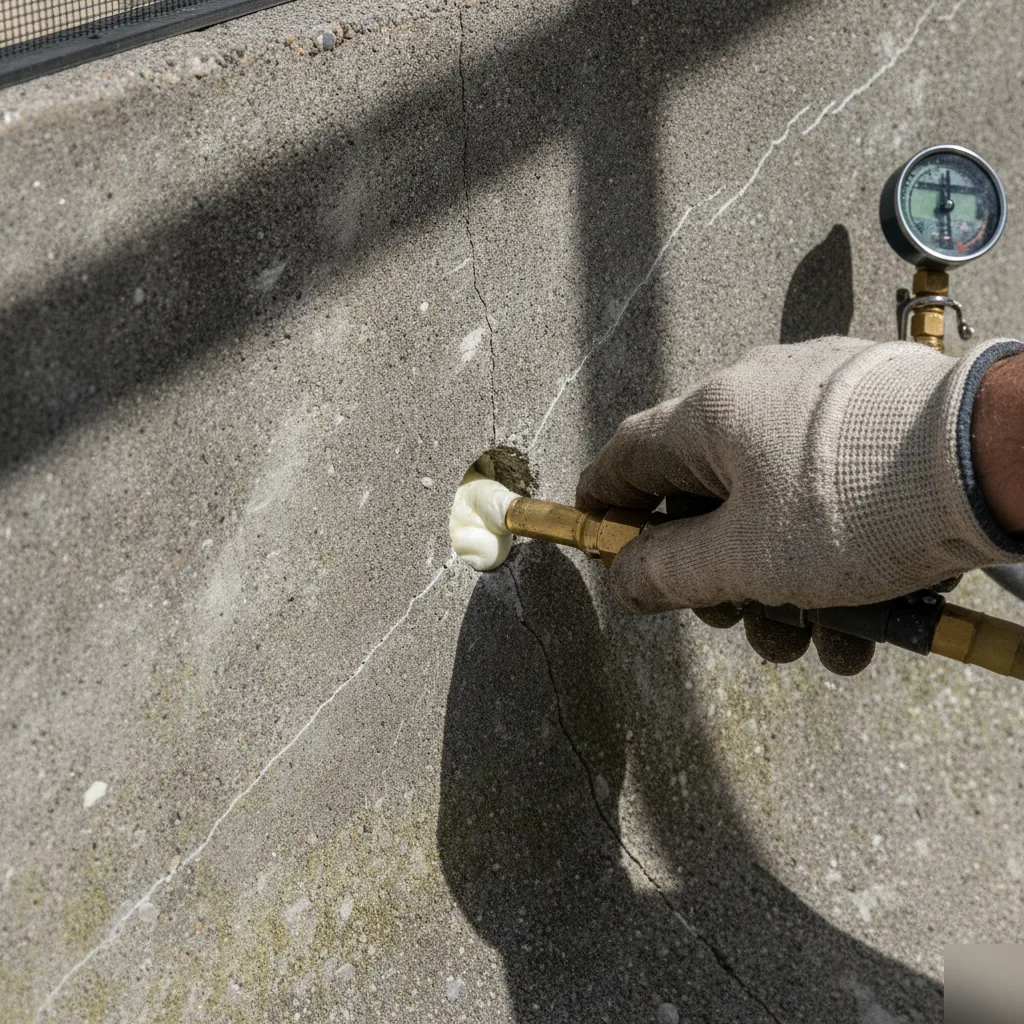
- We drill several small access holes around the outer edge of your pool deck.
- We then inject polyurethane foam below the pool to fill the voids, displacing soil and water pockets as we go.
- The foam expands and cures, creating a stable support layer that locks the pool in position.
- Finally, we'll check the pool level and full pool shell support prior to completion.
In most cases, we can have this whole thing completed in one day. It is no heavy digging, tearing up deck or yard required. And with this technique, our Azalea Park, FL pool technicians typically do not have to deal with the sandy soils near Lake Underhill Road which are likely to cause the pool settling in the first place. The water will easily penetrate the soil and wash the ground that was supporting your pool away from the pool shell. In our area of 32807, especially in older homes (from 1970s, 80s), you will likely run into this issue more often.
However, pool stabilization in Azalea Park does more than just stop your pool from sinking. It also preserves the plumbing that is connected to your pool and protects against new cracks from forming in the shell, not to mention the separation of a pool deck that already has a crack. It's one thing that fixes multiple issues.
In fact, a lot of Azalea Park homeowners will only seek a quote from us once the first signs of a sinking pool start showing up, often to the extent of the waterline tiles becoming uneven or the coping at one spot of the pool sitting a quarter of an inch lower than the rest of the pool deck. While this may seem like a minor problem, your shell has started to move. This process is how we can halt any further sinking and provide a firm base that your pool shell can rest on for the foreseeable future.
Warning Signs That Pool Shell Movement Is Underway
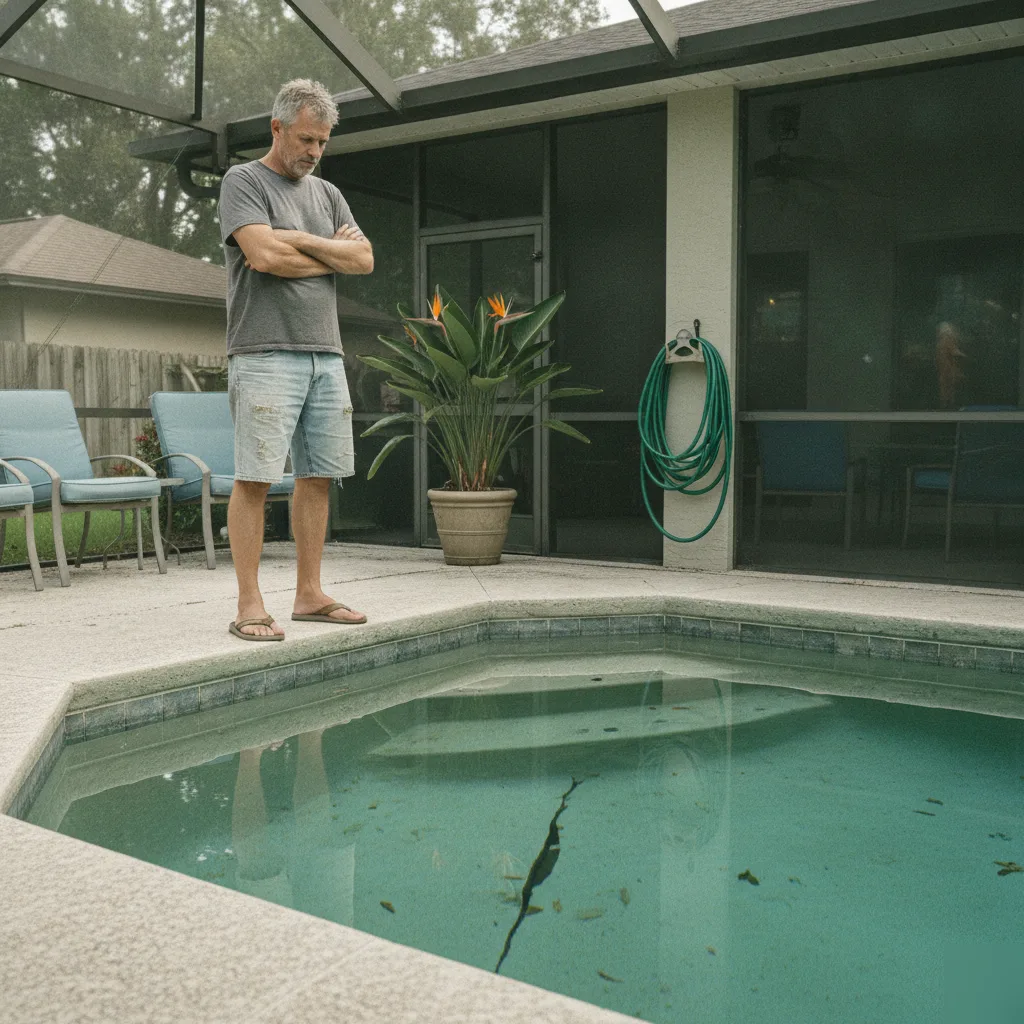
Often, Azalea Park pool owners don't become aware of any issues until a visual or tactile indicator is evident. Does your water look uneven? Is the waterline tile that was straight years ago now tilted at one end? These sorts of discrepancies might be overlooked, but they may be hinting at what's occurring underneath your deck.
We get calls regularly from homeowners along Lake Underhill Road. It all begins the same way. "I thought it was just normal settling." It may well be. However, once you can see movement in your pool shell with your own eyes, you'll have missed the window of opportunity where simple stabilization would have worked; your shell has likely already moved far enough that you need repairs. This is what you need to watch for:
- Cracks developing in the pool walls or floor, especially if they are expanding over the course of a few weeks.
- Gaps becoming visible between the pool and the pool deck.
- An unlevel water line that shows one end of the pool is higher than another end.
- Pool plumbing for pool equipment becoming unhooked or stressed.
- Pool deck sections settling or heaving.
Any one of these could be a warning sign that your pool is moving, and two or more of them mean it definitely is. This is a huge problem in the 32807 zip code. The soils in this area are loose and sandy. A heavy rainfall saturates the soil. It becomes soft. Voids form underneath your pool. The shell drops or tilts. What you might not know is that when a pool shell begins to shift, it doesn't always crack first. Sometimes you'll see tile pop in a row, or a skimmer won't pick up water properly because the skimmer water line changed. Another sign of pool shell movement in Azalea Park is if one side of the pool seems to drain faster than the other one when the pool is in regular use.
Don't ignore these warnings or wait for a dramatic failure. It's always easier to stabilize a pool shell when it's first moved, not several months later when the whole pool has shifted. When you feel there's something different about your pool this year compared to last year, that is your gut telling you something needs attention. We have been doing this work around Azalea Park for so long, we can tell from years of experience that making an early phone call to our Azalea Park pool technicians saves homeowners a lot of problems in the long run.
What Causes Pool Shifts in Azalea Park, Florida?
Pool owners in Azalea Park, FL often are surprised when the ground under their swimming pool begins to move. They don't realize what is occurring beneath their pool and don't understand the mechanics of the soil and groundwater. They notice pool cracks forming in the deck or a corner of the pool sinking in until too late. By that time the swimming pool had been moving around for months. Central Florida is a unique environment with its sandy soil and limestone bedrock, both of which are highly dynamic. Sandy soil can shift and compact at any moment, while limestone dissolves as it comes in contact with groundwater. According to the Florida Geological Survey, the majority of Orange County rests on karst, which is where underground voids and cavities can form naturally. That is the geology your swimming pool is now sitting on.
To make matters even worse, the area that Azalea Park occupies in Orlando, FL has a high water table. This is especially true around Lake Underhill Road or for neighborhoods in or near Lake Barton. It is when it rains heavy summer storms that the water table rises rapidly, increasing the pressure on the soil underneath your swimming pool. Then, during a hot dry summer, the groundwater level lowers again. That pressure eases and the soil shrinks back. It is an annual cycle. Here are some signs you may be experiencing due to the unstable karst geology:
- Pools that are sloping and uneven
- Cracks that run through the pool deck or pool shell
- Seams or cracks at joints in the bonding beam
- Separation between the pool coping and the surrounding concrete
- Leaks in pool piping connections underground due to ground shifting and cracking
Once these symptoms appear, they don't heal on their own. In fact, they won't stay small forever. Pool moving even half an inch can stress the plumbing lines to the point where they crack and leak and we aren't able to identify the leak for several months. When that leaking water eventually gets trapped underground, the soil underneath the pool becomes even more waterlogged. The soil weakens. The pool moves even more. It becomes a self-perpetuating cycle.
When someone near the area around Colonial High School calls us for a "pool leak" or "crack" we take them very seriously. That leak or crack means there is soil and water activity happening under the pool structure. With the high-water-table soil conditions of the area around Azalea Park, most if not all Azalea Park in-ground pools are candidates for pool stabilization. The question is not "should you fix your pool?" but instead, "how soon will we catch it before the pool moves enough so that fixing it will require a complete pool repair or rebuild?"
What To Expect During Your Azalea Park, FL Pool Stabilization
Because we have performed so many times in Azalea Park, our stabilization process is like the back of our hand. Every pool is unique, so while we have a set of proven steps we follow when performing our service, each pool's specific stabilization process is slightly different. Here is a brief explanation of the stabilization steps that take place when our service team comes to your home:
- Exterior Inspection. Before we begin stabilizing your pool, our service team will walk the entire perimeter to inspect the area. We will examine the condition of the surrounding soil, any pooling water, and all visible seams and cracks. The information we gather during this part of the process gives us insight into where the underground voids are.
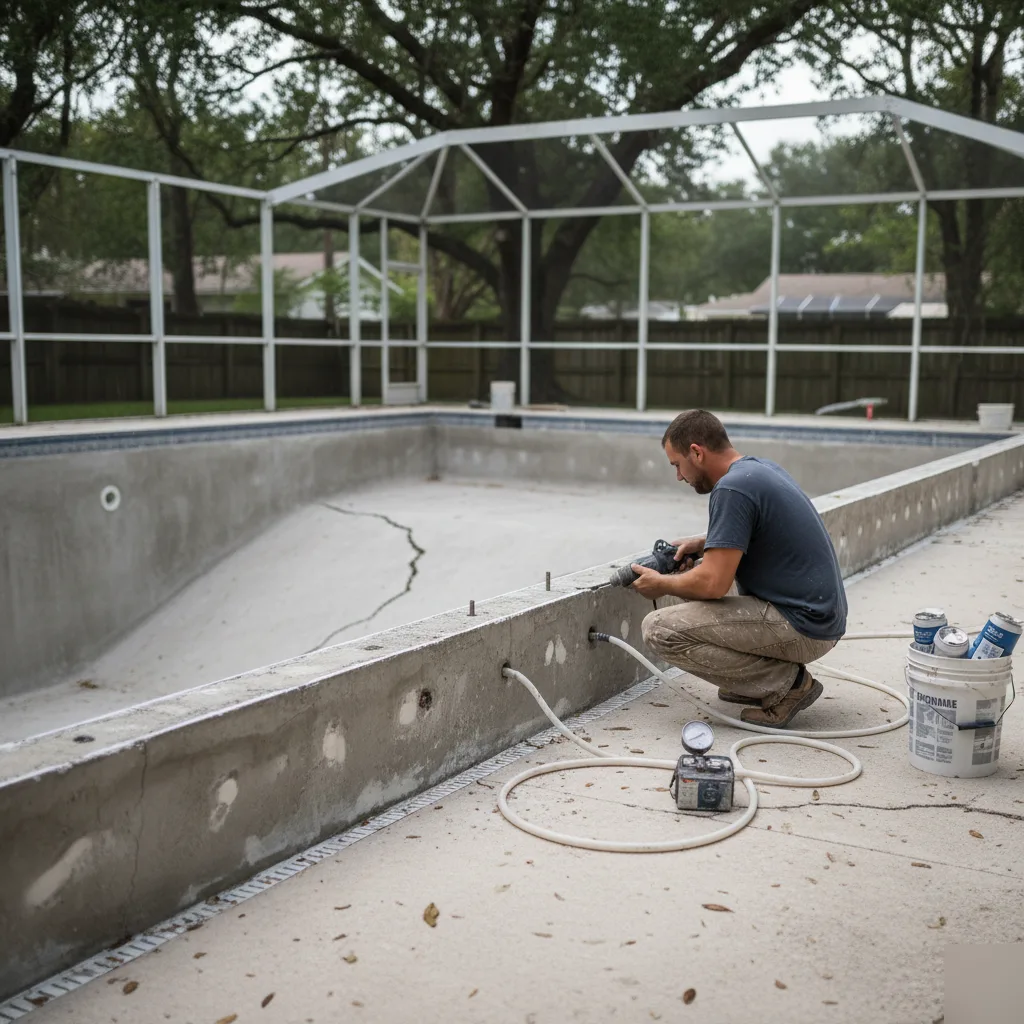
- Boring and Drilling Small Access Holes. After we determine where the underground voids are, we drill small "access" or "boring" holes through the surface of the pool deck. These holes are located strategically around the perimeter and will be used to inject the polyurethane foam material under the pool.
- Polyurethane Foam Injection. This is the key step in the Azalea Park Pool Stabilization process. We inject an expansive polyurethane foam deep underneath the pool. This foam is used to fill any existing voids, compact the soil, and create a solid foundation for your pool. The foam is extremely lightweight and cures quickly (in minutes, rather than hours or days).
- Meticulous Lift & Level Monitoring. Once the polyurethane foam starts expanding under the pool deck, our team begins monitoring your pool's lift and level progress — exactly how much lift we're applying in real-time, which is why your pool never becomes "too high" or "too low." This is an area where our experience really shows.
- Patching and Final Clean-up. After the pool has been stabilized and leveled, we patch and seal up every access hole in your deck. By the time we leave, your pool deck should appear as if there were no holes there to begin with. Most stabilizations are completed in a single day.
Most of our customers, especially those in the South Goldenrod or Lake Underhill area, are shocked when they are informed that their pool is fully stabilized by late in the day. We use a water-proof and long-lasting foam material during the stabilization process. That's critical in central Florida where the water table is high and the rain won't stop. It washes away the concrete-based muds used in the traditional mudjacking method, while polyurethane foam injection is unaffected by this. It's also lightweight, so it does not add further stress to a compromised soil condition while it solidifies and stabilizes the structure, doing its job right from the beginning. Call today for a free estimate and let us see how you stand.
Once Stabilization Is Finished, What Next?
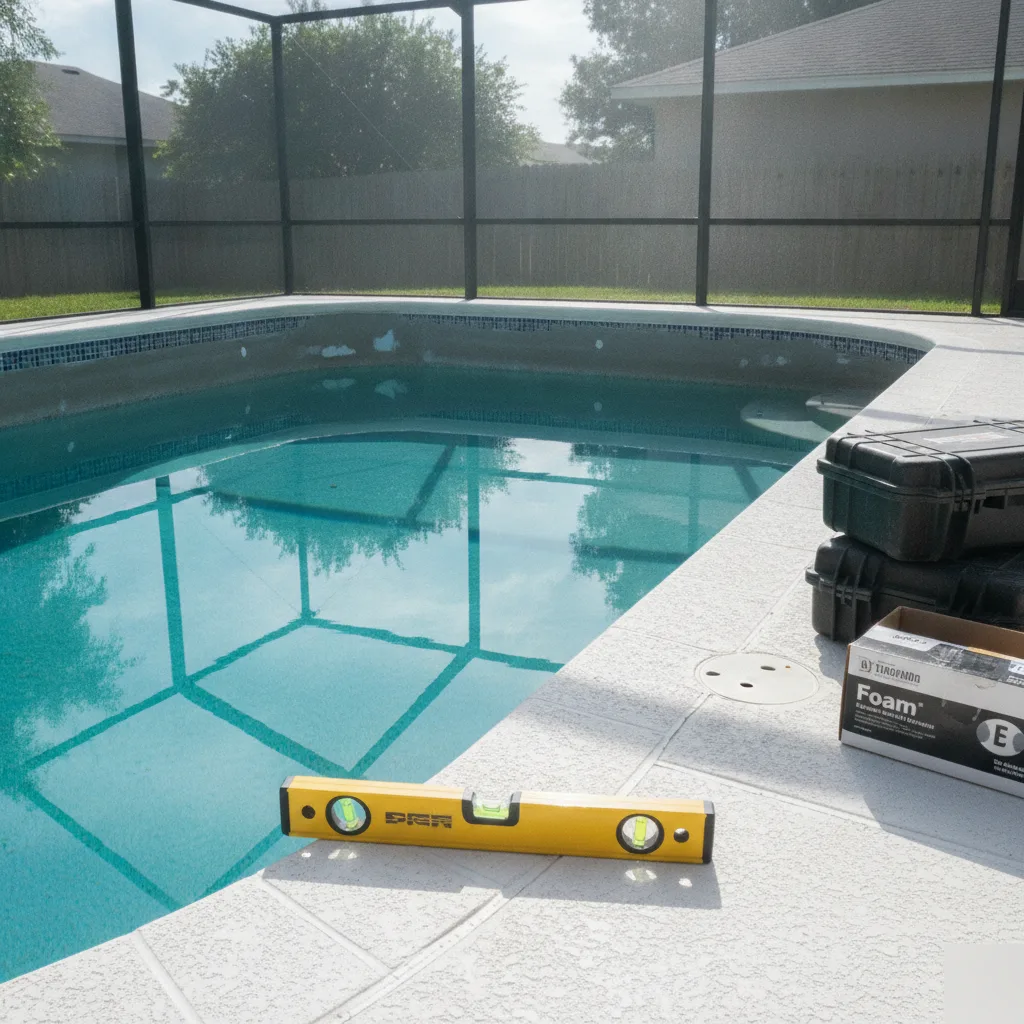
The job is complete. What now? We inspect and verify all the areas of the injection after the material has been cured and is fully solidified. This step of our procedure is often skipped or done incorrectly and it is essential that we verify the pool has been lifted to where it needs to be and that the pool deck did not change positions during our intervention. This has been a common observation on several projects we have completed at homes in the vicinity of Lake Underhill Road where soil conditions are very sandy.
What is Verified Before We Pack Up
- Elevation levels are measured at multiple locations around the pool.
- All port access holes have been sealed flush to the finish deck.
- All cracks on pool coping and deck have been looked over and checked.
- We show you everything we found on our evaluation and what was done to fix it.
In most cases you will notice the difference almost immediately. Cracks in the surface will stop growing and you will not have cracks reopening. Tile will align correctly and pool equipment will not be working harder against a pool shell that is pulling away from plumbing and equipment. In Azalea Park, we advise all of our pool owners to pay attention to water level changes over the first few weeks. Sometimes a pool that was sinking had a small leak and the owner never knew it because the whole pool was moving. When the pool becomes level and fixed, the leaking may become more apparent and you can then deal with a problem sooner than if you had waited until your equipment failed. Sometimes a pool that was sinking may develop new cracks in the plaster and in that case, you may need to contact your pool resurfacing contractor to address cosmetic damage. We offer a free follow-up visit on every pool we stabilize in the 32807 area and have a Lifetime Warranty so there are no problems in the future. But if you have any concern at all, give us a call anytime.
See whether pool stabilization is the right fix for your shell — book a free estimate.
Get your free estimate