
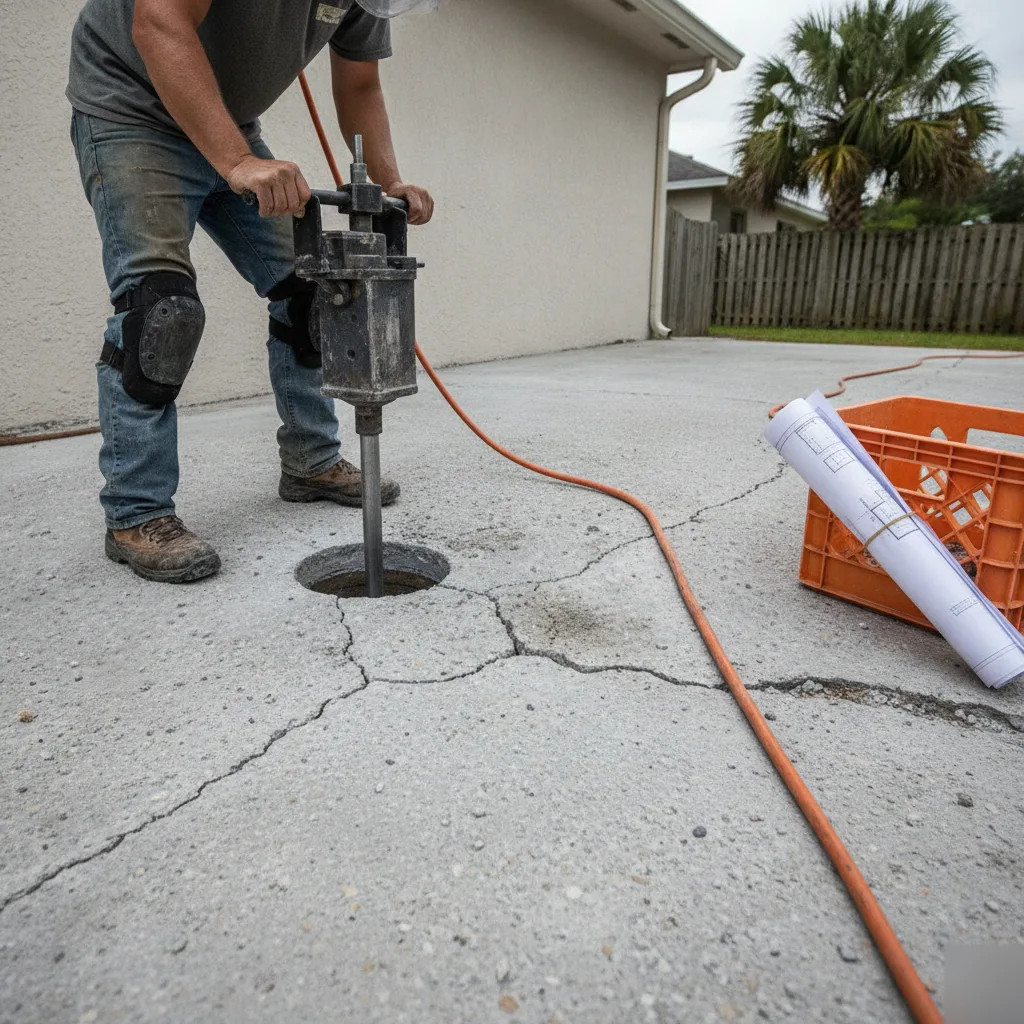
Warning Signs Your Slab Foundation Needs Piers
Most people don't often consider their foundation. They might notice a small sign, like a door that sticks or a crack running across the living room wall. Then, one day, the whole floor feels uneven, and that's when they look for professional foundation repair services, and we get the call.
We get calls like this often from homeowners throughout Azalea Park. The signs were there for months, sometimes years. People just didn't know what they were looking at. Here are the things to watch for:
- Cracks in drywall, especially diagonal ones near door frames or window corners
- Doors or windows that won't close right or suddenly jam
- Visible gaps between the wall and ceiling or wall and floor
- Tile floors cracking for no obvious reason
- A noticeable slope when you walk across a room
Any of these can point to an unevenly settled slab. In Azalea Park, the sandy soils mixed with clay pockets create a common challenge. Heavy rain saturates the ground, and then dry spells pull moisture back out. This repeated cycle puts stress on a concrete slab over time.
We see this often. A homeowner patches a wall crack, paints over it, and forgets about it. Six months later the crack comes back wider. That's not a cosmetic problem. It's the foundation telling you something has shifted underneath.
Not every crack means your home needs slab pier installation. Some are surface-level and harmless. But if you're seeing two or three of those signs together, that's a pattern to check. We can usually tell during the first inspection if slab pier installation is the right fix, or if something else is going on.
Waiting is the biggest mistake. Settlement doesn't reverse itself. The longer a slab sits unevenly, the more stress it puts on your walls, your plumbing, and your entire structure. Catching it early keeps the repair simpler and protects the rest of your home.
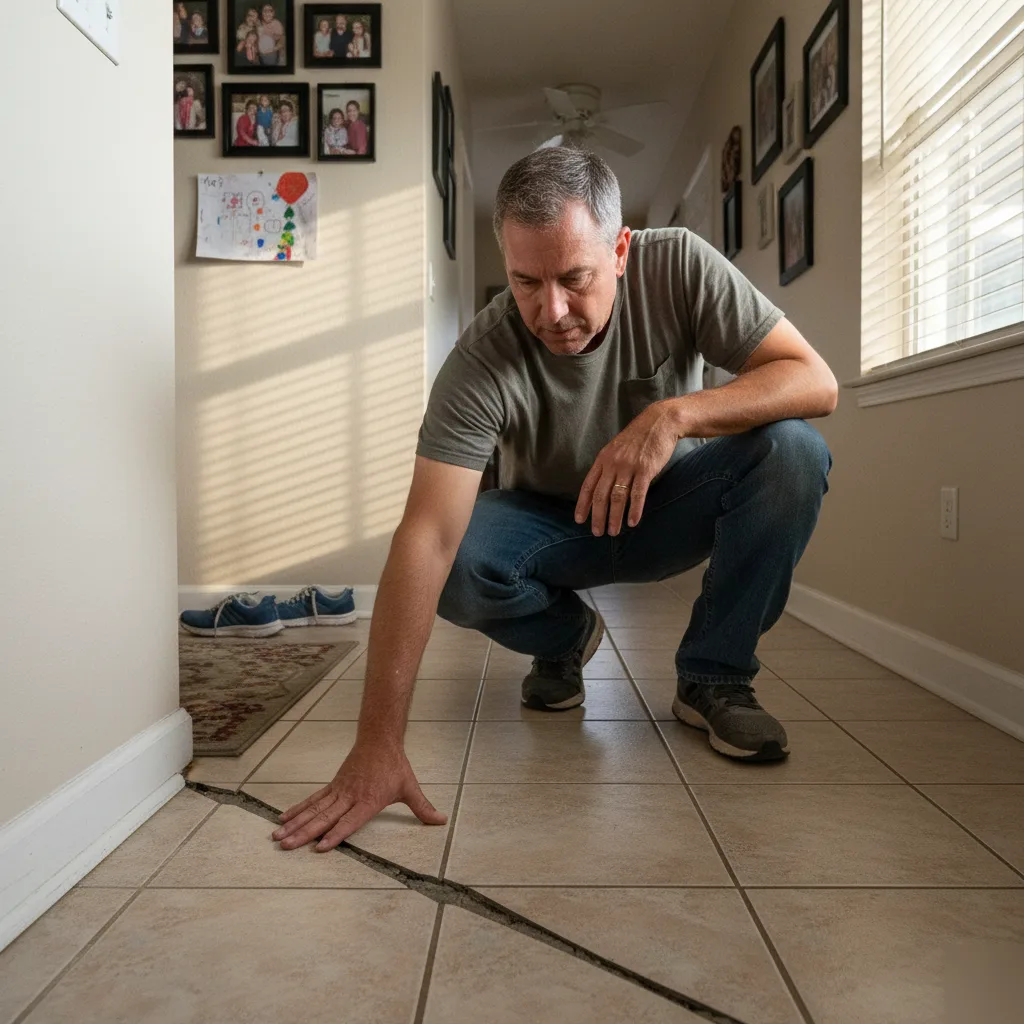
Why Azalea Park Foundations Settle Faster Than Most
Most folks in Azalea Park, FL don't think about what's under their slab until something goes wrong. Maybe a door sticks, a crack runs across the living room floor, or tile pops near the kitchen wall. By that point, the ground beneath your home has already shifted.
Central Florida sits on layers of sandy soil and organic material that compress under weight over time. Azalea Park in Orange County has a few extra factors working against it. The water table here runs high, especially in neighborhoods closer to Lake Underhill Road and Lake Barton. This moisture moves through the soil constantly. It softens the soil and washes out the fine particles that help hold everything in place.
We see this pattern often. A home built in the 1960s or 70s on a poured slab starts showing signs of settlement decades later. The home wasn't built wrong, but the soil underneath just can't support the load anymore. Here's what speeds that process up in this area:
- Sandy soils that drain fast but compact unevenly under a slab's weight
- High water tables that fluctuate with seasonal rain, creating voids beneath concrete
- Organic material in the fill dirt that slowly decomposes and leaves gaps
- Mature tree roots near foundations that pull moisture from the soil, causing it to shrink
This isn't just for older homes. Newer construction near the Orlando Executive Airport corridor deals with similar soil conditions. The ground doesn't care how old your house is.
According to the Florida Geological Survey, much of Orange County sits on karst terrain. This means limestone beneath the surface can dissolve over time. It creates small pockets and voids that accelerate settlement. You won't see it happening. You'll only notice the results.
So when your neighbor tells you their cracks are "just the house settling," that's partly true. In Azalea Park, settling doesn't stop on its own. It keeps going until something structural supports the slab from below. Slab pier installation does this. It transfers the weight of your home down to stable ground where the soil can actually hold it.
Slab Piers vs. Slab Lifting: Choosing the Right Fix
We get this question often. Homeowners in Azalea Park call us after noticing a sinking floor or a crack running across their slab. They ask: do I need slab pier installation, or can you just lift the concrete back into place? The answer depends on what's happening underneath your home.
Slab lifting and leveling works well for slabs that have settled due to voids in the soil. We inject polyurethane foam beneath the concrete to fill those gaps and raise the surface. It's fast and effective. It handles many situations around the 32807 zip code where sandy soils shift over time. But it has limits.
When Slab Piers Are the Better Call
Slab pier installation goes deeper. If your foundation has settled because the soil beneath it can't support the weight of your home anymore, foam alone won't solve the problem long-term. Piers reach down to load-bearing strata, sometimes 15 to 30 feet below grade. They transfer the weight of your slab to stable ground that isn't going to move. This is a permanent fix, not a patch.
Here's how we help you decide:
- Doors and windows sticking or not closing properly suggest deeper structural movement
- Cracks wider than a quarter-inch in your slab or block walls point to ongoing settlement
- A floor that keeps sinking after previous repairs means the soil itself is the issue
- Localized dips near load-bearing walls often need pier support rather than foam
We can tell which solution fits within the first inspection. Some homes along South Goldenrod Road sit on fill dirt from decades-old development. That fill compresses unevenly, and foam can handle minor issues. But when a home's interior walls are cracking and the floor slopes more than an inch across a room, slab pier installation is the right move.
Sometimes you need both. We've done jobs where piers stabilize the foundation at key points. Then we use slab lifting to bring the rest of the floor back to level. Not every situation is one-or-the-other. That's why the inspection matters so much.
Not sure which fix your home needs? Give us a call for a free estimate.
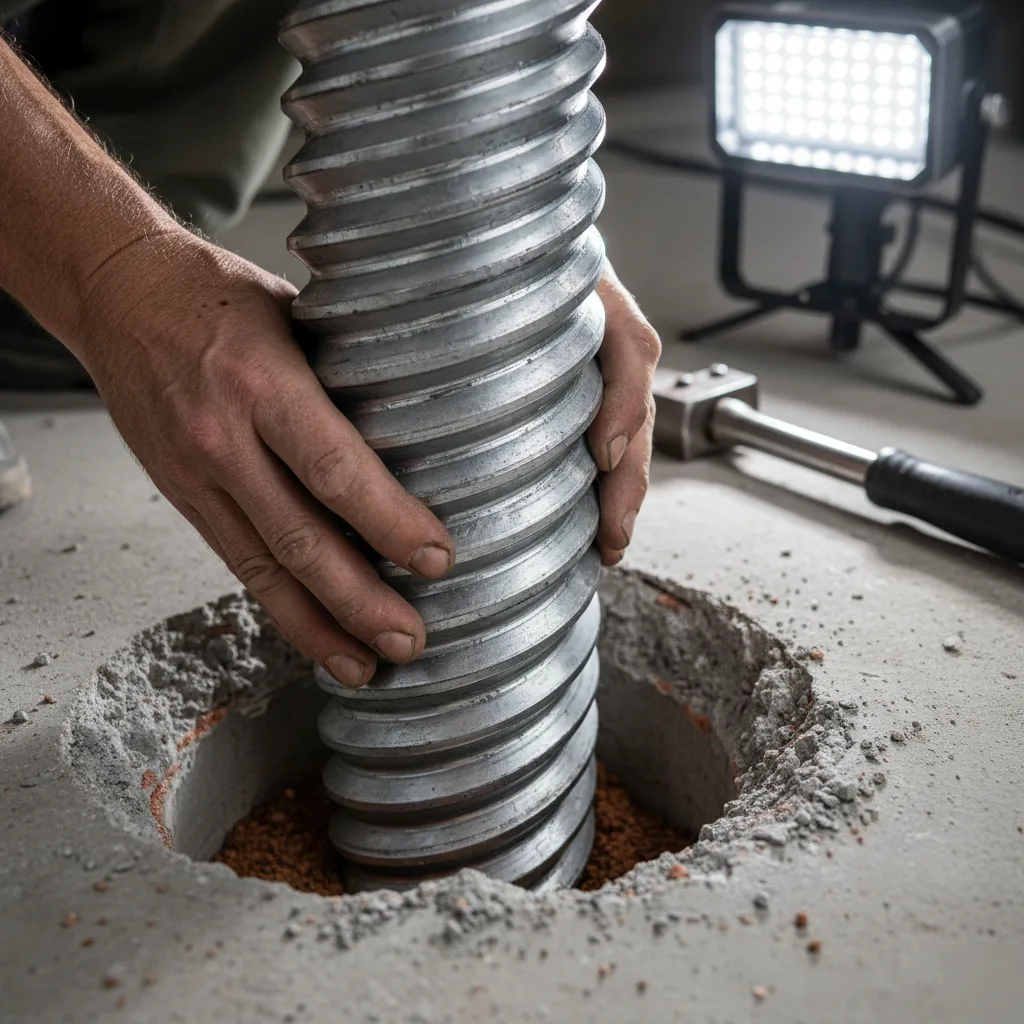
How Slab Pier Installation Works: The Step-by-Step Process
People ask us about this process all the time. It sounds complicated, but broken down, it makes sense. We've done this work on homes across Azalea Park and the surrounding 32807 zip code. The steps are the same every time.
Here's how our crew handles a slab pier installation from start to finish:
- Core through the slab. We drill small, precise holes through your concrete floor at each pier location. These spots are mapped out during the inspection and are just big enough to work through.
- Excavate beneath the slab. Under each hole, we dig down to reach stable soil or bedrock. In Azalea Park, that depth varies depending on the property. Sandy soils near the surface can sit on top of firmer material. This can be anywhere from 10 to 30 feet down.
- Drive the piers to load-bearing strata. Steel pier sections get hydraulically pressed through the unstable soil until they hit solid ground. Each pier is driven independently, so each one reaches the right depth for that exact spot.
- Attach brackets and lift. A steel bracket connects each pier to the underside of your slab. We then use hydraulic jacks to carefully raise the slab back toward its original position. This is where you start to see doors close right again and cracks tighten up.
- Patch and restore. Once the slab is stable, we fill the cored holes and clean up. Most homeowners can't tell where we worked after a few weeks.
The whole job usually wraps up in one to two days. That surprises people.
But here's something important. We monitor pressure readings on every pier as it's driven. If a pier doesn't hit the resistance we need, we keep going deeper. The piers reach solid bearing soil well within the expected range for properties in the 32807 zip code. Each pier is tested individually. This means you're not relying on guesswork.
No heavy equipment tears up your yard, and there's no major disruption to your daily routine. You stay in your home the entire time; the work happens mostly underneath you.
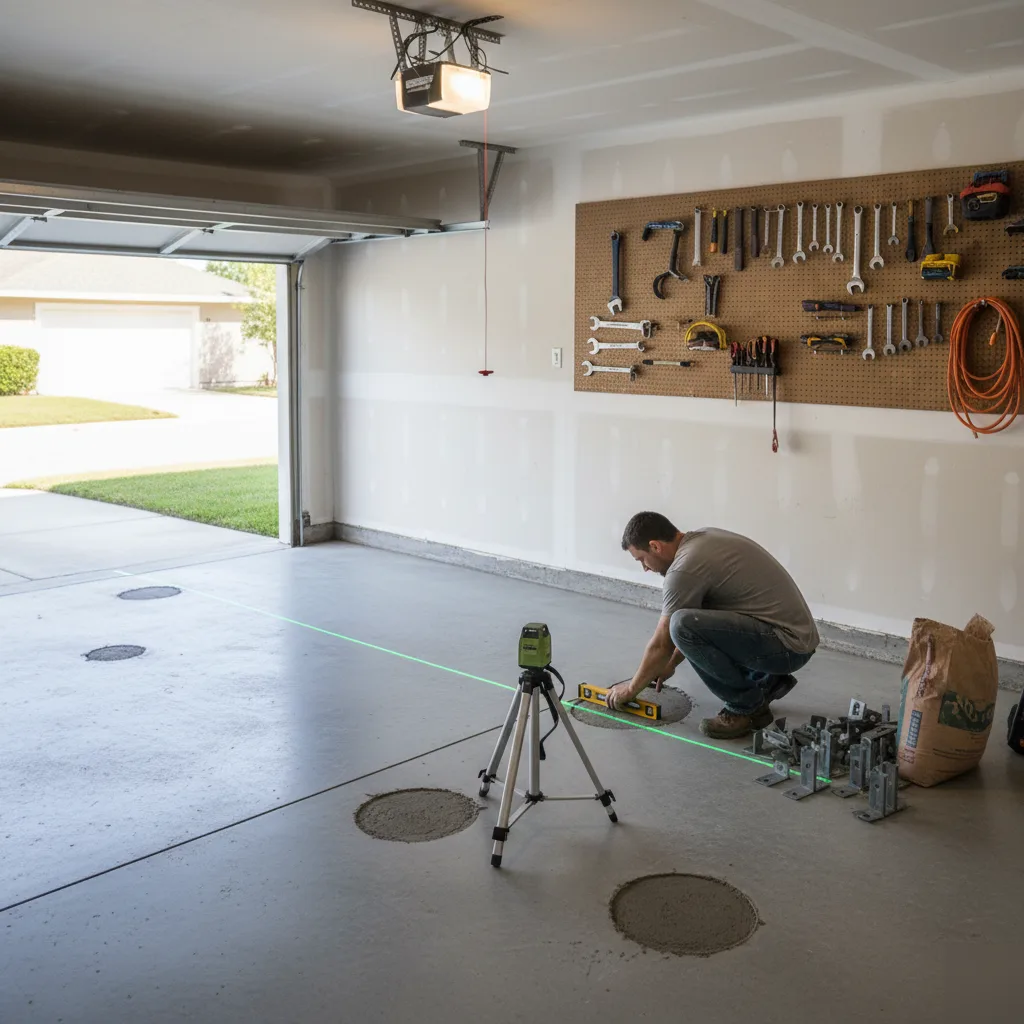
Orange County Permits and What to Verify Before Work Starts
Most homeowners in Azalea Park don't think about permits until a contractor brings it up. That's normal. Slab pier installation involves structural work on your foundation. So Orange County has rules about it.
Here's the good news. We handle the permit process for you. We've pulled permits across the 32807 zip code many times. what the county wants to see before approving the work. You shouldn't have to chase paperwork when your floors are already uneven and your doors won't close right.
What You Should Verify Before Any Crew Shows Up
Before work starts on your property, there are a few things to check on your own. This isn't because you can't trust your contractor, but because a little homework protects you.
- Ask to see the contractor's active license and insurance. Don't just take their word for it.
- Confirm they've submitted for or obtained the required building permit from Orange County.
- Request a copy of the engineering report or structural assessment that supports the pier plan.
- Make sure they've called 811 for underground utility locates. This is non-negotiable in older Azalea Park neighborhoods. Utility lines run in unexpected places.
- Ask about the inspection schedule. Orange County typically requires a post-installation inspection to verify pier depth and load transfer.
We see this often. A homeowner calls us after another company started work with no permit, no engineering plan, and no utility locates. That's a mess nobody wants to clean up.
People often miss this. Your homeowner's insurance may not cover foundation repairs done without a permit. If something goes wrong down the road, an unpermitted job can mean a denied claim. It's not worth the risk.
We walk you through every step before we break ground. We show you the permit. We explain the engineering specs in plain language. We make sure the county inspector has access when the job's done. Homes near the Orlando Executive Airport corridor and along South Goldenrod Road sit on fill soils. These areas get extra scrutiny from inspectors. We plan for that from day one.
No surprises. That's how we work.
Find out whether your home needs piers — book a free foundation inspection.
Get your free estimate