
What Void Filling Actually Does for a Concrete Slab
Most people call us about a slab that's sinking or cracking, which is a common sign of foundation issues in east Orlando homes. The real problem, though, is underneath. Empty space forms between the bottom of your concrete and the soil. That gap is the void, and it's the reason your slab moves.
Void filling puts support back where the ground took it away.
Here in Azalea Park, FL, the sandy soil shifts constantly. Heavy rains wash material out from under driveways, patios, and garage floors. Drought cycles shrink the clay layers in our local soil. Either way, the result is the same. A pocket of nothing sits under your concrete, and gravity starts winning.
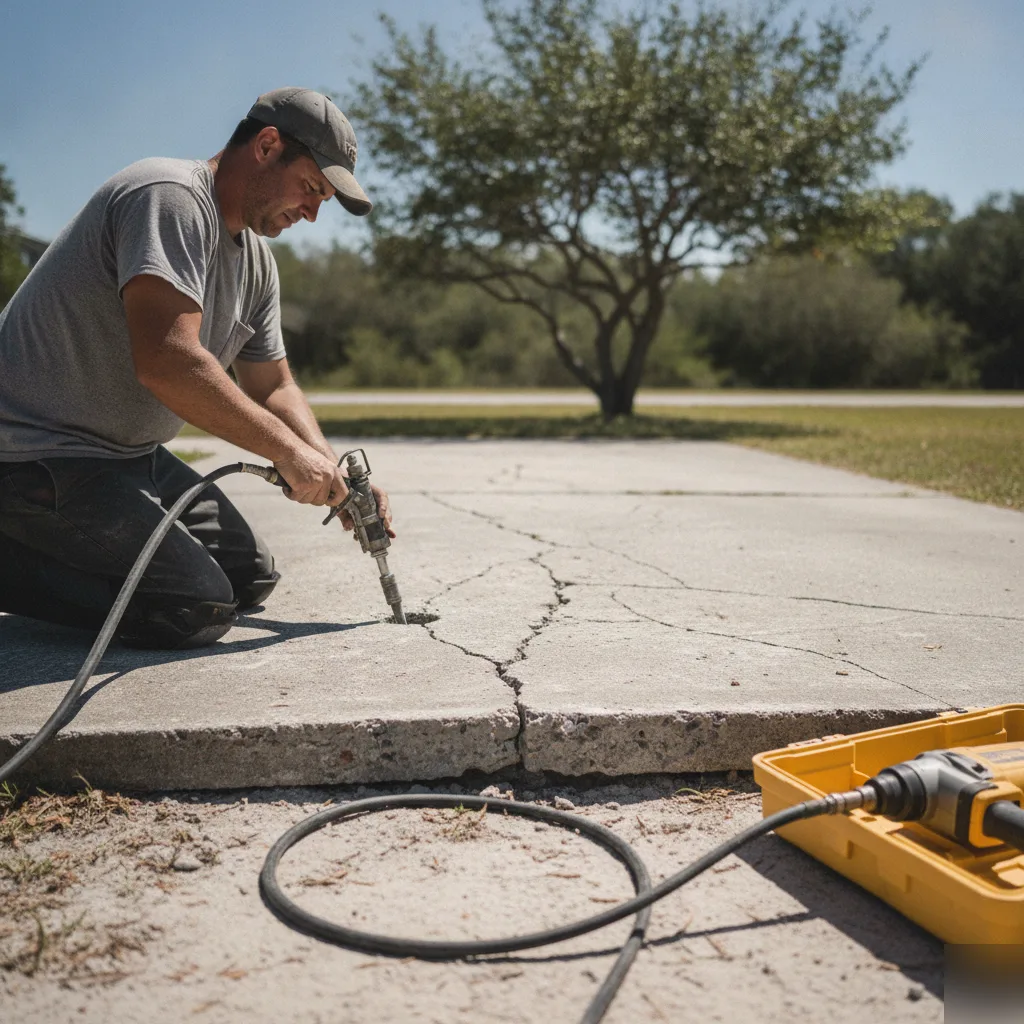
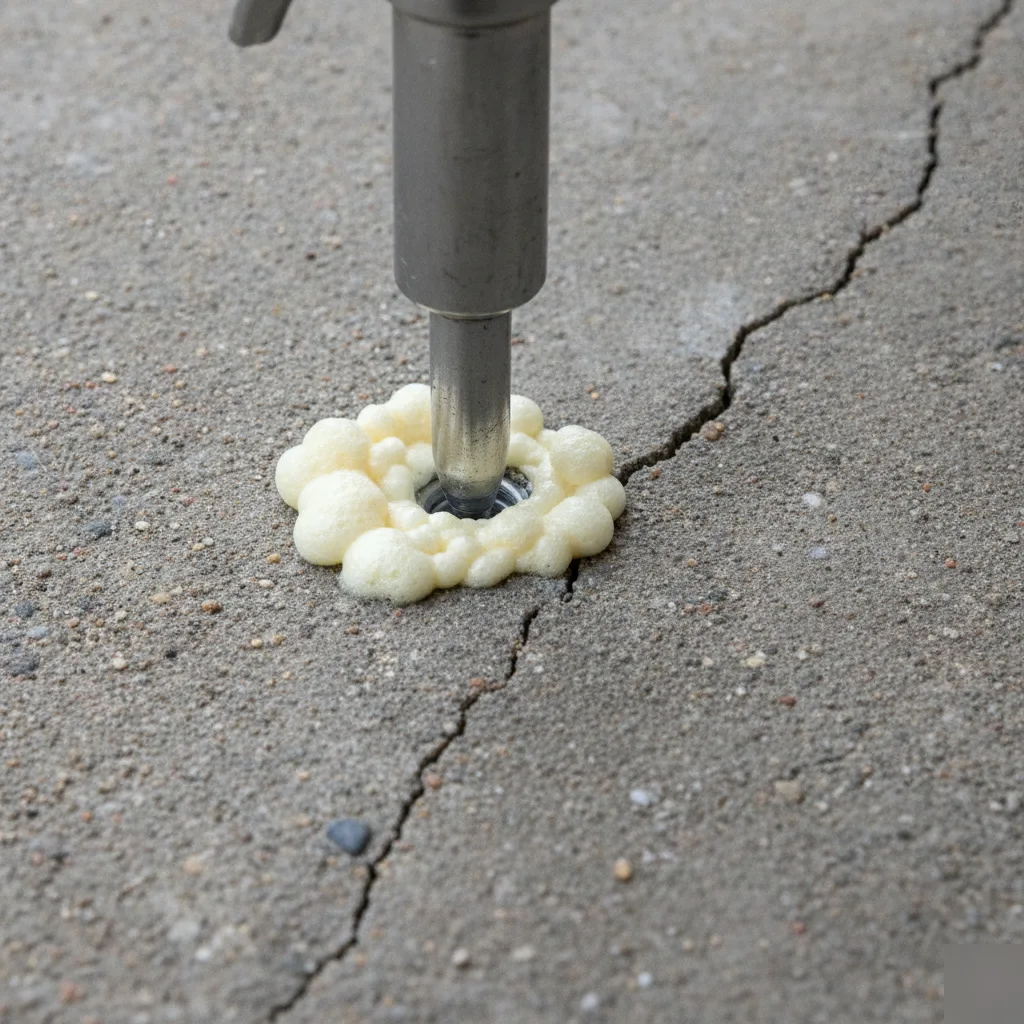
So what actually happens during void filling? We drill small holes through the slab surface, usually about the size of a dime. Then we inject polyurethane foam through those holes directly into the empty space below. The foam expands to fill every gap and pocket. It cures solid within minutes. The foam doesn't wash out. It doesn't compress over time, and it weighs almost nothing compared to old-school mud slurry methods.
What Void Filling Fixes That You Can See
You might notice these signs around your property near Lake Underhill Road or anywhere in the 32807 zip code:
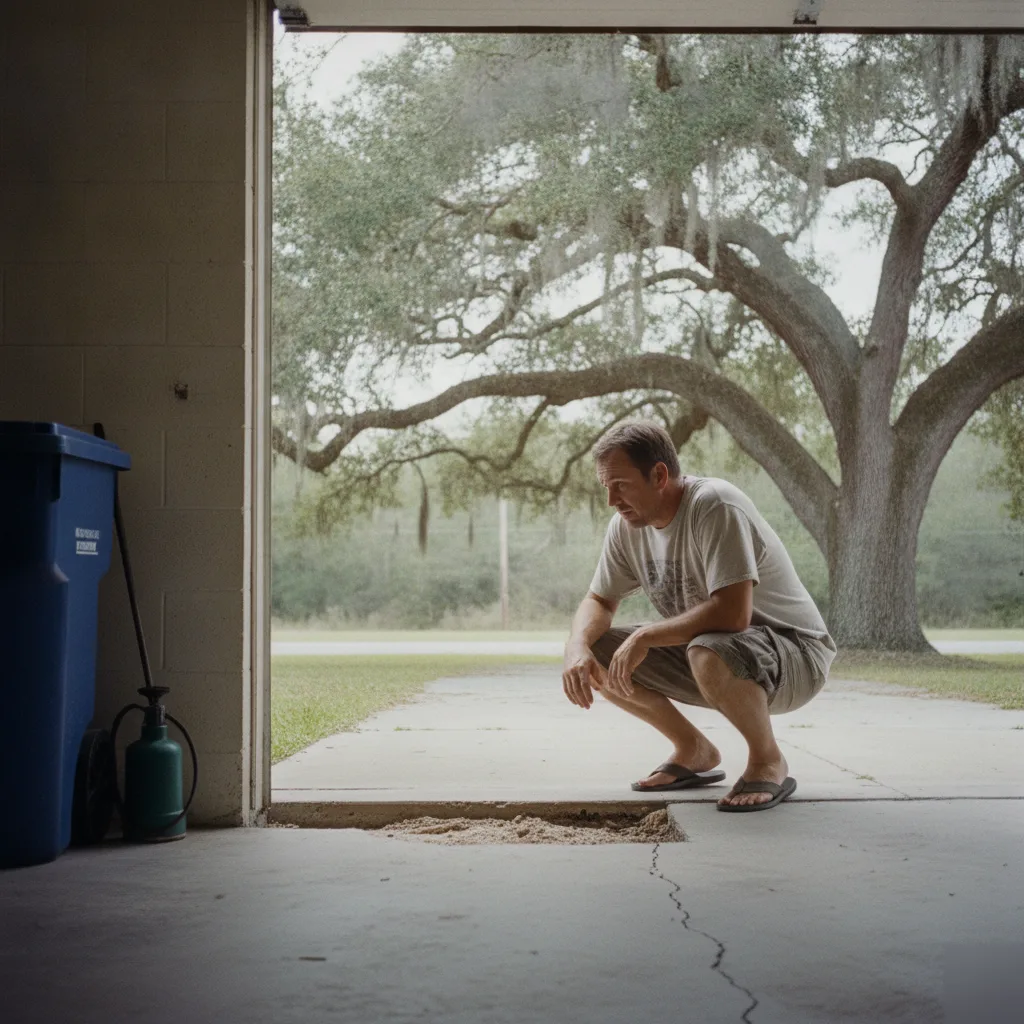
- Concrete sections that rock or wobble when you step on them
- Gaps between the slab edge and your foundation wall
- Water pooling in spots that used to drain fine
- Cracks that keep growing wider over a few months
Every one of those problems points back to a void. We see this every week. A homeowner often thinks they need a whole new driveway, but the concrete itself is still in good shape. The problem is just the empty space underneath, allowing everything to shift.
Here's what most folks don't realize. Void filling isn't just a repair; it's also protection. Once that space is filled with structural foam, your slab has uniform support again. There are no weak spots or soft zones waiting to collapse during the next big storm. The concrete can do its job because the ground beneath it supports it.
Warning Signs Your Slab Has a Void Underneath
Most people don't think about what's happening under their concrete. But your slab tells you when something's wrong. You just need to know what to look for.
We get calls every week from Azalea Park homeowners. They noticed a problem but ignored it for months. By the time they reach out, the void has grown. The fix is still doable, but catching it early always saves headaches.
Here are the signs that usually mean a void has formed beneath your slab:
- A hollow sound when you walk or tap the concrete. This is the big one. Knock on a section of your garage floor or patio. If it sounds different from the rest, there's likely empty space underneath.
- Cracks that keep spreading. A single hairline crack isn't always a problem. But cracks that branch out or widen over a few weeks point to lost support below.
- Uneven or sinking sections. You might notice a dip near your front walkway or a slope forming across your pool deck. That concrete didn't move on its own.
- Doors or windows sticking. When a slab shifts even slightly, the frame of your house shifts too. Doors that used to close fine suddenly won't latch.
- Water pooling in new spots. If rainwater collects where it never did before, the grade has changed. Something underneath gave way.
The cause of these problems is the same. Sandy Florida soil washes out during heavy rain, especially in areas near Lake Underhill Road. The water table sits close to the surface there. This erosion creates pockets of empty space your slab was never designed to bridge.
None of these signs fix themselves. A void only gets bigger. Soil doesn't pack itself back in. It keeps moving with every storm cycle. The concrete above it keeps settling, cracking, and separating.
Not sure if what you're seeing is a void? That's common. We offer a free estimate. We can usually tell you what's going on within the first few minutes of looking at it. Our licensed crew has seen hundreds of these situations across the 32807 zip code.
Why Voids Form Under Azalea Park Slabs
Most folks don't think about what's happening under their concrete. They don't think about it until a slab starts rocking. Or a door won't close right. Or they notice a gap between the garage floor and the driveway. By then, a void has been growing for months.
Azalea Park, FL sits on sandy soil. That's the reality of living in Orange County. Sand shifts. It erodes. When heavy rain rolls through the area near Lake Underhill Road or anywhere along the SR 408 corridor, water finds its way under slabs. It carries soil particles with it. Over time, that washout creates hollow pockets. This leaves empty space where solid ground used to be.
We see this every week. Here's what usually causes voids under concrete in this area:
- Soil erosion from drainage issues. Poor grading, broken downspouts, or missing gutters send water straight under your slab.
- Organic material breakdown. Tree roots and buried debris decompose over time, leaving gaps behind.
- Poorly compacted fill. Some homes in Azalea Park were built on fill dirt that was never packed tight enough, it settles years after construction.
- Plumbing leaks beneath the slab. A slow leak you can't see washes away soil for months before anything shows on the surface.
Florida's wet-dry cycle makes conditions worse. Summer storms saturate the ground. Then dry spells cause the sandy soil to shrink and pull away from the bottom of the slab. That cycle repeats year after year. The void gets bigger each time.
A void doesn't fix itself. It only grows. The longer you wait, the more the slab above it flexes and cracks under its own weight. Concrete is strong in compression but weak when it loses support underneath. A small hollow spot under your patio or walkway can turn into a cracked, sunken mess fast.
Do you wonder if you have a void forming right now? That soft spot you feel when you walk across the garage floor is not your imagination.
How the Void Filling Process Works on Your Property
Most people expect a big production: heavy equipment, torn-up yards, days of noise. Void filling doesn't work that way. The process is fast, controlled. We can usually wrap up the same day we show up.
This is how the process works from start to finish:
- We drill small access holes. These are about the size of a dime. We place them directly through the concrete slab above the void. We map out hole locations based on what we found during inspection. Nothing is random.
- Polyurethane foam gets injected below the slab. The foam travels through injection ports. It expands to fill every gap underneath. It reaches into irregular spaces that gravel or traditional grout would miss.
- The foam cures and hardens in minutes. Not hours, not days. Within about 15 minutes the material is load-bearing. This means you're not roping off areas of your property for a week waiting on cure times.
- We monitor lift and pressure. Our crew watches the slab response in real time. If a section needs more material, we adjust on the spot. If it's stable, we move on.
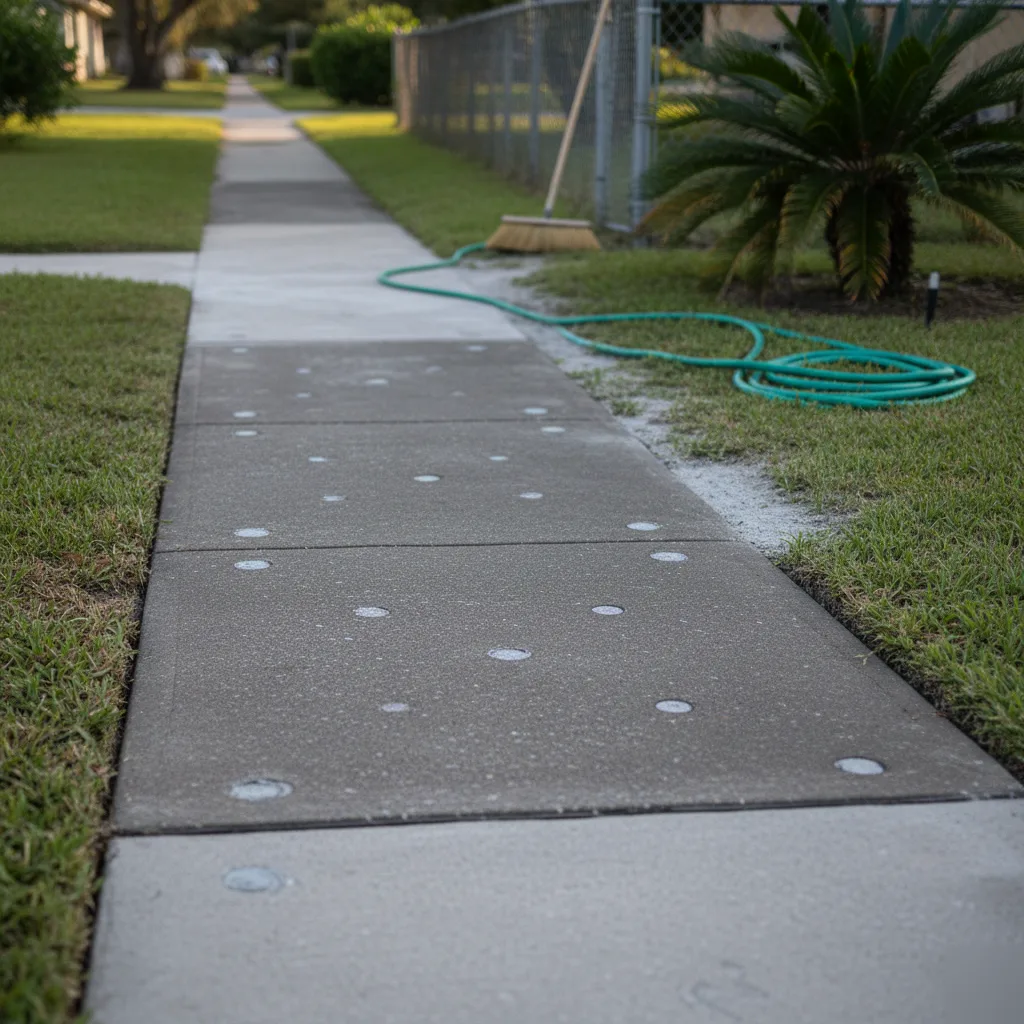
- Access holes get patched and cleaned up. You will barely notice where we drilled. The patches blend in with your existing concrete surface.
We often see homeowners near Lake Underhill Road in Azalea Park who have voids under pool decks or patios. The sandy soil shifts. Water channels through. Suddenly, there's a hollow space under a slab that was fine two years ago. Our polyurethane foam injection process handles these situations. It does so without tearing out concrete or hauling in heavy fill material.
Because the foam is lightweight, it doesn't add stress to already weak soil. This matters here in 32807. Ground conditions can change from one block to the next.
The whole process is cleaner than most people expect. There are no mixing trucks. There is no massive excavation. We have done void filling jobs where the homeowner left for lunch and came back to a finished project. That is not every situation, but it gives you an idea of our timeline.
Do you want to know if your property needs this? Give us a call for a free estimate.
When to Call Today vs. When You Can Wait
Not every crack in your concrete means you need to call us right now. But some signs do mean "call today." Knowing the difference saves you money and stress.
We tell homeowners in Azalea Park, FL who aren't sure the following: If your slab has dropped a quarter inch or less and nothing is actively shifting, you likely have a little time. Keep an eye on it. Mark the crack with a pencil line and check it every couple weeks. If nothing changes, you can plan the repair on your schedule.
Signs You Shouldn't Wait
Some situations need void filling sooner. We often see these calls from homes near Lake Underhill Road and the Colonial High School area, especially after heavy rain seasons. Here's what tells us it is urgent:
- A door or window that suddenly won't close right
- New cracks appearing in drywall or block walls
- Water pooling against your foundation after rain
- A slab that's visibly tilting or sinking fast
Do you see any of those signs? That calls for same-day service. The ground underneath is actively moving, and the void is growing. Waiting a month could turn a straightforward void filling job into something that also needs slab pier installation or deeper foundation work.
Most people don't realize this: Florida's sandy soils don't just erode slowly. They can wash out fast during a single storm event. We have pulled up to properties in the 32807 zip code where the homeowner said, 'It was fine last week.' They were not exaggerating.
Folks who call early spend less than those who wait. A small void under a garage slab is a simpler fix. That same void six months later might have undermined half the floor.
If you are on the fence, here is a simple rule. If the problem is getting worse, don't wait. If it has been the same for months, you have breathing room to schedule a free estimate at your convenience. But don't ignore it entirely. Voids in Azalea Park don't fix themselves; they only get bigger.
See whether your slab has a void worth filling — book a free estimate.
Get your free estimate